
Key Takeaways
- Scientists have developed a way to make biocharBiochar is a carbon-rich material created from biomass decomposition in low-oxygen conditions. It has important applications in environmental remediation, soil improvement, agriculture, carbon sequestration, energy storage, and sustainable materials, promoting efficiency and reducing waste in various contexts while addressing climate change challenges. More more like a metal wire to help clean up farm soil.
- This new material speeds up the natural process where bacteria break down harmful antibiotics.
- The improved biochar helps certain beneficial soil bacteria grow and work together more effectively.
- By moving electricity better, the material creates natural cleaning agents that destroy pollutants.
- This discovery suggests that how well biochar conducts electricity is more important for cleaning soil than how much energy it can store.
The scientific journal Biochar recently published the research of Hua Shang, Chao Jia, Song Wu, Ning Chen, Yujun Wang, and Xiangdong Zhu, which explores a transformative approach to soil decontamination. Their work addresses the frequent detection of antibiotics in paddy soils, which often receive runoff from livestock manure and irrigation water. These pollutants often exceed the natural cleaning capacity of the environment, requiring new strategies to accelerate the breakdown of organic contaminants. The team focused on the role of biochar, a charcoal-like substance, and how its internal structure can be altered to better facilitate the chemical reactions necessary for soil healing.
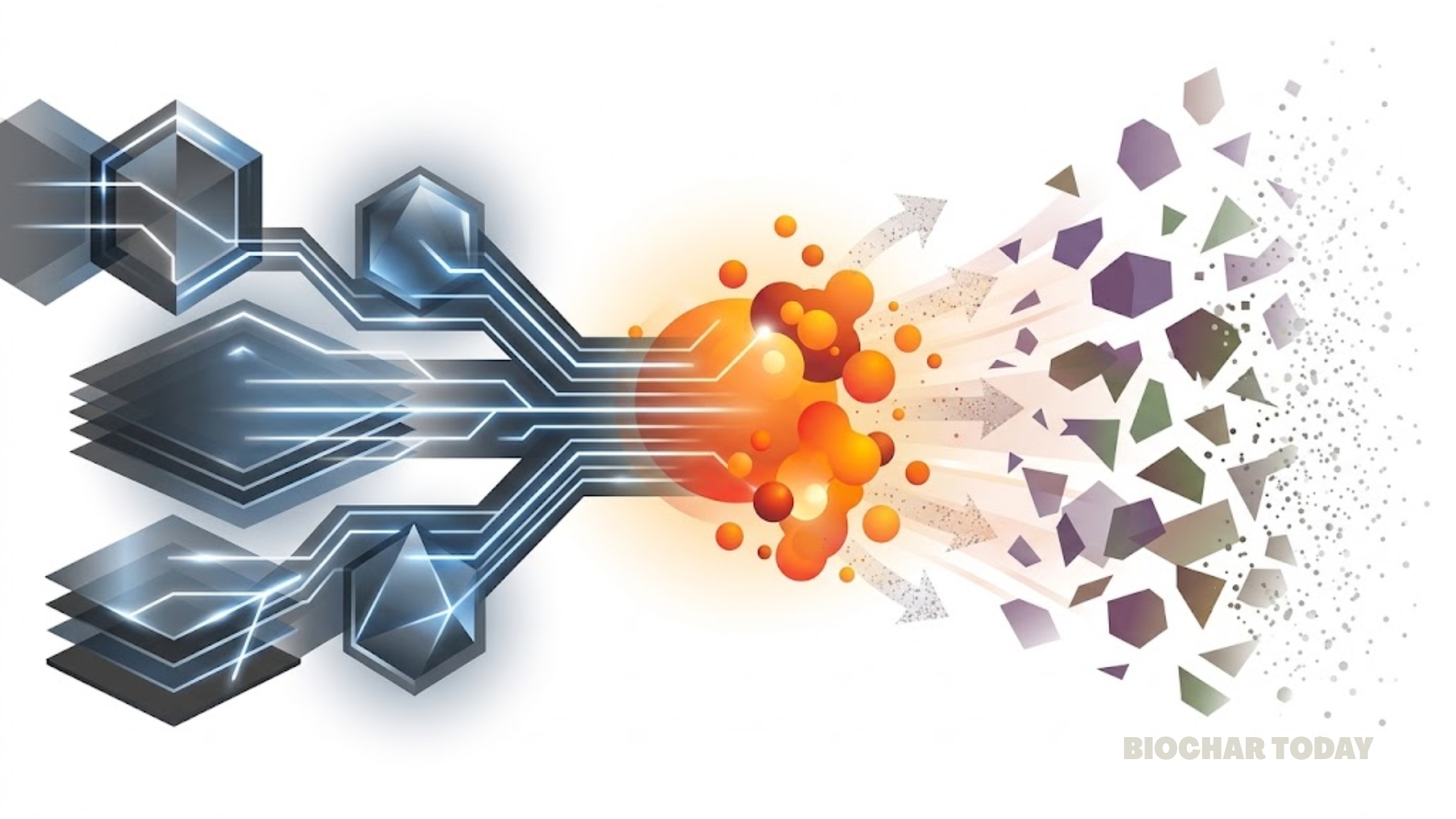
Traditional biochar acts as a hybrid material that can both store and conduct electrons, but its natural state often lacks the highly organized structure needed for rapid energy movement. To solve this, the researchers utilized a method called flash Joule heating to transform standard biochar into a highly conductive, graphitized version. This process essentially unchokes the path for electrons, allowing them to flow nearly three times more easily than before. By creating what acts like a macroscale microbial nanowire, the researchers were able to bridge the gap between soil bacteria and the minerals they interact with, fundamentally changing how electricity moves through the dirt.
The primary benefit of this increased conductivity is the redirection of how bacteria reduce iron in the soil. Specifically, the study found that this graphitized material encourages specific groups of iron-reducing bacteria, such as Bacillus and Anaeromyxobacter, to flourish. As these microbes use the biochar as a highway for electrons, they generate significantly more active iron. This iron then reacts with oxygen to produce hydroxyl radicals, which are powerful, short-lived molecules that act as natural detergents. These radicals are the primary force behind the destruction of persistent antibiotics like sulfamethoxazole, which are common concerns in modern agriculture.
Through rigorous testing in various types of soil, including black, cinnamon, and red soils, the team observed that the results were most dramatic in nutrient-rich environments like black soil. The presence of the graphitized biochar led to a total degradation of the targeted antibiotic within one hundred and twenty hours, a feat that standard biochar or untreated soil could not match. The researchers discovered that the material creates a self-reinforcing cycle where the biochar recruits more reducing bacteria, which in turn provides more electrons to the system, continuously fueling the production of cleaning radicals.
Perhaps the most significant finding of this study is the shift in how scientists understand biochar’s function. For years, the emphasis was placed on the ability of biochar to store electrons like a battery using its oxygen-containing chemical groups. However, this research proves that the ability to conduct electrons directly is far more effective for promoting the specific microbial and chemical processes required for soil remediation. By prioritizing the conductive framework over the storage capacity, the team has provided a new blueprint for creating high-performance environmental amendments that can protect food security and restore soil health on a global scale.
Source: Shang, H., Jia, C., Wu, S., Chen, N., Wang, Y., & Zhu, X. (2026). Geoconductor function of graphitized biochar redirects microbial Fe(III) reduction and stimulates hydroxyl radical production in paddy soil. Biochar, 8(1), 92.



Leave a Reply