
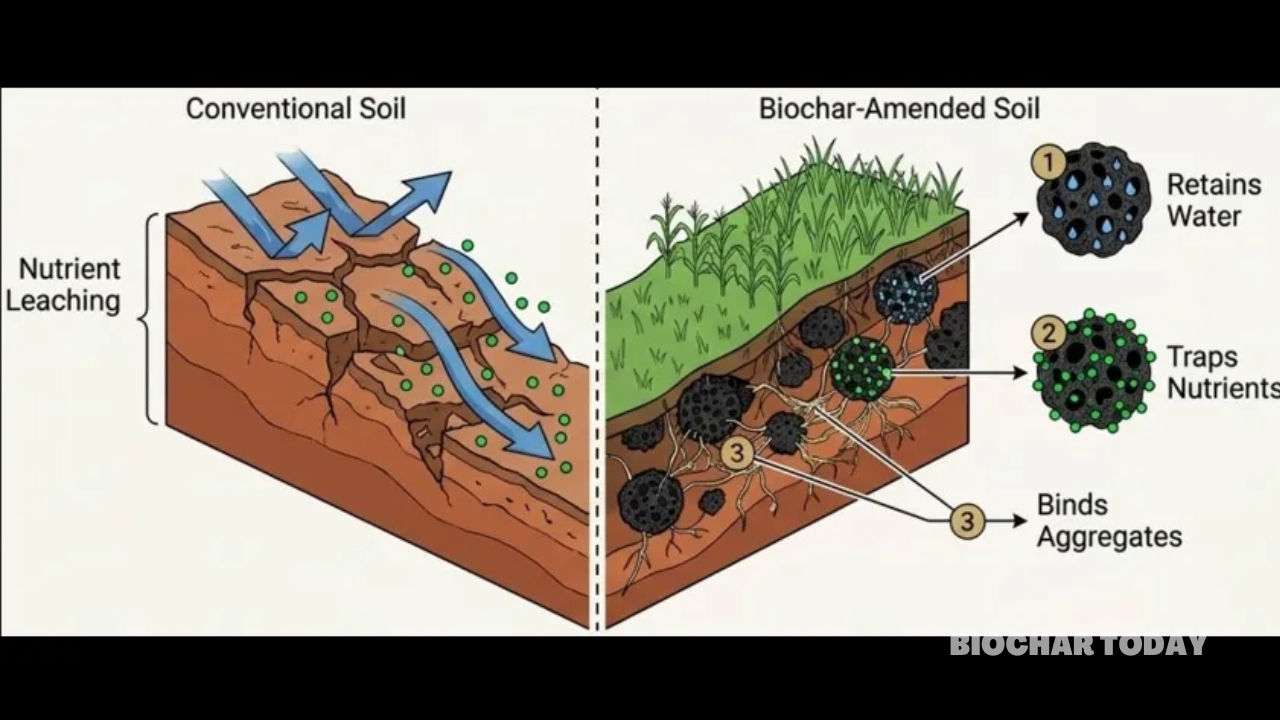
Researchers at Sardar Vallabhbhai Patel University of Agriculture and Technology (SVPUAT) in India have recently conducted a study examining the efficacy of various agricultural waste streams for soil health applications. The investigation centered on how different feedstocks—including crop residues and livestock waste—behave during thermochemical conversion and their subsequent impact on soil chemical and physical properties. This research aligns with a growing emphasis in the Indian agricultural sector on finding sustainable pathways to manage the country’s vast surplus of agricultural residues while simultaneously addressing soil degradation and food security.
The primary challenge addressed by the SVPUAT study is the optimization of biocharBiochar is a carbon-rich material created from biomass decomposition in low-oxygen conditions. It has important applications in environmental remediation, soil improvement, agriculture, carbon sequestration, energy storage, and sustainable materials, promoting efficiency and reducing waste in various contexts while addressing climate change challenges. More quality based on the inherent variability of available biomassBiomass is a complex biological organic or non-organic solid product derived from living or recently living organism and available naturally. Various types of wastes such as animal manure, waste paper, sludge and many industrial wastes are also treated as biomass because like natural biomass these More. In India, farmers often face the dual burden of managing voluminous waste—such as rice husks, corn stover, and poultry manure—and remediating nutrient-depleted or acidic soils. Because each feedstockFeedstock refers to the raw organic material used to produce biochar. This can include a wide range of materials, such as wood chips, agricultural residues, and animal manure. More possesses a unique lignocellulosic and mineral composition, a “one-size-fits-all” approach to production often leads to inconsistent soil performance. Identifying which specific waste products yield the highest nutrient retention and carbon stability is essential for the practical implementation of biochar strategies at the farm level.
To address these inconsistencies, the researchers evaluated the thermochemical decomposition of several feedstocks under controlled, oxygen-limited conditions. The solution involved analyzing how different materials, such as rice husks and livestock dung, respond to varying pyrolysisPyrolysis is a thermochemical process that converts waste biomass into bio-char, bio-oil, and pyro-gas. It offers significant advantages in waste valorization, turning low-value materials into economically valuable resources. Its versatility allows for tailored products based on operational conditions, presenting itself as a cost-effective and efficient More temperatures to create tailored amendments. By focusing on the conversion of these specific wastes into carbon-dense materials, the study provides a framework for selecting feedstocks that maximize specific benefits, such as increasing cation exchange capacity (CEC) or providing high concentrations of essential minerals like potassium and phosphorus.
The outcomes of the research demonstrate that feedstock selection is the most critical determinant of a biochar’s utility in soil management. Specifically, the study found that while crop residues like rice husks produce biochar with high surface area and porosityPorosity of biochar is a key factor in its effectiveness as a soil amendment and its ability to retain water and nutrients. Biochar’s porosity is influenced by feedstock type and pyrolysis temperature, and it plays a crucial role in microbial activity and overall soil health. Biochar More, livestock-based biochars provide superior immediate fertility benefits and alkalinity for neutralizing acidic soils. These findings suggest that integrating tailored biochar applications can improve crop yields by 10% to 35% across various Indian agricultural zones. Furthermore, the stable carbon structures created through these processes offer a long-term solution for carbon sequestration, persisting in the soil for centuries.




Leave a Reply