
Key Takeaways
- Scientists have developed a new eco-friendly fertilizer coating using tea leaf extracts and iron.
- This advanced coating prevents nutrients from washing away, keeping them in the soil for plants to use longer.
- Using this technology significantly boosts tomato plant growth and health compared to standard fertilizers.
- The new fertilizer can help reduce global warming by lowering the amount of greenhouse gases released from farms.
- This method is cost-effective and provides a sustainable way to improve soil quality and crop yields.
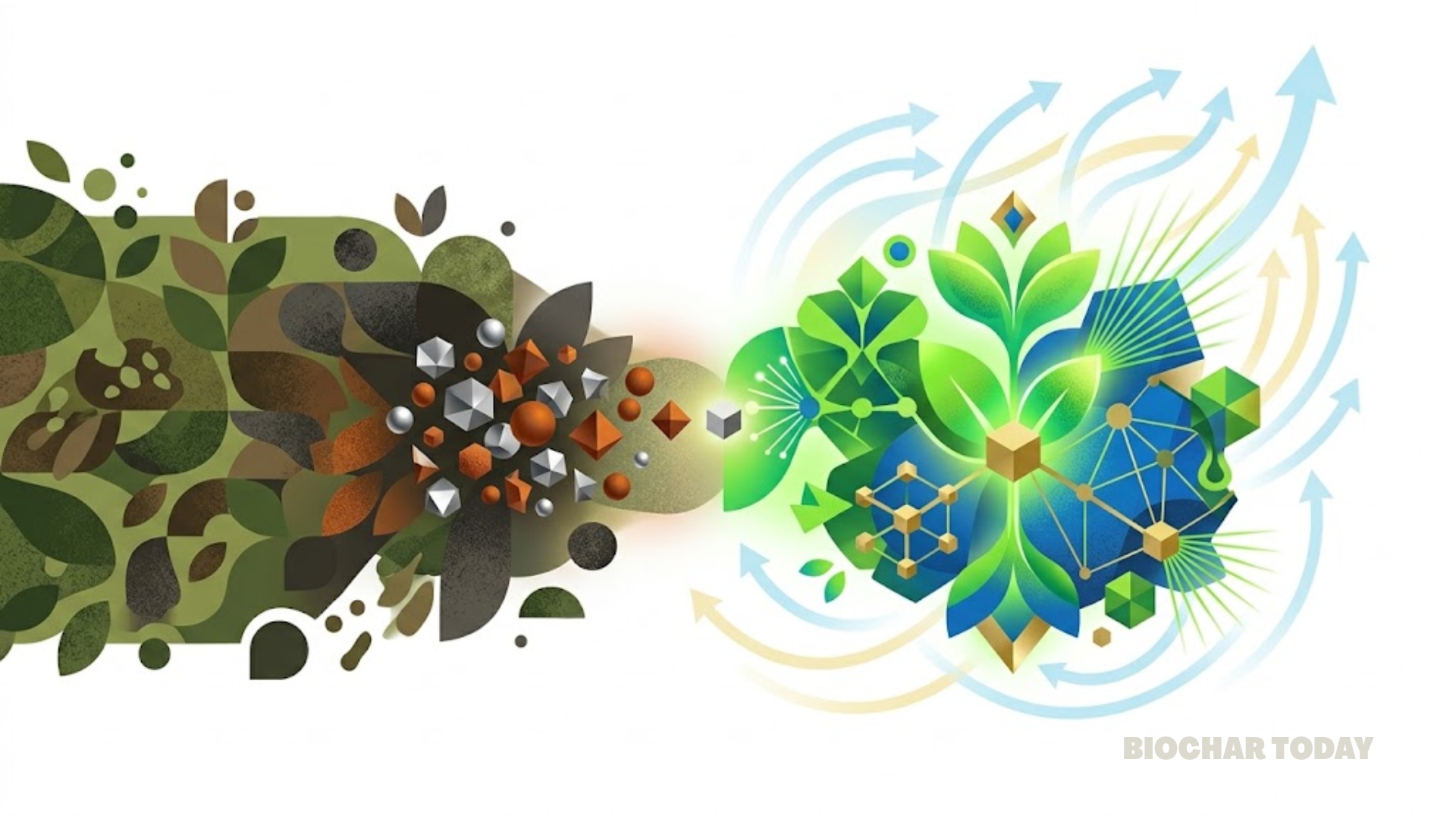
The journal BiocharBiochar is a carbon-rich material created from biomass decomposition in low-oxygen conditions. It has important applications in environmental remediation, soil improvement, agriculture, carbon sequestration, energy storage, and sustainable materials, promoting efficiency and reducing waste in various contexts while addressing climate change challenges. More recently featured research by Mengqiao Wu, Zefeng Ruan, and a multidisciplinary team of scientists who developed a reinforced coating for slow-release fertilizers. Their work addresses the critical environmental challenge of nutrient leachingLeaching is the process where nutrients are dissolved and carried away from the soil by water. This can lead to nutrient depletion and environmental pollution. Biochar can help reduce leaching by improving nutrient retention in the soil. More, where standard fertilizers lose essential elements to water runoff before plants can absorb them. By integrating tea-extract iron nanoparticles into a biodegradable polymer blend of carboxymethyl cellulose and polyvinyl alcohol, the researchers created a high-performance barrier for fertilizer cores made of zeolite and rice straw biochar. This hierarchical structure ensures that nitrogen and phosphorus are released slowly, matching the natural growth cycle of crops while simultaneously providing iron as a beneficial micronutrient.
The primary findings of the study demonstrate that the inclusion of iron nanoparticles fundamentally alters the physical structure of the fertilizer coating. Microscopic analysis revealed that these nanoparticles effectively clog the pores of the polymer matrix, creating a denser and more tortuous pathway for water and nutrients. This physical obstruction significantly slows down the rate at which soil moisture can enter the fertilizer core and the speed at which dissolved nutrients can escape. Quantitative leaching tests showed that the most optimized version of this fertilizer reduced phosphorus loss to just 15.82% and nitrogen loss to 58.47%, vastly outperforming conventional fertilizers that release the majority of their nutrients within the first ten days.
In practical agricultural applications, the benefits of this slow-release system were even more pronounced. During tomato cultivation trials, plants treated with the nanoparticle-reinforced fertilizer grew significantly taller, reaching an average height of 46 centimeters, while those given standard fertilizers reached only about 31 centimeters. The researchers noted that the steady supply of nutrients prevented the growth stagnation often seen with traditional products. Furthermore, the iron-enhanced coating promoted deeper and more robust root development, as the plants did not experience the salt stress typically caused by sudden bursts of fertilizer. This led to a substantial increase in total plant weight, with dry biomassBiomass is a complex biological organic or non-organic solid product derived from living or recently living organism and available naturally. Various types of wastes such as animal manure, waste paper, sludge and many industrial wastes are also treated as biomass because like natural biomass these More exceeding that of standard treatments by 42%.
Soil health also saw a measurable improvement following the application of the new fertilizer. Post-harvest analysis confirmed that the soil retained higher levels of total nitrogen, phosphorus, and potassium compared to areas treated with conventional options. The iron nanoparticles also increased the soil’s cation exchange capacity, which is a key indicator of its ability to hold onto nutrients and prevent them from washing away in the future. Additionally, the coating helped the soil maintain higher moisture levels, which protects plants during dry periods and ensures a stable environment for beneficial soil microbes.
Beyond the farm, this technology offers significant environmental and economic advantages. The research suggests that by improving nitrogen use efficiency, this fertilizer could drastically reduce the release of nitrous oxide, a potent greenhouse gas. In East Asia alone, switching to this sustainable alternative could prevent the emission of up to 17.77 million metric tons of greenhouse gases. From a financial perspective, the production cost of 562.02 dollars per ton makes it a competitive option for industrial-scale manufacturing. The study concludes that using green chemistry to enhance biochar-based fertilizers provides a scalable and effective strategy for modernizing agriculture while protecting the planet’s vital ecosystems.
Source: Wu, M., Ruan, Z., Wu, Y., Cheng, Y., Hong, Y., Gu, Q., Zhang, Y., Wei, J., Zhang, X., Dong, C., Zhao, X., Li, Y., Song, C., & Yu, B. (2026). Green-synthesized iron nanoparticles enhance CMC/PVA coatings for biochar-zeolite slow-release fertilizers. Biochar, 8(1), 80.



Leave a Reply