
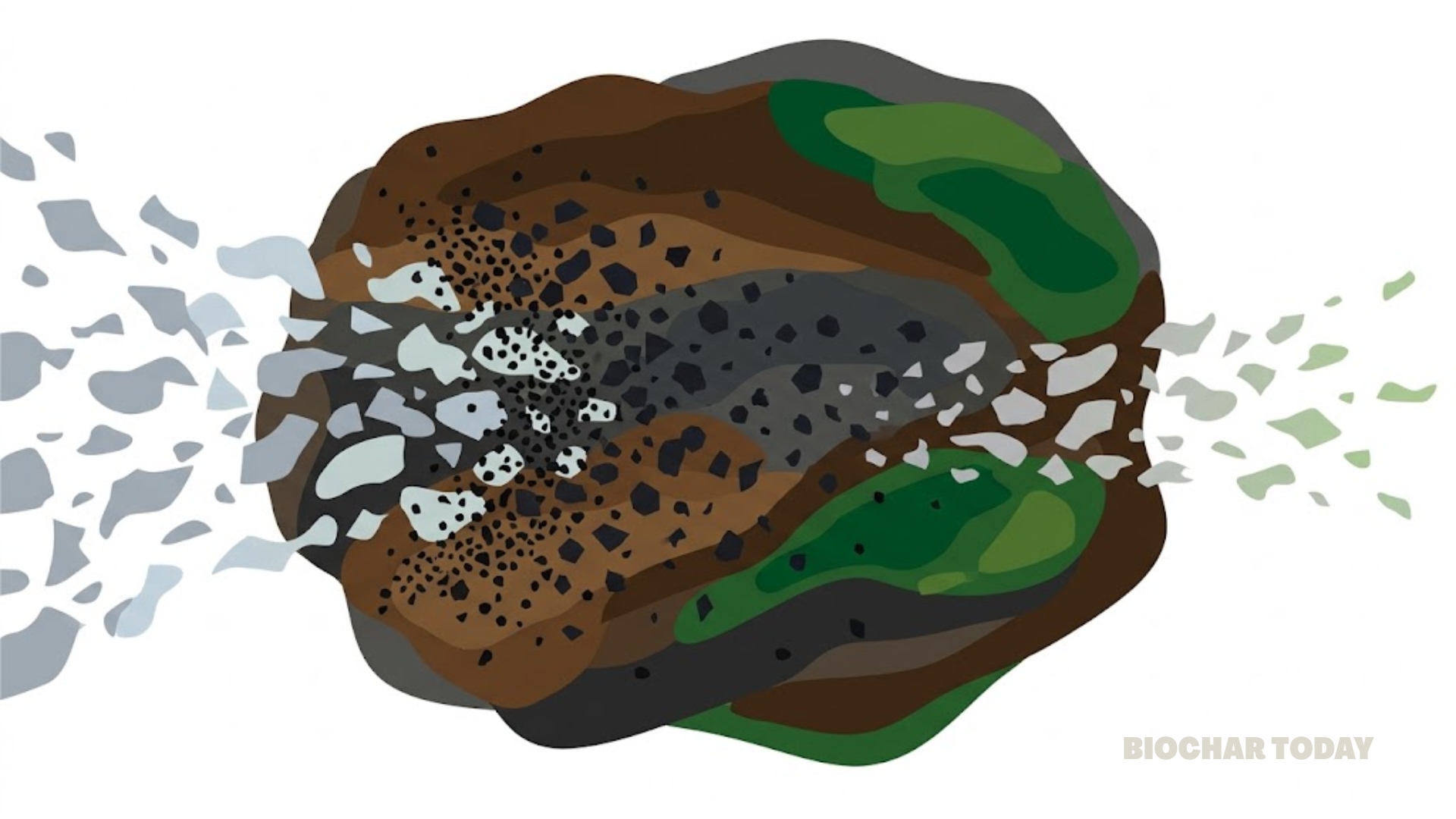
Key Takeaways
- Studies show that using biocharBiochar is a carbon-rich material created from biomass decomposition in low-oxygen conditions. It has important applications in environmental remediation, soil improvement, agriculture, carbon sequestration, energy storage, and sustainable materials, promoting efficiency and reducing waste in various contexts while addressing climate change challenges. More made from crop waste can cut harmful greenhouse gas emissions from farm soil in half.
- The best way to use biochar depends on local conditions like the amount of fertilizer used and the local weather.
- In areas with high rainfall, biochar made at higher temperatures works best to protect the soil.
- Using these strategies not only helps the environment but can also significantly increase the amount of food grown by farmers.
- Customizing biochar use for each specific region is the key to getting the best results for the planet.
The scientific journal Biochar recently published an extensive investigation by Qingrui Wang, Dunxue Yao, Xinyi Tang, and a team of researchers regarding the potential for straw-derived biochar to mitigate nitrous oxide emissions in China. Nitrous oxide is a potent greenhouse gas, and agricultural soils are one of its primary sources. While biochar has long been recognized for its ability to store carbon, this study shifts the focus toward its role in actively reducing soil-based emissions. The researchers conducted a detailed spatial analysis to determine how different regions in China could maximize the environmental benefits of biochar by adjusting application rates and the temperatures at which the biochar is produced.
The findings demonstrate that a one-size-fits-all approach to biochar application limits its true potential. Under ideal conditions, which assume unlimited access to crop residues, the nationwide reduction in nitrous oxide emissions could reach approximately 50%. Even under realistic constraints where crop straw is limited, the researchers estimated that 36% of these emissions could still be avoided. This suggests that biochar could offset roughly 0.18 to 0.27 teragrams of nitrogen per year, a substantial contribution to meeting climate targets.
A critical discovery of the study is the identification of the primary drivers that determine biochar’s effectiveness. Nitrogen fertilizer application rates and existing soil organic carbon content were found to be the dominant factors in deciding how much biochar should be added to a field. For example, in regions with low soil carbon, more biochar is needed to provide the carbon sources required for soil microbes to complete the conversion of nitrous oxide into harmless nitrogen gas. Conversely, water input—which includes both rain and irrigation—is the most important factor in determining the ideal properties of the biochar itself, such as its pHpH is a measure of how acidic or alkaline a substance is. A pH of 7 is neutral, while lower pH values indicate acidity and higher values indicate alkalinity. Biochars are normally alkaline and can influence soil pH, often increasing it, which can be beneficial More level.
The researchers also explored the impact of pyrolysisPyrolysis is a thermochemical process that converts waste biomass into bio-char, bio-oil, and pyro-gas. It offers significant advantages in waste valorization, turning low-value materials into economically valuable resources. Its versatility allows for tailored products based on operational conditions, presenting itself as a cost-effective and efficient More temperature, which is the heat used to create biochar from straw. For rice-straw biochar, which showed the highest overall mitigation potential, higher production temperatures around 700 degrees Celsius were found to be most effective in most regions. This is because high-temperature biochar typically has a higher pH, which helps neutralize acidic soils and facilitates a more complete chemical reaction in the soil. In contrast, wheat and maize-straw biochar often performed better when produced at more moderate temperatures between 400 and 500 degrees Celsius.
Beyond the environmental benefits, the study indicates that these optimal biochar strategies could lead to significant increases in crop productivity. National average yields were estimated to rise by 59% for rice and as much as 82% for wheat and maize when the recommended biochar treatments were applied. This creates a powerful incentive for the agricultural sector, as biochar can simultaneously restore soil health, increase food security, and serve as a cost-effective method for atmospheric carbon removal.
The spatial patterns revealed in the study show that provinces like Jiangsu, Shanghai, and Henan are particularly well-suited for biochar projects, showing the highest potential for both emission reduction and yield improvement. While the researchers acknowledge that their study focused solely on nitrous oxide, the methodology provides a blueprint for future work that could include other greenhouse gases like methane and carbon dioxide. Ultimately, this research provides stakeholders and policymakers with the data needed to develop site-specific strategies that maximize the ecological and economic value of transforming agricultural waste into biochar.
Source: Wang, Q., Yao, D., Tang, X., Zhu, D., Sun, Y., Zhang, H., Yang, Q., Yang, H., Chen, H., & Mašek, O. (2026). Maximizing nitrous oxide mitigation potential of straw-derived biochar in China with optimal application strategies. Biochar, 8(1), 1.


Leave a Reply