
Key Takeaways
- A new material made from leftover agricultural stalks and discarded eggshells effectively cleans pharmaceutical pollutants out of contaminated water supplies.
- The sustainable material can be repeatedly cleaned and reused while maintaining the vast majority of its original cleaning power.
- Higher processing temperatures during water treatment expand the binding efficiency, allowing for greater overall removal of broad-spectrum antibiotics.
- Computer modeling algorithms successfully identify that initial contaminant levels and filter dosage dictate the operational success of the system.
- Environmental assessments show that utilizing clean energy sources during manufacturing can significantly reduce the overall carbon footprint.
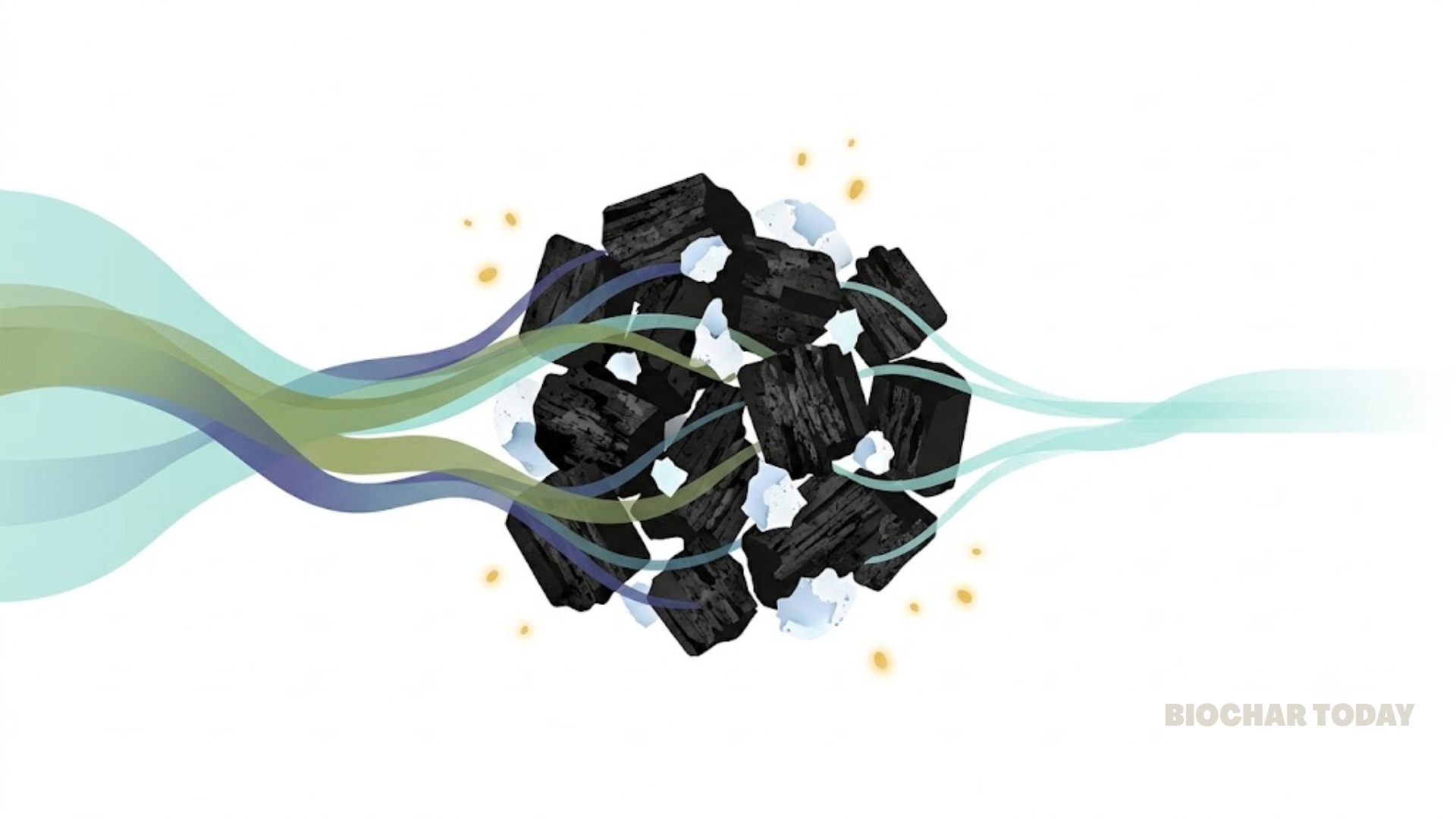
The pervasive occurrence of residual antibiotics across global environmental matrices presents a severe threat to public health and aquatic ecosystems. In a new paper published in the journal BiocharBiochar is a carbon-rich material created from biomass decomposition in low-oxygen conditions. It has important applications in environmental remediation, soil improvement, agriculture, carbon sequestration, energy storage, and sustainable materials, promoting efficiency and reducing waste in various contexts while addressing climate change challenges. More, lead author Chong Liu and a team of international co-authors demonstrate a sustainable solution to this ecological challenge by recycling common municipal and agricultural waste streams into high-performance filter materials. The researchers successfully developed an advanced engineered adsorbent by utilizing discarded cotton stalks as a structural foundation and waste eggshells as a natural calcium booster. This base material was subsequently functionalized with a specialized starch derivative known as beta-cyclodextrin using rapid, energy-efficient microwave heating. The resulting hybrid composite was deployed to eliminate tetracycline, a broad-spectrum antibiotic heavily utilized in livestock farming and commercial aquaculture, from contaminated water supplies.
The experimental findings indicate that this multi-element composite yields outstanding remediation results under realistic water purification benchmarks. The engineered material achieved its finest cleaning efficiency at a slightly acidic chemical threshold, specifically hovering around a value of six. This chemical baseline allows the organic and metallic components of the filter to maintain a favorable electrical state, facilitating immediate contact with the dissolved antibiotic molecules. When the water temperature was raised, the maximum binding capacity expanded systematically, climbing from over one hundred and forty-two milligrams per gram at room temperature to nearly one hundred and sixty-two milligrams per gram under higher thermal conditions. This expanding behavior proves that the purification reaction behaves endothermically, meaning that mild warmth actively assists the internal structures in freeing up localized active sites and maximizing overall uptake.
Furthermore, the composite demonstrated excellent practical robustness when challenged with complex wastewater conditions. Real-world water contains a wide variety of dissolved minerals and organic matter that typically clog ordinary carbon filters. However, the newly developed material showed high tolerance to common coexisting minerals like sodium, potassium, and magnesium. On the other hand, the tests revealed specific competitive interactions with certain chemical species. Trivalent metals like dissolved iron and complex organic molecules like humic acid caused a more pronounced reduction in antibiotic uptake. This occurred because these heavy background compounds actively bind with the antibiotic molecules in the bulk liquid or physically mask the micro-scale openings on the filter surface, reducing the immediate path availability for target contaminants.
Crucially, the study validated that the material possesses high reusability, which represents a primary requirement for commercial engineering deployment. Saturated filters were systematically regenerated using a mild alkaline washing solution of sodium hydroxide, which triggers local structural adjustments that force the trapped antibiotics to detach. Over five consecutive chemical recycling runs, the composite successfully retained between eighty-four and eighty-six percent of its initial cleaning capacity. Advanced electronic examinations and quantum-level calculations confirmed that this high level of performance is driven by a cooperative relationship between the distinct materials. While the calcium clusters derived from eggshells provide highly stable areas for direct metal coordination, the grafted organic ring structures supply specialized cavities that physically trap the molecular segments of the antibiotic.
To support the real-world scale-up of this technology, the authors combined their wet-lab experiments with advanced predictive software and environmental lifecycle calculations. Among multiple computer modeling options, a gradient boosting decision tree model achieved the most accurate simulations, yielding a test-set coefficient of determination above ninety-nine percent. This data-driven model pinpointed the initial antibiotic concentration, total filter dosage, and overall contact time as the three most critical operational variables for predicting final performance. Simultaneously, a holistic lifecycle assessment tracked the total ecological burden of the manufacturing process. The production stage generated roughly five and a half kilograms of carbon dioxide equivalents per kilogram of finished material. The environmental data highlighted electricity consumption from traditional grid infrastructure as the single largest carbon hotspot, accounting for over sixty-two percent of the overall warming impact.
Consequently, the researchers conclude that this advanced biochar platform offers an economically viable and highly reproducible strategy for managing pharmaceutical pollution. Maintaining local supply networks for the raw agricultural byproducts and incorporating industrial waste-heat recycling can limit production costs to approximately one dollar and twenty cents per kilogram. This budget falls squarely within the market price limits of commercial activated carbons while offering vastly superior chemical versatility. By transitioning the initial manufacturing units to renewable power configurations and continuing to optimize the chemical mixture of eggshells and cotton stalks, this treatment pathway can deliver large-scale, sustainable water protection in full alignment with international environmental development goals.
Source: Liu, C., Crini, G., Bello-Mendoza, R., Wilson, L. D., Jawad, A. H., Balasubramanian, P., Nguyen, X. C., Zheng, Q., & Li, F. (2026). Microwave-assisted β-cyclodextrin modified calcium-rich biochar for tetracycline removal from wastewater: mechanistic, machine learning, density functional theory calculations and life cycle assessment. Biochar, 8, 124.





Leave a Reply