
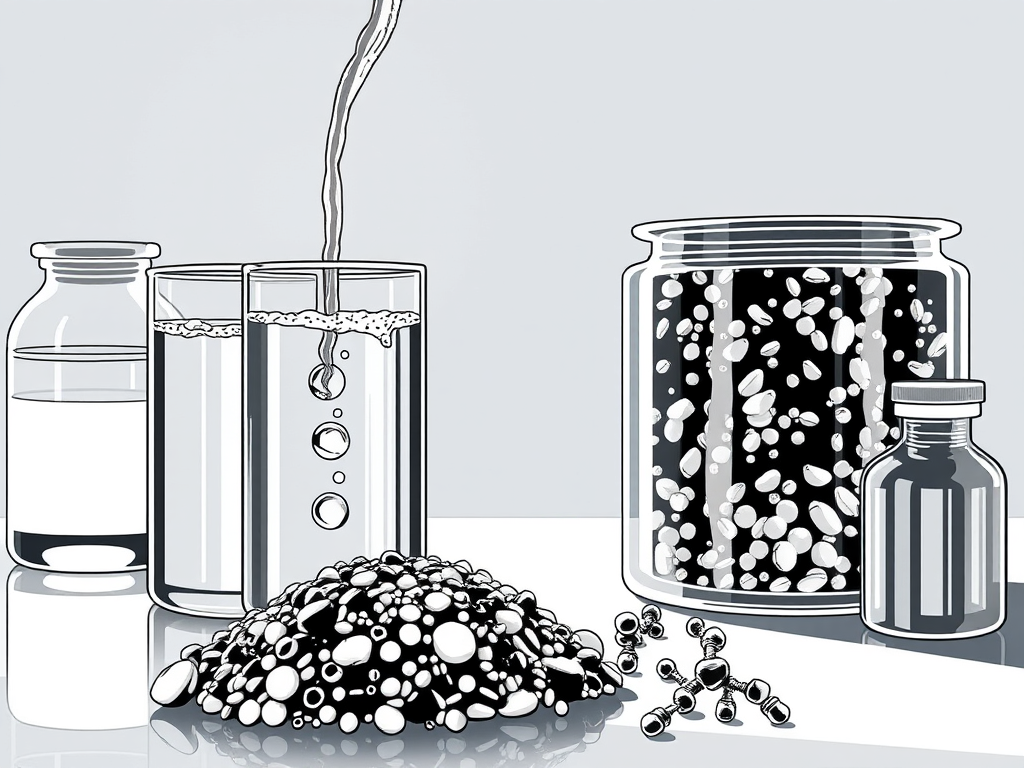
Antimony (Sb) pollution in water is a growing environmental concern, primarily due to widespread industrial activities and mining. This heavy metal poses serious health risks, including reproductive damage and neurological toxicity, leading to its classification as a priority pollutant by environmental agencies like the U.S. Environmental Protection Agency (USEPA). Addressing this challenge, a study by Xueyi Shen, Siyi Ma, and Siqin Xu, published in ACS Omega, introduces a highly effective and recyclable solution: zirconium-modified peanut shell biocharBiochar is a carbon-rich material created from biomass decomposition in low-oxygen conditions. It has important applications in environmental remediation, soil improvement, agriculture, carbon sequestration, energy storage, and sustainable materials, promoting efficiency and reducing waste in various contexts while addressing climate change challenges. More (ZrBC).
Traditional methods for antimony removal, such as membrane separation and flocculation, often have limitations. Adsorption, however, stands out due to its high capacity, cost-effectiveness, and minimal secondary pollution. Zirconium, known for its high coordination ability, strong ionic affinity, and stability across a wide pHpH is a measure of how acidic or alkaline a substance is. A pH of 7 is neutral, while lower pH values indicate acidity and higher values indicate alkalinity. Biochars are normally alkaline and can influence soil pH, often increasing it, which can be beneficial More range, is an excellent candidate for adsorption materials. Previous research showed zirconium-based metal-organic frameworks could remove significant amounts of antimony, but their practical application was hindered by difficulties in immobilization, separation, and recycling. This is where biochar (BC) comes in. As an inexpensive and environmentally friendly porous adsorbent, biochar can be effectively modified to load functional materials like zirconium, enhancing its adsorptive capabilities, especially for anionic substances like antimonate.
The researchers prepared ZrBC from peanut shells, an agricultural waste, by modifying the biochar with zirconium oxychloride. Their comprehensive investigation included assessing the impact of various environmental factors on antimony(V) adsorption, evaluating the material’s recycling capacity, and studying its performance in real wastewater, all while unraveling the underlying removal mechanisms. The results highlight ZrBC’s superior performance compared to unmodified biochar. The maximum adsorption capacity of antimony(V) by ZrBC reached an impressive 72.34 mg/g at 45∘C. Adsorption isotherm analyses indicated that antimony(V) adsorption by ZrBC primarily followed a multilayer adsorption mechanism, consistent with the Freundlich model. Kinetic studies further revealed that the adsorption process was predominantly chemisorptive, meaning strong chemical bonds are formed between the antimony ions and the adsorbent surface.
The material demonstrated remarkable reusability and stability. After four reuse and adsorption-desorption cycles, ZrBC maintained a 100% removal rate of antimony(V), with a desorption amount of 6.16 mg/g. This indicates its long-term viability and potential for repeated use in wastewater treatment applications. In practical tests using actual antimony mine wastewater, ZrBC successfully adsorbed 6.97 mg/g of antimony, even in the presence of competing ions like chloride and sulfate, which are common in real-world effluents. When the ZrBC dosage was increased to 0.3125 g/L, the residual antimony concentration in the treated wastewater dropped to 0.19 mg/L, falling below China’s emission limit of 0.3 mg/L (GB 30770-2014).
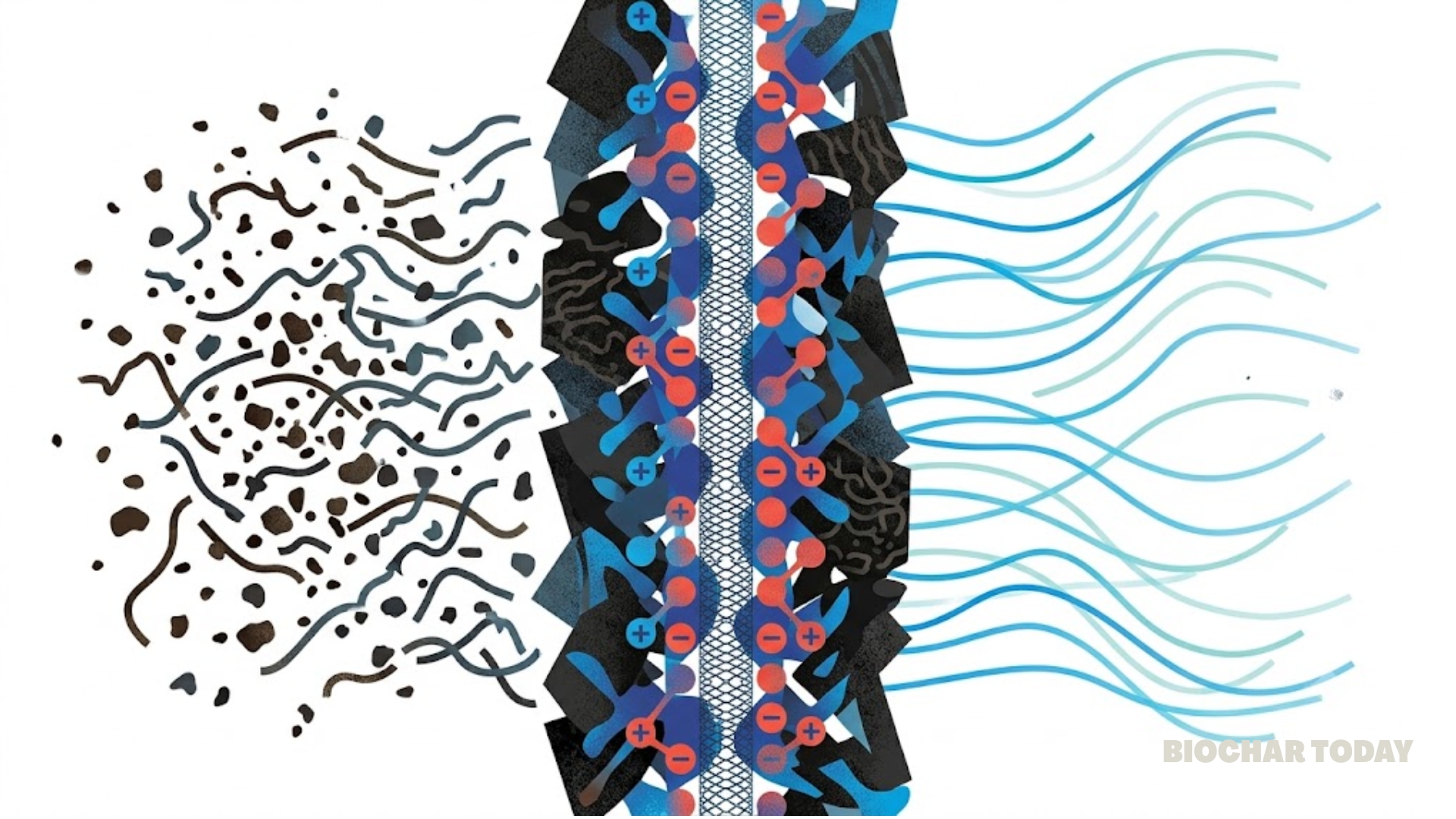
Further characterization, including FT-IR and XPS analyses, revealed the primary mechanisms behind ZrBC’s high adsorption efficiency. These include ligand exchange, where ligands on the ZrBC surface are replaced by antimony ions; complexation, forming stable complexes with zirconium; electrostatic interaction between the positively charged ZrBC surface (under acidic conditions) and negatively charged antimonate ions; and hydrogen bonding. Pore filling also plays a role, with the material’s rich pore structure providing abundant adsorption sites.
While the findings are promising, future research will focus on enhancing adsorptive properties under complex environmental conditions and evaluating ZrBC’s performance under dynamic flow, which would more accurately simulate real-world scenarios. This innovative use of agricultural waste to create a highly efficient and reusable adsorbent offers a sustainable and practical approach to mitigating antimony pollution in water resources.
Source: Shen, X., Ma, S., & Xu, S. (2025). Adsorption Performance and Mechanism of Low Antimonate Concentrations in Water by Zirconium- Modified Biochar .ACS Omega.




Leave a Reply