
Key Takeaways
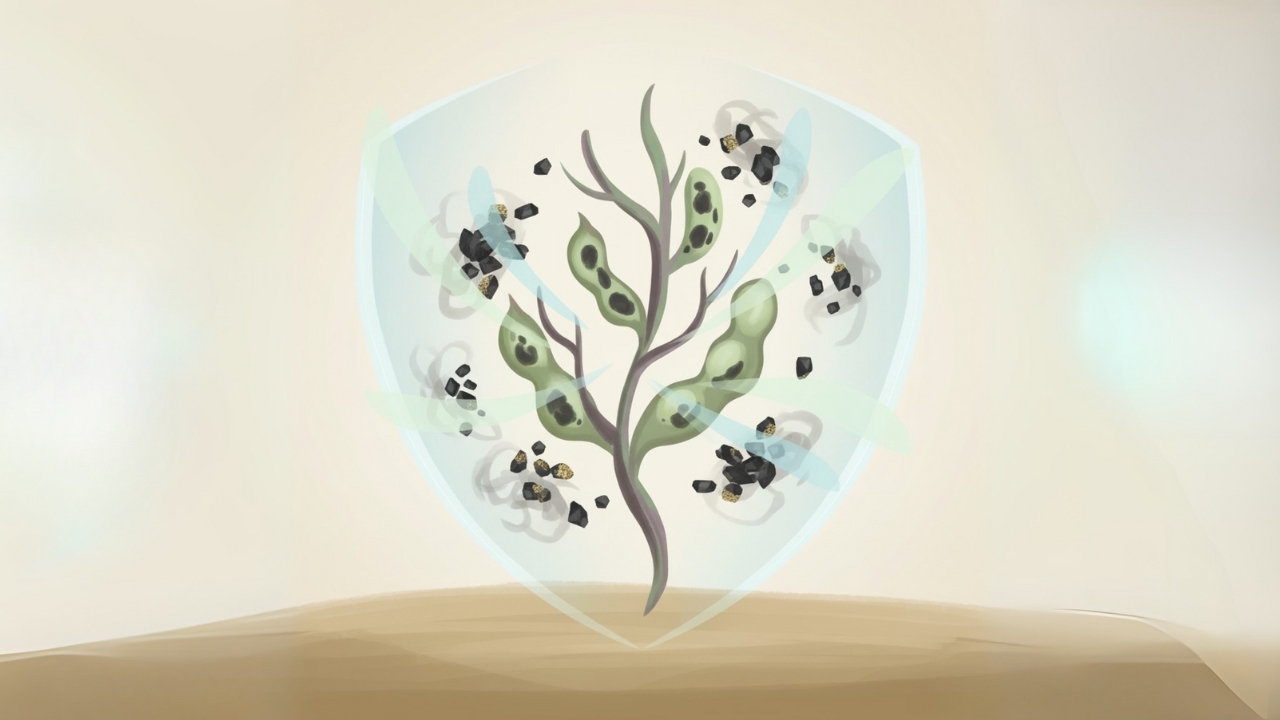
- Powerful, Eco-Friendly Protection: Corncob nano-biochar (CCNB) is an all-natural soil amendmentA soil amendment is any material added to the soil to enhance its physical or chemical properties, improving its suitability for plant growth. Biochar is considered a soil amendment as it can improve soil structure, water retention, nutrient availability, and microbial activity. More that can significantly reduce the severity of the common faba bean fungal disease, Rhizoctonia stem canker, by as much as 62.43%.
- Boosts Plant Immunity: The nano-biochar works by dramatically increasing the plant’s natural defenses, specifically boosting the production of protective chemicals (total phenols) by over 45% in infected plants.
- Higher Crop Survival: The treatment led to a sharp increase in plant survival, with one fungal strain seeing survival jump by over 66% compared to untreated plants.
- Bigger, Healthier Plants: Even when infected, plants grown with CCNB were larger and healthier, with shoot dry weight increasing by up to 73.44% and plant height increasing by nearly 40%.
- Enhanced Nutrition: The nano-biochar helps plants absorb more vital nutrients like Nitrogen and Phosphorus, which are essential for growth and yield.
In a significant advance for sustainable agriculture, a new study published in Future Perspectives of Medical, Pharmaceutical and Environmental Biotechnology demonstrates the power of nanotechnology to protect a vital food crop. Researchers Amira Magdy, Gamal A. G. Ammar, Sayed S. Aboshosha, and Sobhy S. H. Abdelsalam investigated how nano-biochar, a highly refined soil amendment, could combat the destructive fungal pathogen Rhizoctonia solani in faba beans (Vicia faba). Faba bean is a crucial global legume, prized for its high protein content (28-30%), but its production in countries like Egypt is constantly challenged by soil-borne diseases such as Rhizoctonia stem canker. This research focused on a specific type of nano-biochar—corncob nano-biochar (CCNB)—and confirmed its effectiveness as a dual-action tool: a potent disease suppressant and a powerful growth promoter.
The scientists first confirmed the virulence of two local isolates of the fungus, named Isol and Iso2, on the faba bean variety ‘Maryout2,’ with Iso2 proving the more aggressive strain, causing an 85.55% disease severity. They then tested CCNB’s ability to directly inhibit the pathogen in a lab setting. The results were compelling: a concentration of just 0.5% CCNB was the most effective against both isolates, causing the lowest fungal fresh and dry weights compared to other concentrations and a second type of nano-biochar made from sugarcane bagasse. This direct inhibitory effect suggests CCNB has intrinsic antifungal properties.
The most striking results came from the pot experiments, where the nano-biochar was mixed with the soil. Faba bean plants grown in soil amended with 0.5% CCNB showed a dramatic increase in defense and survival against the fungus. Disease severity—a measure of the lesion area on the hypocotyl and roots—decreased by 62.43% in plants infected with the less aggressive Isol, and by 44.61% with the more aggressive Iso2, when compared to infected plants grown without the amendment. This reduction directly correlates with a significantly higher survival ratio, which increased by 66.66% and 50.02% for the Isol and Iso2 infections, respectively.
A key mechanism behind this improved resistance is the activation of the plant’s own defense system. The total phenolic content—chemical compounds plants produce to ward off pathogens—soared in the infected, CCNB-treated plants. This critical defense mechanism was boosted by 45.26% against Iso2 and by 16.41% against Isol compared to their non-amended counterparts. The use of nano-biochar essentially turned the faba bean plants into better fighters against the fungal attack.
Beyond disease management, 0.5% CCNB acted as a strong growth promoter, significantly enhancing key plant growth parameters. In infected plants, the application of CCNB led to a substantial improvement in fresh and dry weights for both shoots and roots. For plants infected with the highly virulent Iso2, shoot fresh weight increased by an impressive 60.41%, and shoot dry weight jumped by 73.44%. Plant height also saw a nearly 40% increase. This generalized improvement in health is linked to the CCNB’s positive effects on the soil’s physicochemical properties.
A major factor in this growth boost is enhanced nutrient uptake and photosynthesis. CCNB-amended soil led to a clear increase in the essential macro-nutrients nitrogen (N), phosphorus (P), and potassium (K) in both the shoot and root tissues. For instance, in plants infected with Isol, the total N content in the shoot increased by over 44%, and total P content increased by 50%. Additionally, CCNB treatment significantly increased the concentration of photosynthetic pigments, with total chlorophyll content increasing in non-infected plants by 33.01%. This growth-promoting aspect ensures that farmers not only save their crops from disease but also benefit from higher yields and better-quality plants.
Source: Magdy, A., Ammar, G. A. G., Aboshosha, S. S., & Abdelsalam, S. S. H. (2025). Evaluation of Faba Bean (Vicia faba) Resistance to Rhizoctonia solani Infection in Soil Amended with Nano-Biochar under Controlled Conditions. Future Perspectives of Medical, Pharmaceutical and Environmental Biotechnology, 2(2), 1–12.



Leave a Reply