
A recent paper in RSC Advances, authored by Seyed Jamaleddin Peighambardoust, Somayyeh Rezaei-Aghdam, Javaneh Sakhaei Niroumand, Parisa Mohammadzadeh Pakdel, and Mika Sillanpää, presents a highly effective method for removing methylene blue (MB) dye from water using a novel nanocomposite adsorbent. This research is critical because water contamination by organic dyes is a significant global issue, with toxic chemicals and industrial wastewater posing a threat to aquatic ecosystems and human health. The textile industry, for instance, is responsible for about 15% of the total worldwide production of dyes discharged in wastewater. Methylene blue, a common cationic dye used in various industries, can cause severe health problems if it enters the human body. The study focuses on using adsorption as a promising and cost-effective technique for water purification.
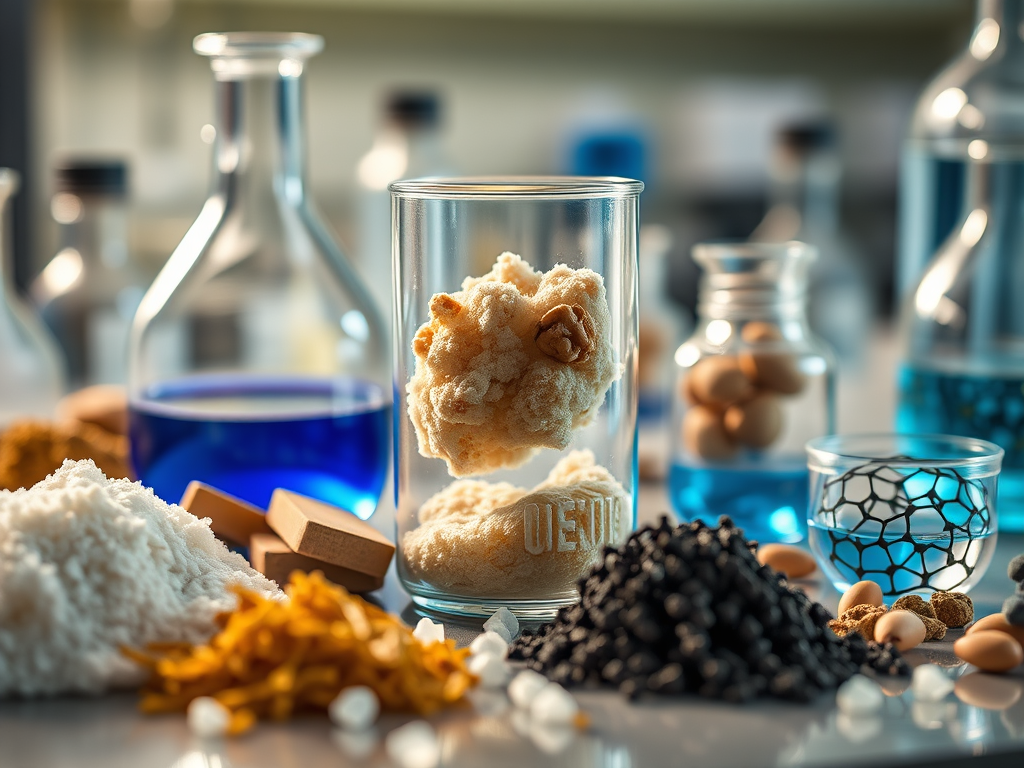
The team developed a new hydrogel-based adsorbent, leveraging a free radical polymerization approach to create a carboxymethyl cellulose-grafted poly(acrylamide) hydrogel (Hyd). To enhance its performance, they incorporated different materials: biocharBiochar is a carbon-rich material created from biomass decomposition in low-oxygen conditions. It has important applications in environmental remediation, soil improvement, agriculture, carbon sequestration, energy storage, and sustainable materials, promoting efficiency and reducing waste in various contexts while addressing climate change challenges. More from walnut shells (WS), magnetic biochar (WS/CoFe_2O_4), and magnetic biochar decorated with ZIF-67 (WS/CoFe_2O_4/ZIF−67). The use of walnut shells is particularly notable as it provides an inexpensive and readily available precursor for producing biochar. Magnetic nanoparticles like CoFe_2O_4 were chosen for their large surface area and the ease with which they can be separated from the water using a magnetic field. The addition of Zeolitic imidazolate frameworks (ZIFs), specifically ZIF-67, further improved the adsorbent’s surface area, porosityPorosity of biochar is a key factor in its effectiveness as a soil amendment and its ability to retain water and nutrients. Biochar’s porosity is influenced by feedstock type and pyrolysis temperature, and it plays a crucial role in microbial activity and overall soil health. Biochar More, and stability.
The researchers systematically investigated how different factors influence the adsorbent’s performance. They found that increasing the amount of filler particles up to 10% by weight significantly improved the removal efficiency. The best results were achieved at an optimal pHpH is a measure of how acidic or alkaline a substance is. A pH of 7 is neutral, while lower pH values indicate acidity and higher values indicate alkalinity. Biochars are normally alkaline and can influence soil pH, often increasing it, which can be beneficial More of 10, an adsorbent dose of 1 g L−1, a contact time of 50 minutes, and a temperature of 25 °C. Under these conditions, the removal efficiency of the adsorbents increased with each added component: Hyd (85.74%), Hyd/WS (91.74%), Hyd/WS/CoFe_2O_4 (95.83%), and the most advanced composite, Hyd/WS/CoFe_2O_4/ZIF−67 (97.72%). The superior performance of the final composite is linked to its improved surface area and increased functional groups that can interact with the dye molecules.
Further analysis of the adsorption process revealed several key insights. The study’s kinetic data best fit a pseudo-second-order model, suggesting that the primary mechanism for MB removal is chemisorption, which involves chemical bonding between the adsorbent and the dye molecules. The equilibrium data aligned with the Freundlich isotherm model, indicating that the adsorption of methylene blue occurs in multiple layers on the adsorbent’s surface. A thermodynamic study confirmed that the process is both spontaneous and exothermic, meaning it releases heat and does not require a continuous energy input to proceed. This exothermic nature also explains why higher temperatures decrease the removal efficiency, as the heat can weaken the bonds formed during adsorption.
The researchers also tested the adsorbent’s reusability, a crucial factor for practical applications. The Hyd/WS/CoFe_2O_4/ZIF−67 composite maintained a high removal performance for up to five cycles, with the efficiency gradually decreasing after that. The decrease is likely due to the blockage of active sites and the physical breakdown of the adsorbent’s structure over multiple uses.
This study demonstrates the potential of these novel nanocomposite adsorbents, especially the Hyd/WS/CoFe_2O_4/ZIF−67 composite, for effective wastewater treatment. The findings provide a clear, science-backed approach to tackling water pollution caused by industrial dyes, offering a promising solution that is both efficient and can be reused multiple times.
Source: Peighambardoust, S. J., Rezaei-Aghdam, S., Niroumand, J. S., Pakdel, P. M., & Sillanpää, M. (2025). Efficient methylene blue elimination from water media by nanocomposite adsorbent-based carboxymethyl cellulose-grafted poly(acrylamide)/magnetic biochar decorated with ZIF-67. RSC Advances, 15(32), 32407–32423.



Leave a Reply