
In an era where clean water is paramount for human health and environmental balance, the quest for efficient and sustainable wastewater treatment methods is more urgent than ever. A recent review in the Journal of Chemical Reviews by Jana Rammal, Anis Daou, Dalia EL Badan, Zaher Abdel Baki, Salem Darwich, Wassim Rammal, and Akram Hijazi, explores various natural and synthetic materials, offering a comparative analysis of their effectiveness, costs, and environmental footprints in treating wastewater. The study, published in June 2025, provides valuable insights into how different adsorbents perform, highlighting the path toward more effective and sustainable solutions.
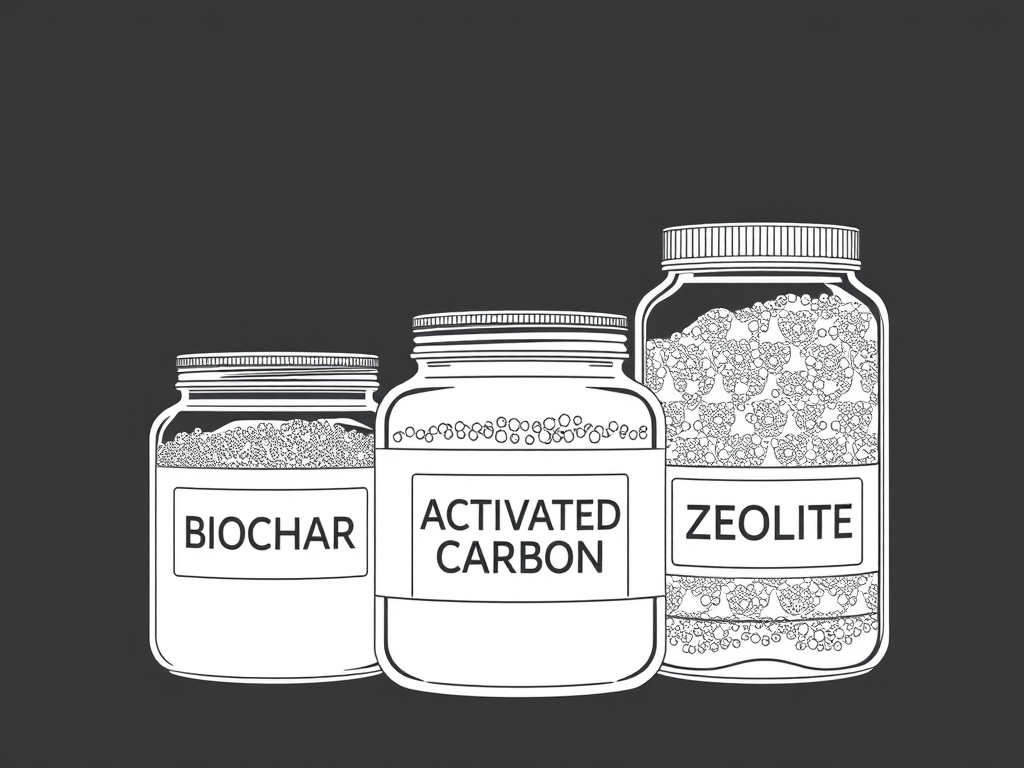
Activated carbonActivated carbon is a form of carbon that has been processed to create a vast network of tiny pores, increasing its surface area significantly. This extensive surface area makes activated carbon exceptionally effective at trapping and holding impurities, like a molecular sponge. It is commonly More, a long-standing champion in wastewater treatment, continues to hold the largest market share at 40%. Its exceptional adsorption capacity, driven by a large surface area and porosityPorosity of biochar is a key factor in its effectiveness as a soil amendment and its ability to retain water and nutrients. Biochar’s porosity is influenced by feedstock type and pyrolysis temperature, and it plays a crucial role in microbial activity and overall soil health. Biochar More, makes it highly effective in removing a wide array of organic pollutants and heavy metals. Produced from various organic materials, including agricultural waste, activated carbon’s versatility and proven efficiency solidify its leading position. However, its production and regeneration can be energy-intensive and costly, raising environmental and economic concerns. For instance, the activation process often requires temperatures as high as 900∘C.
Following activated carbon, zeolites capture 25% of the wastewater treatment market. These crystalline microporous materials are highly valued for their excellent ion exchange and selective adsorption properties. Their unique framework, composed of aluminosilicate tetrahedra, allows for the selective removal of specific contaminants like ammonium, phosphorus, and heavy metals such as lead and cadmium. Natural zeolites are also relatively low in cost and boast a high regeneration potential, contributing to their growing popularity in environmental applications. Despite natural variations in composition affecting consistent performance, their targeted efficacy makes them a strong contender.
BiocharBiochar is a carbon-rich material created from biomass decomposition in low-oxygen conditions. It has important applications in environmental remediation, soil improvement, agriculture, carbon sequestration, energy storage, and sustainable materials, promoting efficiency and reducing waste in various contexts while addressing climate change challenges. More is emerging as a promising green alternative, holding 15% of the market share. Its production from renewable resources like agricultural and forest waste promotes biomassBiomass is a complex biological organic or non-organic solid product derived from living or recently living organism and available naturally. Various types of wastes such as animal manure, waste paper, sludge and many industrial wastes are also treated as biomass because like natural biomass these More utilization and waste reduction, contributing to carbon sequestration and climate change mitigation. Biochar’s moderate adsorption capacity makes it effective for nutrient recovery and organic pollutant removal. Compared to activated carbon and nanomaterials, biochar generally has a lower production cost, enhancing its accessibility, especially in developing nations. However, its performance can vary significantly depending on the feedstockFeedstock refers to the raw organic material used to produce biochar. This can include a wide range of materials, such as wood chips, agricultural residues, and animal manure. More and pyrolysis conditionsThe conditions under which pyrolysis takes place, such as temperature, heating rate, and residence time, can significantly affect the properties of the biochar produced. More, leading to inconsistencies in adsorption efficiency. Despite these limitations, its sustainability benefits position it as a significant material for future wastewater treatment.
Plant powders and nanomaterials each account for 10% of the market. Plant powders, sourced from agricultural waste, are inexpensive and eco-friendly, making them attractive for low-resource settings, particularly for removing turbidity and pathogens. However, their adsorption capacity for heavy metals and organic pollutants is generally lower compared to synthetic materials, and their regeneration potential is limited, often making them single-use. Nanomaterials, engineered at the nanoscale, offer exceptional efficiency due to their high surface area-to-volume ratio and catalytic properties. They are highly effective in advanced treatment processes like photocatalysis and disinfection, capable of removing complex and advanced contaminants. Despite their high performance, nanomaterials face significant hurdles, including high production costs, limited regeneration methods, and concerns regarding potential toxicity and environmental persistence, which restrict their widespread application.
The review concludes that while each material—plant powders, activated carbon, biochar, zeolite, and nanomaterials—offers unique advantages and limitations, the future of wastewater treatment lies in developing hybrid systems. Combining the cost-effectiveness and environmental sustainability of natural materials with the high efficiency of advanced technologies, such as nanomaterials, could pave the way for sustainable, scalable, and high-performance wastewater treatment solutions. Such integrated approaches promise to optimize the strengths of different materials, leading to more comprehensive and effective contaminant removal.
Source: Rammal, J., Daou, A., El Badan, D., Baki, Z. A., Darwich, S., Rammal, W., & Hijazi, A. (2025). Comparative Analysis of Natural and Synthetic Materials for Wastewater Treatment: Plant Powders, Activated Carbon, Biochar, Zeolite, and Nanomaterials. Journal of Chemical Reviews, 7(4), 566-590.



Leave a Reply