

In the heart of Italy, a quiet revolution is brewing in the field of soil remediation. Elisabetta Loffredo and her team at the University of Bari Aldo Moro are exploring the remarkable potential of biocharBiochar is a carbon-rich material created from biomass decomposition in low-oxygen conditions. It has important applications in environmental remediation, soil improvement, agriculture, carbon sequestration, energy storage, and sustainable materials, promoting efficiency and reducing waste in various contexts while addressing climate change challenges. More, a charcoal-like substance, in tackling the pervasive problem of organic soil pollutants. Their research, published in the journal Soil Systems, focuses on a specific type of biochar produced through the innovative pyrogasification process.
Pyrogasification, a cutting-edge technology, involves heating biomassBiomass is a complex biological organic or non-organic solid product derived from living or recently living organism and available naturally. Various types of wastes such as animal manure, waste paper, sludge and many industrial wastes are also treated as biomass because like natural biomass these More in a controlled environment to produce a gas that can be used as fuel. What makes this process particularly appealing is its byproduct: biochar. This biochar, derived from the pyrogasification of wood chips in this study, is rich in carbon and possesses a unique structure that makes it an exceptional biosorbent. The research team put this pyrogasification biochar to the test against two common agrochemicals: the fungicide penconazole and the herbicide S-metolachlor. These chemicals, widely used in agriculture, can persist in the soil, posing potential threats to ecosystems and human health. Additionally, they included bisphenol A (BPA), an industrial chemical found in various plastics and resins, known for its endocrine-disrupting effects.
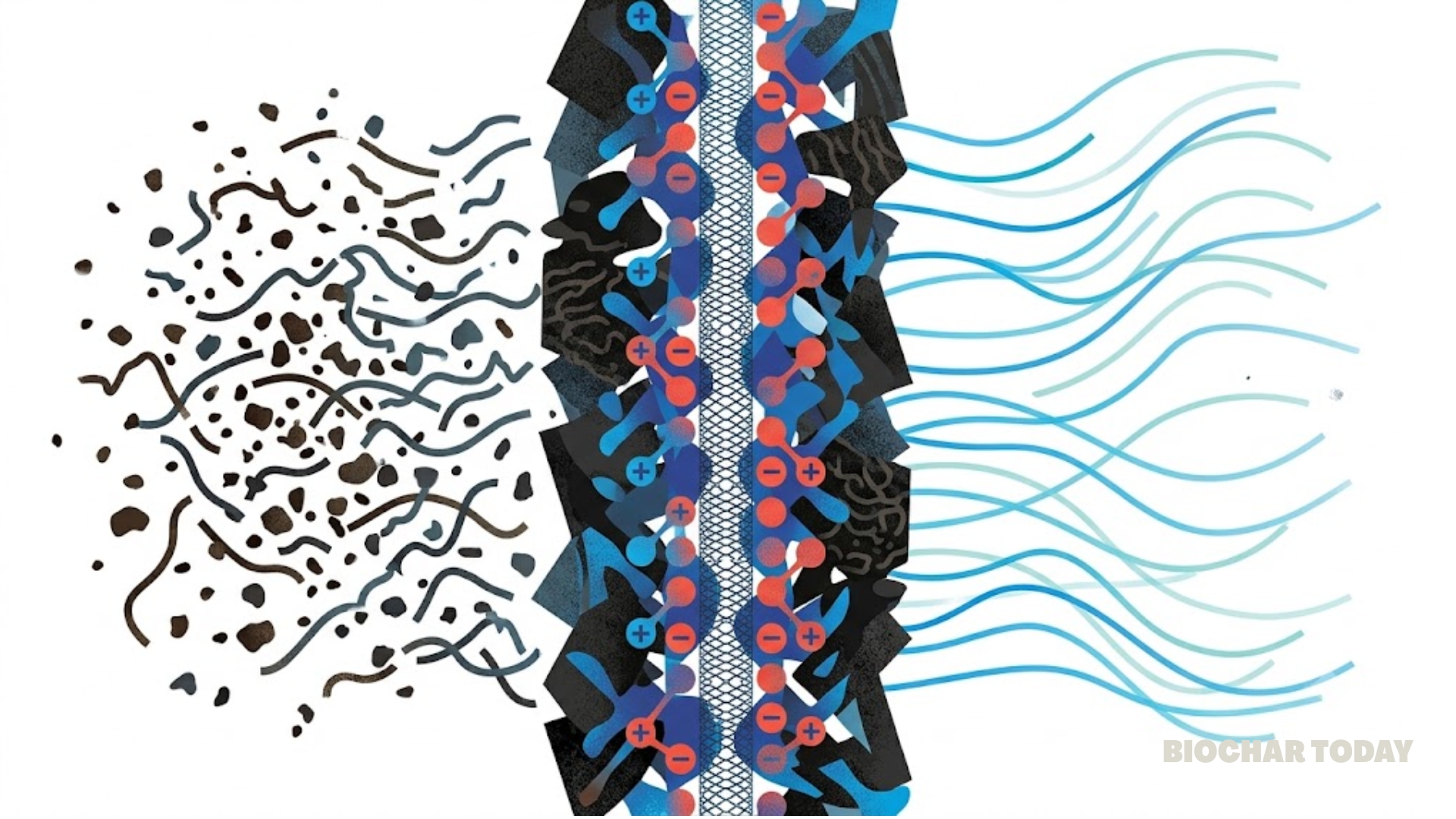
Through meticulous laboratory experiments, Loffredo and her colleagues demonstrated the extraordinary ability of the biochar to adsorb, or bind, these pollutants. The biochar’s large surface area and porous structure, along with its abundance of reactive functional groups, provide ample sites for the pollutants to attach. The results were striking: the biochar rapidly and efficiently removed the pollutants from the soil solution, effectively trapping them within its matrix. The implications of this research are far-reaching. Biochar, particularly that derived from pyrogasification, emerges as a promising tool for soil remediation. Its ability to sequester harmful pollutants offers a sustainable and environmentally friendly solution to a growing problem. As Loffredo and her team continue to unlock the potential of biochar, we move closer to a future where agriculture and industry can coexist with a healthy and vibrant environment.
Source: Loffredo, E., Denora, N., Vona, D., Gelsomino, A., Porfido, C., & Colatorti, N. (2025). Wood gasificationGasification is a high-temperature, thermochemical process that converts carbon-based materials into a gaseous fuel called syngas and solid by-products. It takes place in an oxygen-deficient environment at temperatures typically above 750°C. Unlike combustion, which fully burns material to produce heat and carbon dioxide (CO2), gasification More biochar as an effective biosorbent for the remediation of organic soil pollutants. Soil Systems, 9(1), 18. https://doi.org/10.3390/soilsystems9010018




Leave a Reply