

Key Takeaways
- Adding biocharBiochar is a carbon-rich material created from biomass decomposition in low-oxygen conditions. It has important applications in environmental remediation, soil improvement, agriculture, carbon sequestration, energy storage, and sustainable materials, promoting efficiency and reducing waste in various contexts while addressing climate change challenges. More deep into the ground helps the soil store much more carbon than standard farming methods.
- Using regenerative techniques like less plowing and planting extra crops improves the soil structure and keeps it from becoming too packed.
- Healthy soil microbes, which are tiny organisms that help plants grow, increase significantly when farmers switch to these natural regenerative methods.
- While simple regenerative farming is good for soil health, adding biochar is the key ingredient needed to actually trap more greenhouse gases underground quickly.
- These improved farming methods help protect the earth by keeping carbon in the ground where it helps plants instead of letting it escape into the air.
In a recent article published in Scientific Reports, researchers Lucas Kohl, Eva-Maria L. Minarsch, Wiebke Niether, B. A. Dix, Claudia Kammann, John C. Clifton-Brown, and Andreas Gattinger explored how specific farming techniques can better store carbon in the ground to help fight climate change. The team conducted a three-year field experiment on an organic farm in Germany to see if regenerative agriculture, which focuses on restoring soil health, could actually make a measurable difference in a short amount of time. Their research focused on comparing traditional organic farming with more advanced regenerative methods, including a unique approach that involved placing biochar deep into the earth.
The study found that simply switching to regenerative practices like reduced tillage and planting diverse cover crops was excellent for the living part of the soil but did not immediately increase the total amount of carbon stored. While these methods improved the soil structure and boosted the presence of beneficial tiny organisms known as microbial biomassBiomass is a complex biological organic or non-organic solid product derived from living or recently living organism and available naturally. Various types of wastes such as animal manure, waste paper, sludge and many industrial wastes are also treated as biomass because like natural biomass these More, the actual carbon levels remained relatively stable compared to traditional plowing. This highlights a common challenge in sustainable farming where visible improvements in soil health do not always translate to instant gains in long-term carbon storage.
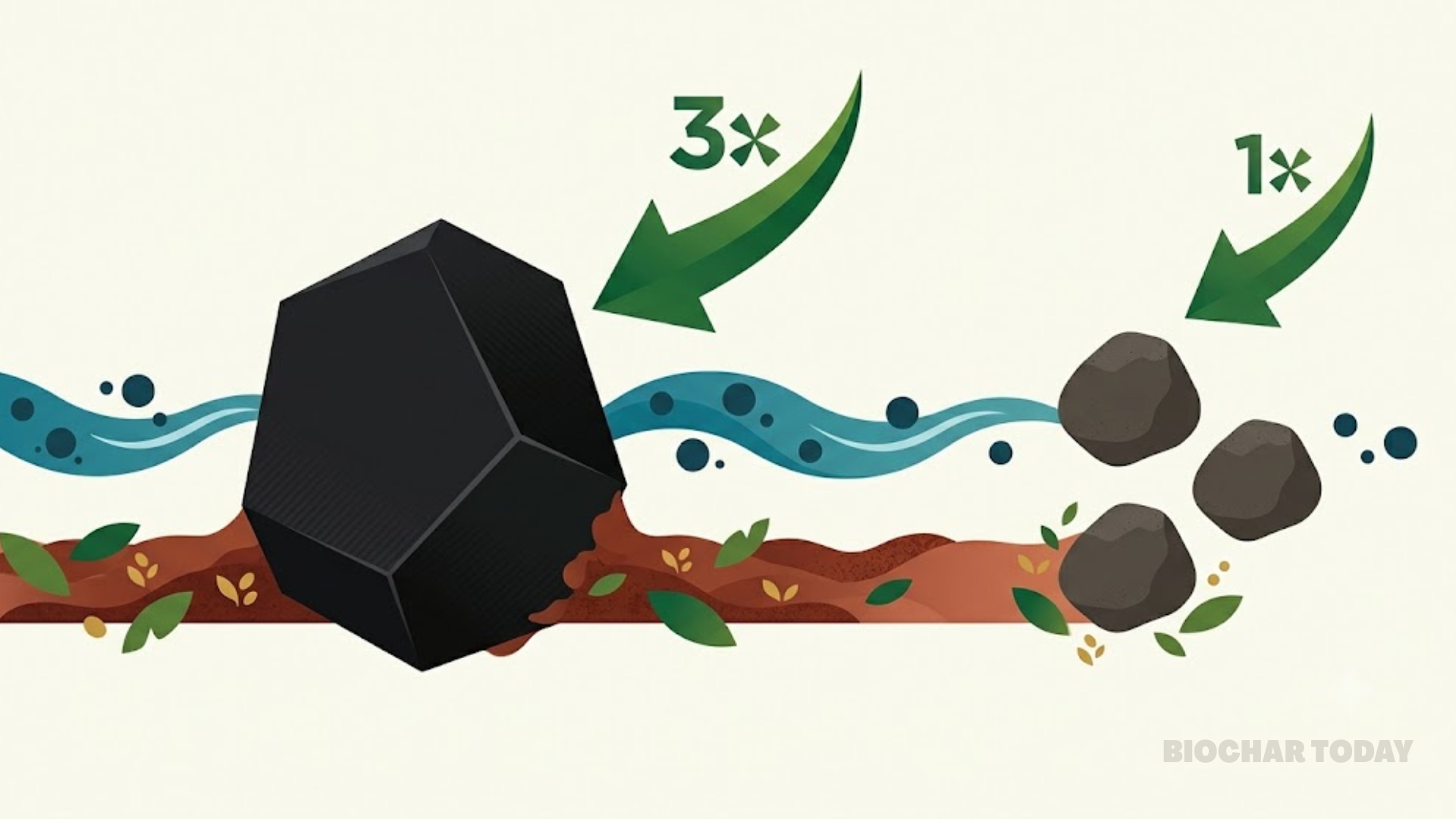
However, the results changed dramatically when the researchers added biochar to the mix. By injecting a specific amount of this charcoal-like substance about a foot deep into the ground, the team observed a significant jump in soil organic carbon. In fact, this method led to an increase of over two tons of carbon per hectare across the entire soil profile. This gain was in addition to the carbon already contained within the biochar itself, suggesting that the presence of biochar actually helps the soil naturally accumulate and hold onto more organic material from plant roots and other sources.
Another major benefit discovered was the reduction in soil density. Over time, heavy machinery and traditional plowing can create a hard, compacted layer beneath the surface that makes it difficult for roots to grow and water to soak in. The combination of regenerative farming and deep biochar application effectively broke up these compacted layers. This led to a more porous soil structure, which is essential for healthy crop growth and better water retention during dry periods. The researchers noted that these physical improvements were most prominent in the deeper layers where the biochar was specifically placed.
The study also looked at early biological signals to see if they could predict future soil health. They found that microbial biomass in the top layer of the soil was a very strong indicator of positive change. In both the standard regenerative plots and those with biochar, the amount of living microbial carbon increased significantly. This suggests that the soil starts to “wake up” and become more biologically active almost immediately after these sustainable practices are implemented, even if the total carbon takes a bit longer to catch up.
Interestingly, the research showed that these positive changes happened even during years with lower-than-average rainfall. This is particularly important as farmers around the world face increasingly unpredictable weather and frequent droughts. The ability of biochar and regenerative techniques to maintain or improve soil quality under climate stress offers a promising path forward for global food security. It demonstrates that agricultural land can serve as more than just a place to grow food; it can actively function as a tool to remove carbon dioxide from the atmosphere and store it safely underground.
Ultimately, the findings suggest that while basic regenerative steps are a great starting point for any farmer, more intensive strategies like deep biochar application might be necessary to achieve rapid and meaningful carbon sequestration. The researchers conclude that these advanced methods provide a dual benefit by both repairing the physical structure of the land and enhancing its natural capacity to store carbon. As the world seeks practical solutions for environmental restoration, this study provides a clear scientific roadmap for how modern organic farming can evolve to meet the challenges of the future.
Source: Kohl, L., Minarsch, E.-M. L., Niether, W., Dix, B. A., Kammann, C., Clifton-Brown, J. C., & Gattinger, A. (2026). Early evidence for the benefits of biochar in organic regenerative agriculture. Scientific Reports.



Leave a Reply