
Key Takeaways
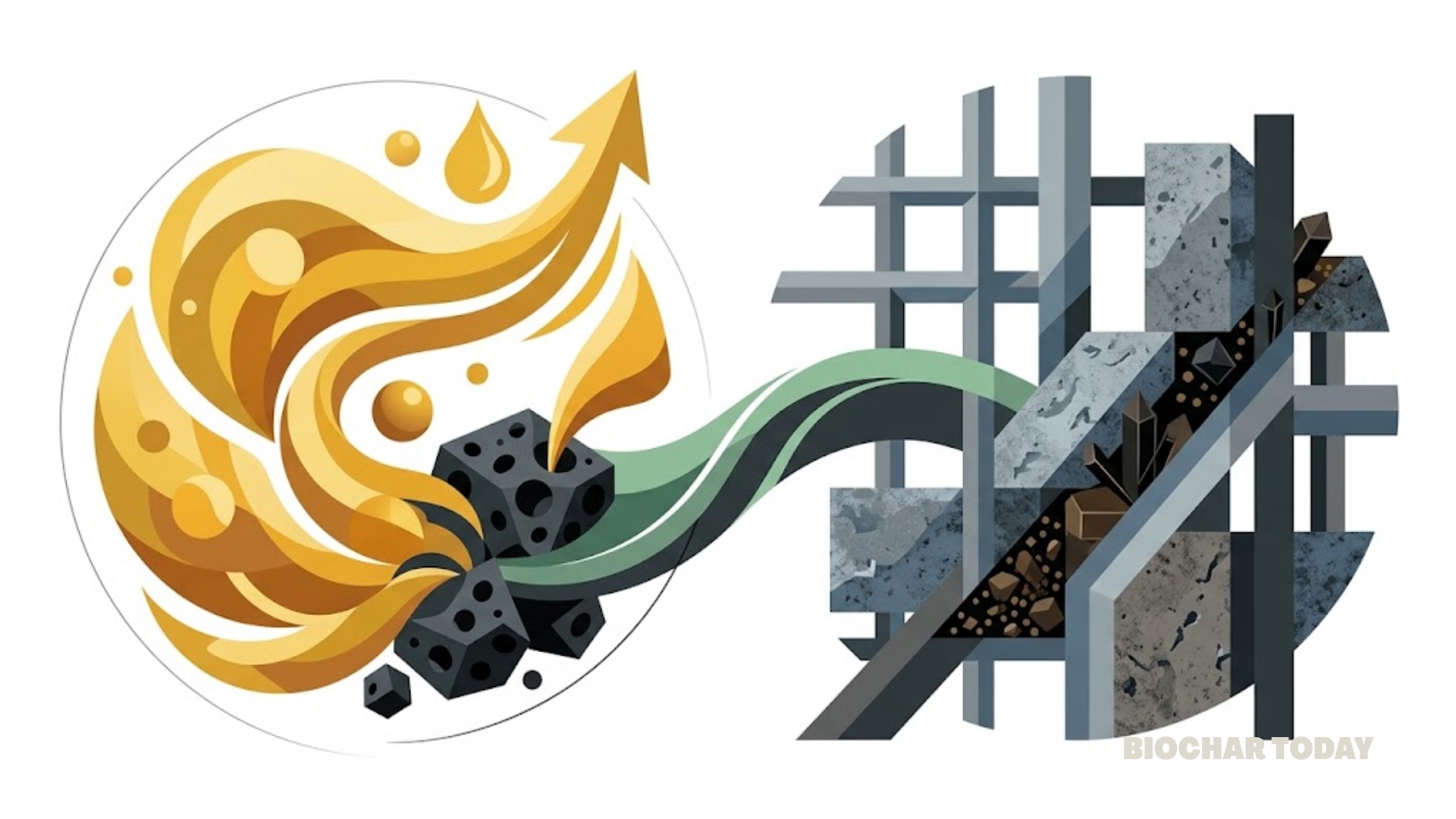
- Sugarcane waste can be converted into a high-carbon material called biocharBiochar is a carbon-rich material created from biomass decomposition in low-oxygen conditions. It has important applications in environmental remediation, soil improvement, agriculture, carbon sequestration, energy storage, and sustainable materials, promoting efficiency and reducing waste in various contexts while addressing climate change challenges. More to reduce industrial waste.
- This material can act as a catalyst to turn waste cooking oil into renewable fuel with nearly perfect efficiency.
- Adding a small amount of this char to cement significantly strengthens concrete used in building construction.
- Biochar helps the environment by capturing carbon and cleaning toxic heavy metals from contaminated water.
- The process turns low-value agricultural leftovers into valuable products for energy, farming, and manufacturing.
In a comprehensive review published in the journal Emergent Materials, authors Mohd. Khalid Zafeer, Rachel Alveera Menezes, H. Venkatachalam, and K. Subrahmanya Bhat examine the transformative potential of sugarcane bagasse. As a major byproduct of the sugar industry, bagasse is generated in massive quantities, with approximately 280 kilograms of wet residue produced for every ton of sugarcane processed. While often stockpiled or incinerated on-site, this biomassBiomass is a complex biological organic or non-organic solid product derived from living or recently living organism and available naturally. Various types of wastes such as animal manure, waste paper, sludge and many industrial wastes are also treated as biomass because like natural biomass these More can be converted through thermochemical processes into biochar, a stable, carbon-rich solid that serves as an eco-friendly alternative in numerous industrial sectors. The research highlights how the unique physical and chemical properties of this material—such as high surface area, porosityPorosity of biochar is a key factor in its effectiveness as a soil amendment and its ability to retain water and nutrients. Biochar’s porosity is influenced by feedstock type and pyrolysis temperature, and it plays a crucial role in microbial activity and overall soil health. Biochar More, and cation exchange capacity—make it an ideal candidate for energy recovery and environmental remediation.
One of the most significant findings involves the use of sugarcane-based biochar as a catalyst for renewable energy production. Specifically, the material has proven highly effective in the transesterification process required to produce biodiesel from waste cooking oil. Quantitative results from previous studies show that utilizing an activated version of this biochar can achieve a maximum biodiesel conversion of 98.94%. This high efficiency is reached under optimized conditions, including a reaction time of 120 minutes and a temperature of 65 degrees Celsius. By serving as a solid catalyst, the biochar addresses common industrial challenges such as catalyst recovery and product purification, providing a scalable and cost-effective pathway for sustainable fuel synthesis.
The application of this biochar extends beyond energy into the field of sustainable building materials. Incorporating biochar into cementitious composites offers a dual benefit: it sequesters carbon that would otherwise be released during waste disposal and enhances the structural integrity of the resulting materials. Experiments testing the mechanical properties of concrete revealed that adding just 5% of treated bagasse biochar by mass can increase tensile strength by a remarkable 78% compared to standard concrete. Furthermore, using 2% biochar by weight improved cement hydration, leading to 36% less water absorption, while a 4% loading reduced thermal conductivity by 25%. These findings suggest that biochar-modified concrete is not only stronger but also more durable and better insulated than traditional building materials.
In the realm of environmental protection, sugarcane bagasse biochar demonstrates an exceptional ability to remove toxins from both water and soil. Because it is highly porous and contains specific functional groups like carboxyl and phenol, it acts as a powerful adsorbent for organic dyes and heavy metals. For example, studies on water purification showed that magnetic biochar derived from bagasse could maintain over 80% removal efficiency for toxic chromium ions even after multiple reuse cycles. Other research documented a lead sorption capacity of 86.96 milligrams per gram, significantly outperforming other waste-derived chars due to its superior surface area. This makes the material a vital tool for treating industrial effluents and cleaning up contaminated agricultural land.
The researchers also emphasize the role of biochar in greenhouse gas mitigation through advanced adsorption techniques. Bagasse-derived biochar can be engineered to capture carbon dioxide, with some nitrogen-doped versions exhibiting a capture capacity of 4.88 millimoles per gram. This stability remains consistent over multiple capture cycles, making it a reliable and low-cost alternative for industrial carbon management. Additionally, in the context of biogas purification, a mixture containing 50% sugarcane bagasse biochar was found to be the most effective ratio for reducing carbon dioxide content in fuel mixtures. By providing a high-value use for agricultural waste, this technology supports a circular economy that balances global energy needs with environmental sustainability.
Source: Zafeer, M. K., Menezes, R. A., Venkatachalam, H., & Bhat, K. S. (2024). Sugarcane bagasse-based biochar and its potential applications: a review. Emergent Materials, 7, 133–161.



Leave a Reply