
Key Takeaways
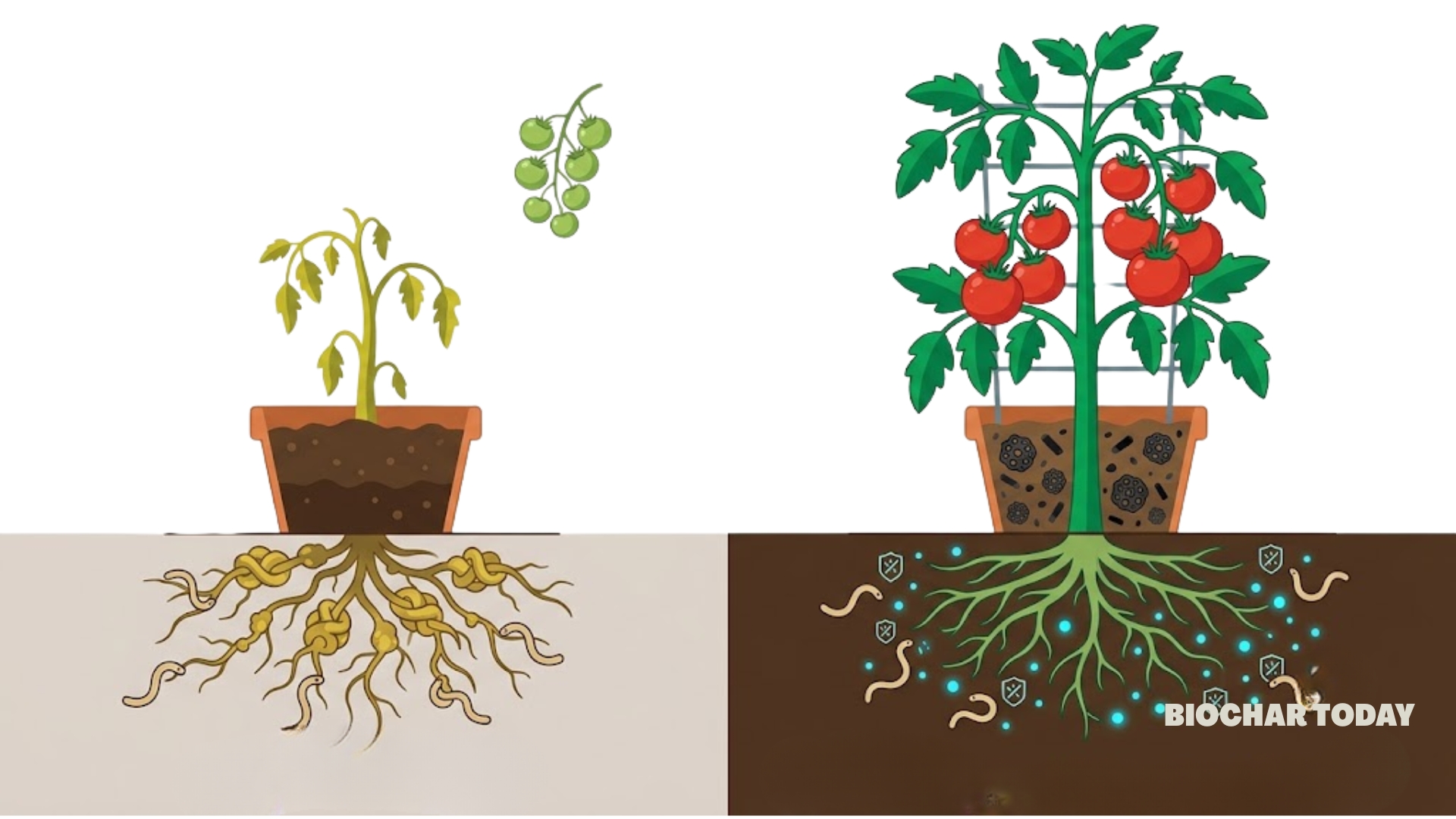
- Mixing biocharBiochar is a carbon-rich material created from biomass decomposition in low-oxygen conditions. It has important applications in environmental remediation, soil improvement, agriculture, carbon sequestration, energy storage, and sustainable materials, promoting efficiency and reducing waste in various contexts while addressing climate change challenges. More made from sugarcane bagasse into agricultural soil protects vegetable crops by significantly stopping the development of destructive parasitic worms.
- Adding high-quality biochar directly into animal rations at up to three percent improves the basic health, daily food intake, and overall immune response of livestock.
- Supplementing aquaculture feeds with specific poultry waste biochar allows young fingerlings to increase their total body weight by over two hundred fifty-six percent.
- Substituting ten percent of regular construction sand with sustainable biochar blocks heat movement and improves the insulation performance of building bricks.
- Channelling city stormwater through specialized biochar geostructures filters out toxic heavy metals and organic chemicals before they pollute regional water ecosystems.
In a recent paper published in the journal BiomassBiomass is a complex biological organic or non-organic solid product derived from living or recently living organism and available naturally. Various types of wastes such as animal manure, waste paper, sludge and many industrial wastes are also treated as biomass because like natural biomass these More and Bioenergy, researchers Kennedy I. Ogunwa, Ebenezer C. Nnadozie, Nontembeko Dube, Peter Olusakin Oladoye, and Kehinde Shola Obayomi reviewed the expanding role of biochar in advancing planetary resource conservation and supporting a circular bioeconomy. Biochar is a highly porous, stable, carbon-rich material produced through the thermal degradation of various organic materials in an oxygen-limited environment. Historically used for centuries to manage soil health and generate heat, modern innovations in engineering have uncovered a vast array of new applications for this versatile substance. Today, customized production techniques and surface modifications allow industries to use biochar as a sustainable solution across agriculture, eco-friendly construction, water management, and pharmaceutical sectors.
The agricultural sector has seen major performance breakthroughs through the strategic application of feedstock-specific biochars. In plant systems, utilizing biochar derived from sugarcane bagasse produced at a pyrolysisPyrolysis is a thermochemical process that converts waste biomass into bio-char, bio-oil, and pyro-gas. It offers significant advantages in waste valorization, turning low-value materials into economically valuable resources. Its versatility allows for tailored products based on operational conditions, presenting itself as a cost-effective and efficient More temperature of three hundred degrees Celsius dramatically improves the physical growth of tomato crops. This specific organic treatment simultaneously suppresses the reproductive development of root-knot nematodes, providing a natural defense mechanism against destructive soil pathogens. When incorporated directly into livestock production as a dietary additive at one to three percent of dry matter rations, biochar enhances animal immunity, increases weight gain, and stabilizes beneficial gut microbiomes. Furthermore, in aquaculture operations, adding poultry-waste biochar to plant-meal diets for fingerlings optimizes food conversion ratios and yields a weight gain of over two hundred fifty-six percent.
Beyond farming applications, biochar has emerged as a powerful component in the manufacturing of green building materials and urban infrastructure. Incorporating highly aromatic, fine-particle biochars into standard cement and asphalt mixtures modifies their internal chemistry to boost structural durability and crack resistance. When used in masonry production, replacing ten percent of standard construction sand with a biochar alternative decreases thermal conductivity from over a half-watt per meter-kelvin down to less than a half-watt per meter-kelvin. This structural shift drastically improves the insulation performance of the bricks, allowing buildings to retain heat more efficiently while permanently trapping carbon away from the atmosphere for centuries.
The material also provides excellent environmental remediation capabilities when deployed in water systems and wastewater treatment facilities. Because of its immense specific surface area and abundant surface functional groups, biochar functions as a cheap and highly effective filtration medium. Channelling contaminated city stormwater runoff through engineered biochar geostructures effectively traps persistent organic pollutants and toxic heavy metals, shielding vulnerable aquatic ecosystems from runoff pollution. Additionally, fabricating advanced biochar-clay composites increases the available pollutant adsorptionBiochar has a remarkable ability to attract and hold onto pollutants, like heavy metals and organic chemicals. This makes it a valuable tool for cleaning up contaminated soil and water. More surface area thirty-fold compared to raw components. This structural optimization allows the composite material to achieve exceptional extraction capacities, binding up to hundreds of milligrams of stubborn pharmaceutical contaminants, persistent dyes, and industrial toxins per gram of material.
Source: Ogunwa, K. I., Nnadozie, E. C., Dube, N., Oladoye, P. O., & Obayomi, K. S. (2026). The evolving role of biochar: recent advances and future directions – a review. Biomass and Bioenergy, 208(108844), 1-11.



Leave a Reply