
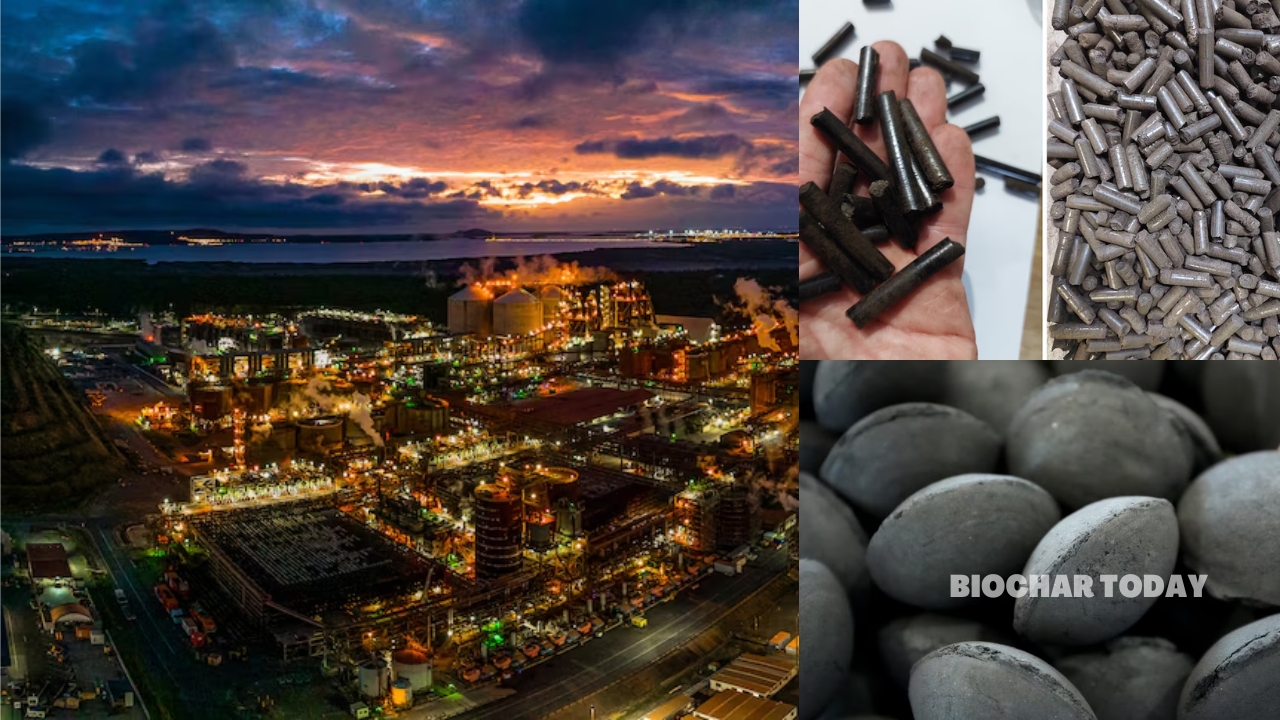
Global mining group Rio Tinto has executed a five-year off-take agreement with Australian biocarbon producer SuperChar to acquire 35,000 tonnes of bio-pellets annually from a proposed $30 million production facility in Central Queensland. Scheduled to begin commercial deliveries in 2028, the biocarbon fuel will directly substitute thermal coal utilized at Rio Tinto’s alumina refining facilities in Gladstone, Australia. This off-take commitment provides the foundational commercial validation needed for SuperChar to construct its processing infrastructure while advancing decarbonization efforts across heavy manufacturing.
Alumina refining remains one of the most energy-intensive industrial processes, relying heavily on pulverized coal to generate the high-temperature steam required for bauxite processing. Transitioning heavy thermal operations away from fossil fuels presents significant engineering challenges, as electrification alternatives remain limited or economically unviable for high-temperature applications. Furthermore, direct substitution with raw biomassBiomass is a complex biological organic or non-organic solid product derived from living or recently living organism and available naturally. Various types of wastes such as animal manure, waste paper, sludge and many industrial wastes are also treated as biomass because like natural biomass these More often introduces thermal inefficiencies, fuel inconsistency, and severe supply chain risks due to seasonal feedstockFeedstock refers to the raw organic material used to produce biochar. This can include a wide range of materials, such as wood chips, agricultural residues, and animal manure. More variability and fragmented collection networks.
To resolve these technical and logistical hurdles, SuperChar is constructing a specialized $30 million facility integrated with regional agricultural networks to process purpose-grown bana grass into high-density bio-pellets. The continuous thermochemical processing framework converts the high-yield grass into uniform, energy-dense biocarbon pellets optimized for co-firing and direct coal replacement. By establishing local farming partnerships for feedstock cultivation, the operation secures a stable, non-waste agricultural input stream while generating useful secondary outputs such as charcoalCharcoal is a black, brittle, and porous material produced by heating wood or other organic substances in a low-oxygen environment. It is primarily used as a fuel source for cooking and heating. More briquettes.
Under the five-year contract, Rio Tinto will integrate 35,000 tonnes of bio-pellets per year into its Gladstone energy mix starting in 2028, driving measurable reductions in operational carbon emissions. The off-take agreement provides SuperChar with the revenue certainty needed to secure final municipal approvals, construct the Central Queensland facility, and expand local biomass cultivation. Ultimately, this partnership provides a repeatable framework for heavy industrial facilities to replace fossil coal with engineered biocarbon while supporting regional agricultural development.





Leave a Reply