
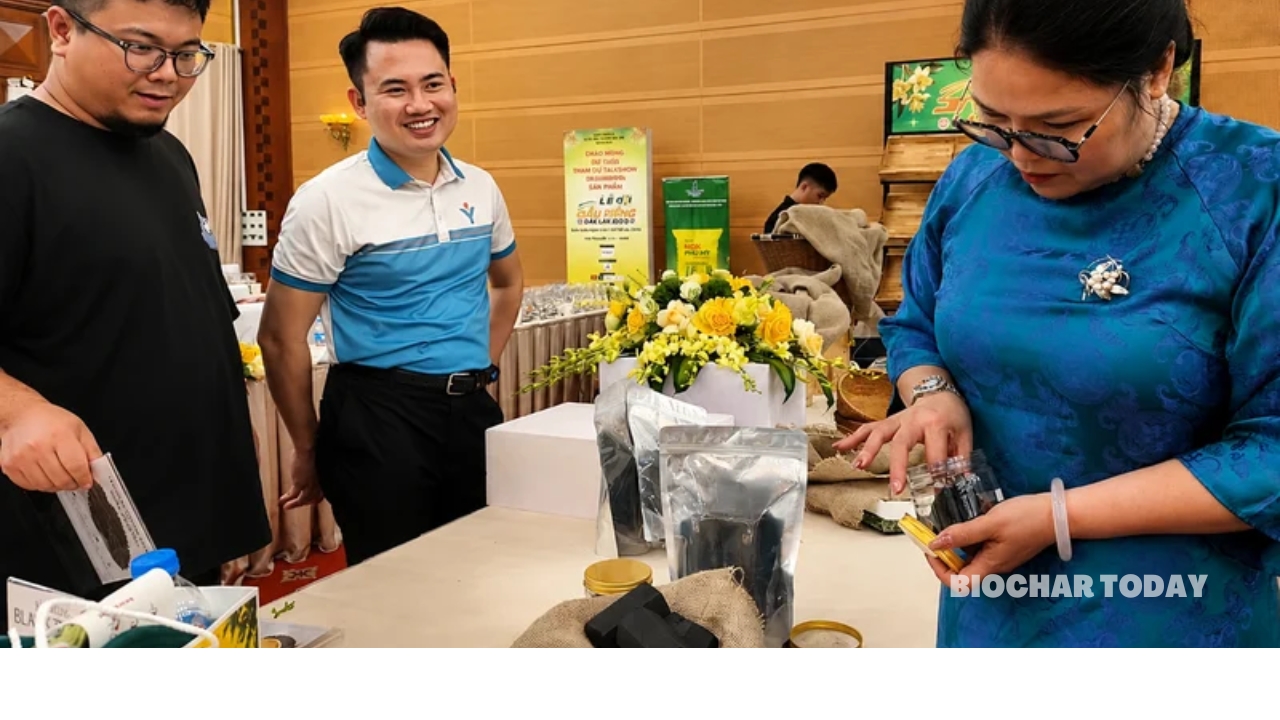
In Vietnam’s Central Highlands, local agricultural cooperatives and processing enterprises in Dak Lak Province have established a circular bioeconomy model to process discarded durian husks into commercial-grade biocharBiochar is a carbon-rich material created from biomass decomposition in low-oxygen conditions. It has important applications in environmental remediation, soil improvement, agriculture, carbon sequestration, energy storage, and sustainable materials, promoting efficiency and reducing waste in various contexts while addressing climate change challenges. More and organic fertilizer for international export. By capturing organic waste streams from the province’s rapidly expanding durian harvesting and processing sector, the initiative converts post-harvest residue into high-value bioproducts. This collaborative effort aligns regional agricultural waste management with global demand for sustainable soil amendments and carbon-negative inputs.
The rapid expansion of durian cultivation in Dak Lak generated acute environmental and operational challenges, as millions of tons of bulky, high-moisture durian husks were routinely dumped in landfills or left to decompose in open fields. This uncontrolled disposal led to severe land pollution, offensive odors, and disease vector propagation, while also releasing significant volumes of methane and greenhouse gas emissions. Traditional waste handling methods imposed heavy municipal disposal costs and offered no financial return to local farming communities.
To address this environmental hazard, regional enterprises deployed decentralized pyrolysisPyrolysis is a thermochemical process that converts waste biomass into bio-char, bio-oil, and pyro-gas. It offers significant advantages in waste valorization, turning low-value materials into economically valuable resources. Its versatility allows for tailored products based on operational conditions, presenting itself as a cost-effective and efficient More technologies tailored to process high-moisture fruit waste into high-carbon biochar. The process thermally decomposes the husks in an oxygen-limited environment, stabilizing the carbon content into a porous, nutrient-dense material that improves soil moisture retention and microbial activity. The resulting biochar is blended into high-grade organic fertilizers and specialized soil conditioners packaged specifically to meet international import and environmental standards.
The establishment of durian husk biochar production has transformed a costly agricultural waste burden into a profitable export commodity for Dak Lak Province. Local farming cooperatives benefit from improved waste management, reduced environmental hazard mitigation costs, and new income streams from raw biomassBiomass is a complex biological organic or non-organic solid product derived from living or recently living organism and available naturally. Various types of wastes such as animal manure, waste paper, sludge and many industrial wastes are also treated as biomass because like natural biomass these More supply. Furthermore, the application of durian biochar back into local soils reduces synthetic fertilizer dependency, enhancing long-term agricultural resilience while positioning Vietnam as an innovator in circular biochar supply chains.


Leave a Reply