
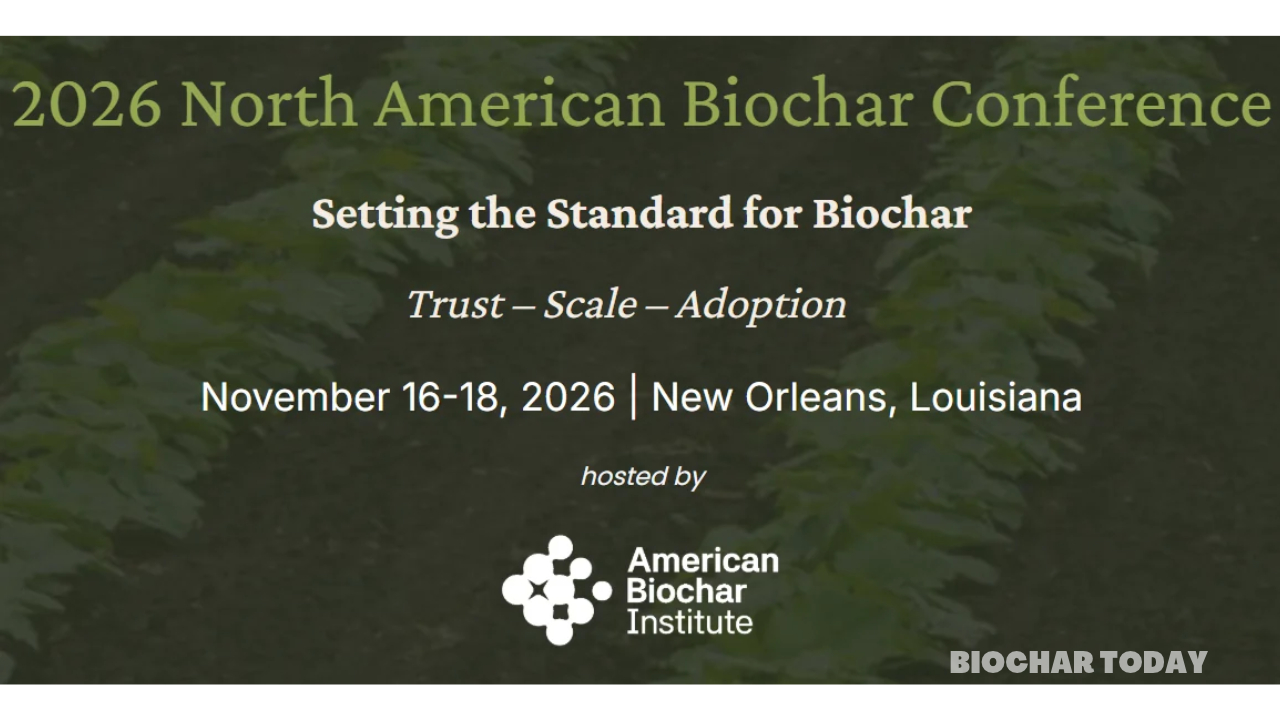
The American BiocharBiochar is a carbon-rich material created from biomass decomposition in low-oxygen conditions. It has important applications in environmental remediation, soil improvement, agriculture, carbon sequestration, energy storage, and sustainable materials, promoting efficiency and reducing waste in various contexts while addressing climate change challenges. More Institute (ABI) and the U.S. Biochar Coalition (USBC) are hosting the 2026 North American Biochar Conference (NABC) in New Orleans, Louisiana, in the United States, from November 16 to 18. The annual gathering coincides with the start of construction on a $16.3 million biochar manufacturing facility in Alexandria, Louisiana, by local sponsor Robinson Carbon. Together, these developments reflect the rapid expansion of the United States biochar sector, which grew in economic value from $53.6 million in 2023 to approximately $157 million in 2025, particularly across the Southeast.
Central Louisiana’s forestry and wood products sector faces a significant supply-chain disruption due to declining traditional outlets for timber residuals. Recent paper mill closures, including the April 2025 shutdown of International Paper’s mill in Campti, alongside canceled biomassBiomass is a complex biological organic or non-organic solid product derived from living or recently living organism and available naturally. Various types of wastes such as animal manure, waste paper, sludge and many industrial wastes are also treated as biomass because like natural biomass these More energy projects, have left regional sawmills with limited commercial options for their wood waste. Without viable secondary markets, these residuals risk decomposition or combustion, threatening the economic stability of working forests and rural communities that depend on steady timber demand.
To address these market bottlenecks, industry organizations and private enterprises are establishing new commercial infrastructure and standardized supply networks. Robinson Carbon, the carbon products arm of New Orleans-based Robinson Lumber Company, is building its Alexandria facility at England Airpark with partial grant support from the USDA Forest Service Wood Innovations Program. Simultaneously, ABI and USBC are utilizing the NABC agenda to standardize end-use applications, align public and private capital, and launch an Industry Directory to connect producers, suppliers, and end users.
These coordinated actions yield measurable industrial and regional outcomes. Once operational, Robinson Carbon’s facility will process roughly 100,000 metric tons of Southern Yellow Pine residuals annually into 16,500 metric tons of stable biochar for agricultural, horticultural, and pollution remediation markets. This permanent off-take restores revenue streams for rural Louisiana mills while sequestering carbon. Meanwhile, ABI’s newly released directory and conference programming streamline procurement and establish clearer technical standards, positioning the Southeast United States to sustain commercial scalability across industrial and agricultural sectors.


Leave a Reply