

GUEST AUTHOR
Ragavan Chandrasekar (Prime Minister’s Research Fellow (PMRF) at IIT Guwahati)
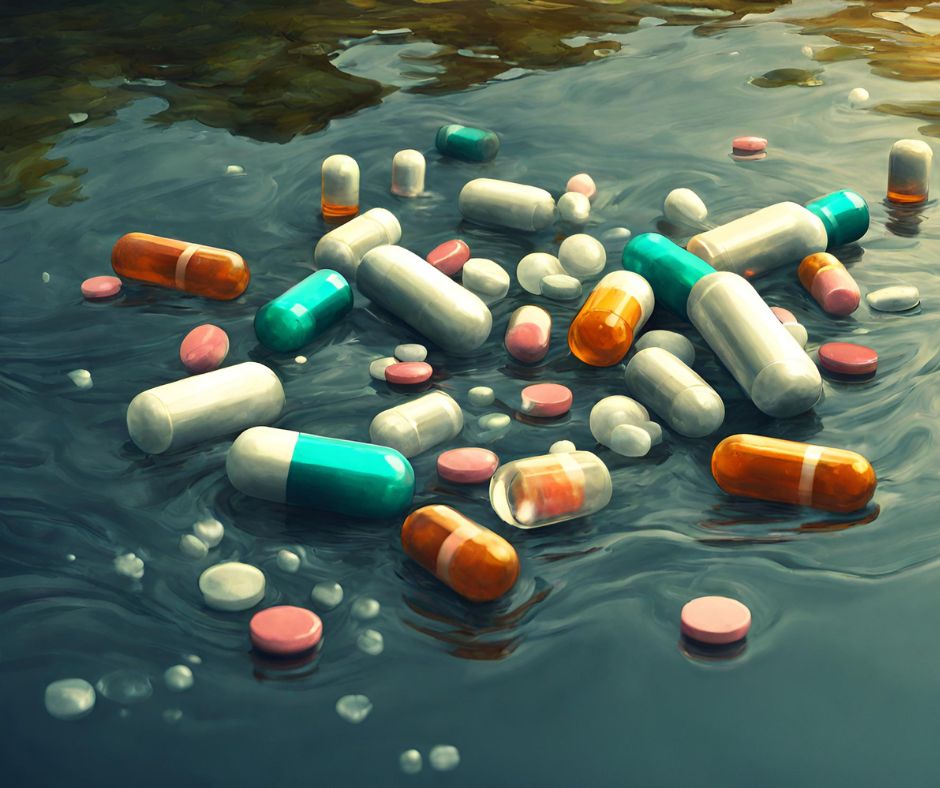
Water scarcity and contamination loom large as global challenges. Traditional treatment methods struggle with emerging contaminants (ECs) – pharmaceuticals, pesticides, and others – which persist and threaten water quality. Adsorption offers a promising solution, but effective multi-contaminant removal remains a hurdle.
In our recent study, my colleagues and I from the Indian Institute of Technology Guwahati introduced a novel approach: hydrothermal carbonization (HTC) with a twist. We crafted a custom hydrochar (HC200) from sawdust at a low temperature (200°C) using an acid catalyst. This eco-friendly process yielded a remarkably effective adsorbent:
- High surface area: HC200 boasts a spacious 114.84 m²/g surface area, ideal for capturing contaminants.
- Targeted functionalities: Oxygen-containing groups on HC200 selectively attract diverse ECs.
- Multi-talented champion: We tested HC200 against ibuprofen, sulfamethoxazole, and bisphenol A, achieving impressive removal rates of 92.4%, 85.4%, and 82%, respectively.Notably, its selectivity followed the order ibuprofen > sulfamethoxazole > bisphenol A, highlighting its preference for specific contaminants.
Beyond its individual prowess, HC200 shines in complex scenarios:
- Multicomponent mayhem: We challenged HC200 with binary and ternary mixtures of the same contaminants, and it emerged victorious, demonstrating remarkable efficiency in real-world situations.
- Humic acid hurdle: Humic acid, a common natural organic matter, often interferes with adsorption. However, HC200 proved resilient, with negligible impact on its contaminant removal performance.
This study paves the way for a cost-effective and sustainable solution to the EC conundrum. HTC offers a green alternative to energy-intensive carbon-based materials, and HC200’s targeted adsorption and multi-contaminant prowess make it a valuable tool for cleaner water. By delving into the physicochemical interactions and selectivity, we contribute to a deeper understanding of adsorption processes, propelling us towards even more effective water treatment strategies.
READ MORE
Ragavan Chandrasekar et al. (2024) Performance analysis of hydrochar derived from catalytic hydrothermal carbonization in the multicomponent emerging contaminant systems: Selectivity and modeling studies. Bioresource Technology Vol 393. https://doi.org/10.1016/j.biortech.2023.130018



Leave a Reply