
Yang, et al (2024) Structure–Activity Mechanism of Sodium Ion Adsorption and Release Behaviors in BiocharBiochar is a carbon-rich material created from biomass decomposition in low-oxygen conditions. It has important applications in environmental remediation, soil improvement, agriculture, carbon sequestration, energy storage, and sustainable materials, promoting efficiency and reducing waste in various contexts while addressing climate change challenges. More. Agriculture. https://doi.org/10.3390/agriculture14081246
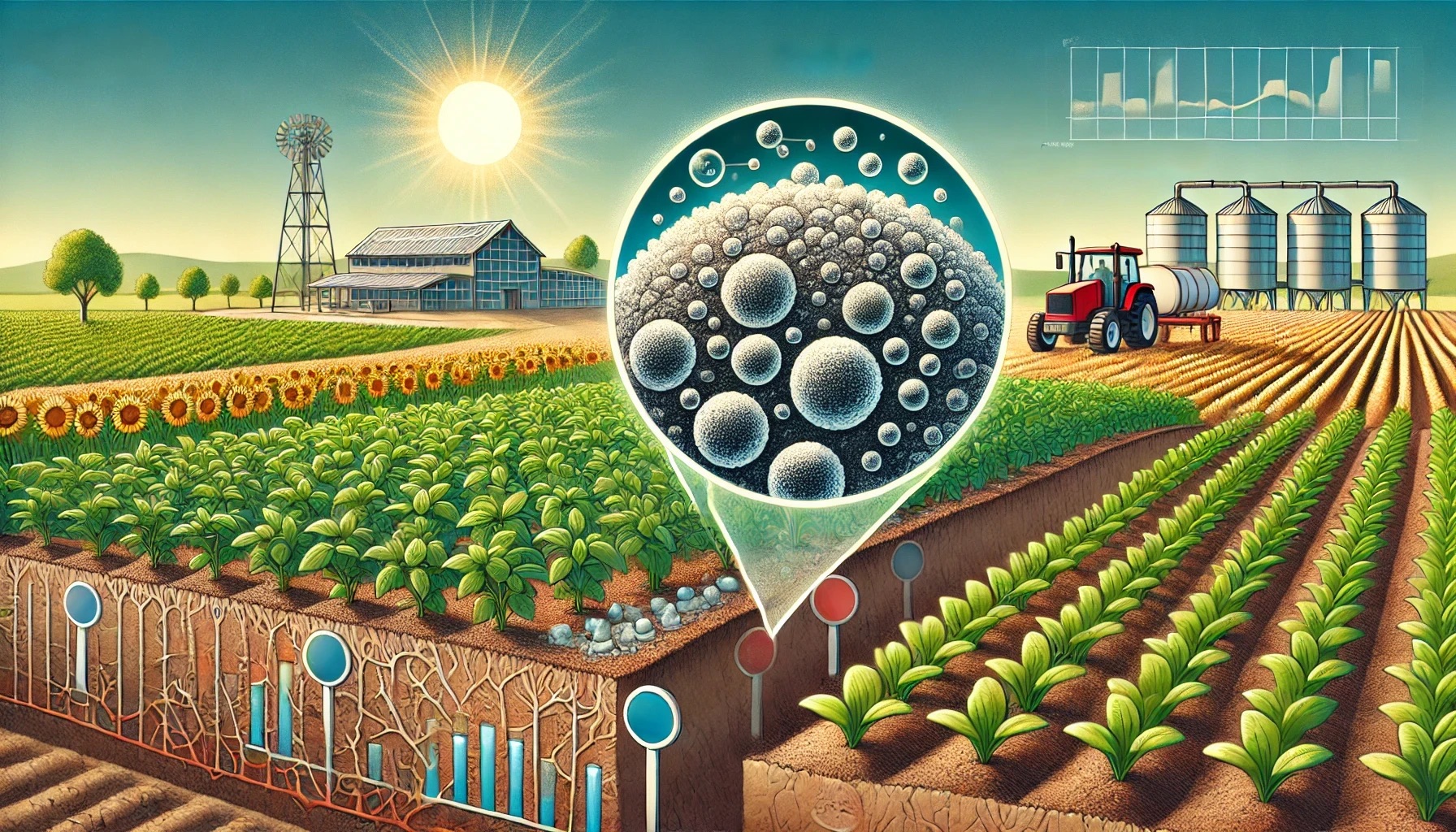
Biochar, a carbon-rich material derived from organic biomassBiomass is a complex biological organic or non-organic solid product derived from living or recently living organism and available naturally. Various types of wastes such as animal manure, waste paper, sludge and many industrial wastes are also treated as biomass because like natural biomass these More, has gained attention for its potential in improving soil health and mitigating salinization. Salinization, affecting over 833 million hectares globally, significantly reduces agricultural productivity by increasing soil sodium (Na) levels, which is harmful to plant growth. This blog post explores recent research on biochar’s ability to adsorb and release sodium ions, offering insights into its application for soil remediation.
Soil salinization poses a severe threat to global food security, with sodium ions being a primary contributor. Traditional methods to manage soil salinity include chemical amendments, biological treatments, and advanced irrigation techniques. However, biochar offers a promising, sustainable alternative due to its unique properties derived from biomass pyrolysisPyrolysis is a thermochemical process that converts waste biomass into bio-char, bio-oil, and pyro-gas. It offers significant advantages in waste valorization, turning low-value materials into economically valuable resources. Its versatility allows for tailored products based on operational conditions, presenting itself as a cost-effective and efficient More under limited oxygen conditions.
The study in focus examined two types of biochar—pyrochar (produced through pyrolysis) and hydrochar (produced via hydrothermal processes)—made from wheat straw and poplar wood chips. Researchers aimed to understand the mechanisms behind sodium adsorption on these biochars, particularly the role of different preparation temperatures and the resultant structural and chemical properties.
Biochar’s efficiency in sodium ion adsorption was tested through a series of batch adsorption experiments. These tests revealed that biochar’s adsorption capacity is influenced by the concentration of sodium ions in the solution, the temperature at which the biochar was produced, and the type of feedstockFeedstock refers to the raw organic material used to produce biochar. This can include a wide range of materials, such as wood chips, agricultural residues, and animal manure. More used. When sodium concentrations were low (≤100 mg/L), the main mechanism for adsorption was pore filling, where sodium ions occupy the biochar’s porous structure. At higher concentrations (>100 mg/L), ion exchange became the dominant mechanism, particularly involving potassium (K) ions in the biochar.
Wheat straw pyrochar exhibited higher sodium adsorption capacities compared to poplar wood pyrochar, especially at higher temperatures. For instance, at low sodium concentrations, wheat straw pyrochar could adsorb 3.95–4.94 mg/g of sodium, while poplar wood pyrochar adsorbed only 0.62–0.70 mg/g. This difference increased significantly at higher sodium concentrations, with wheat straw pyrochar adsorbing 25.44–36.45 mg/g compared to poplar wood pyrochar’s 4.46–6.23 mg/g. Hydrochar, on the other hand, showed insufficient adsorption and release capabilities, making it less effective for this application.
The study further analyzed the pHpH is a measure of how acidic or alkaline a substance is. A pH of 7 is neutral, while lower pH values indicate acidity and higher values indicate alkalinity. Biochars are normally alkaline and can influence soil pH, often increasing it, which can be beneficial More impact on sodium adsorption. It was found that in acidic conditions, biochar tended to release sodium ions due to competitive adsorption with hydrogen ions. Conversely, in alkaline conditions, sodium adsorption was more favorable due to the deprotonation of functional groups on the biochar, enhancing electrostatic attraction to sodium ions.
Understanding these mechanisms is crucial for optimizing biochar use in agricultural practices. For effective sodium adsorption in saline soils, biochar should be tailored based on the specific environmental conditions. When sodium levels are low, biochars with well-developed pore structures should be prioritized. For higher sodium concentrations, biochars rich in exchangeable ions like potassium should be used to maximize ion exchange capacity.
This research underscores the importance of selecting appropriate biochar types and preparation methods to address soil salinization effectively. By leveraging the natural properties of biochar, farmers and land managers can improve soil health, enhance crop yields, and contribute to sustainable agricultural practices.
Biochar’s potential in soil remediation represents a significant step towards sustainable agriculture. Continued research and development will further refine its applications, ensuring that biochar becomes a vital tool in the global effort to combat soil salinization and enhance food security.



Leave a Reply