

Key Takeaways
- Mixing biocharBiochar is a carbon-rich material created from biomass decomposition in low-oxygen conditions. It has important applications in environmental remediation, soil improvement, agriculture, carbon sequestration, energy storage, and sustainable materials, promoting efficiency and reducing waste in various contexts while addressing climate change challenges. More into agricultural soils reduces harmful nitrous oxide gas emissions by 10.5 to 54.8 percent.
- Biochar reduces acidity in the soil, which helps beneficial bacteria convert greenhouse gases into harmless nitrogen gas. PDF
- The porous structure of biochar improves soil aeration and controls underground moisture levels.
- High-temperature biochar acts like a tiny battery that shares electrons with microbes to help them process nutrients cleanly.
- Instead of blocking a single biological process, biochar works by improving the entire surrounding soil environment.
In a comprehensive scientific article published in the journal Soil Biology and Biochemistry, authors Xiao Wang, Camille Nunes Leite, Bo Thamdrup, Sander Bruun, and Hans Chr. Bruun Hansen explored the complicated underground network of chemical and biological interactions that occur when biochar is added to dirt. Farm soils represent a major worldwide source of nitrous oxide, which is a greenhouse gas with a global warming potential 273 times greater than carbon dioxide over a century-long timescale. Human farming activities have essentially doubled the global cycling of nitrogen over the past one hundred years, primarily through the heavy use of fertilizers. This massive structural change has drastically increased the amount of nitrous oxide escaping from fields into the air, forcing scientists to search for reliable ways to slow down these emissions. The research team analyzed extensive global data to understand exactly how adding charcoal-like biochar material to farmland alters the nitrogen cycle. Their analysis shows that biochar acts as a highly successful tool for environmental management, though its exact performance shifts depending on local soil conditions and how the material was manufactured.
The main results of this research show that biochar decreases greenhouse gas emissions by altering the environmental conditions that control gas production and consumption pathways, rather than by stopping a single microbial group. Underground gas emissions are the net result of various biological and chemical processes where nitrogen compounds are constantly transformed. The most consistent way biochar limits gas escape is by altering soil acidity. Most biochars are naturally alkaline because they contain metal oxides and carbonates left behind from the high-heat manufacturing process. When mixed into acidic soils, biochar acts like lime and raises the pHpH is a measure of how acidic or alkaline a substance is. A pH of 7 is neutral, while lower pH values indicate acidity and higher values indicate alkalinity. Biochars are normally alkaline and can influence soil pH, often increasing it, which can be beneficial More level. This reduction in acidity creates an ideal environment for specific soil bacteria to construct an essential enzyme called nitrous oxide reductase. This specialized enzyme accelerates the final stage of a process called denitrification, which safely transforms harmful nitrous oxide gas into harmless dinitrogen gas before it can escape into the atmosphere.
The findings also reveal that the physical structure of biochar significantly changes oxygen movement and moisture levels inside the dirt. Biochar particles possess large internal surface areas and numerous tiny pores that alter how water and air fill the spaces between soil grains. Larger biochar pieces enhance general aeration and air movement, which keeps the soil well-oxygenated and limits the completely oxygen-free conditions where nitrous oxide gas tends to build up rapidly. Conversely, very fine biochar particles can hold extra moisture and occasionally create tiny, localized pockets without oxygen where specific microbial reactions take place. However, because biochar also releases dissolved organic carbon and binds to nitrogen molecules, it helps balance out the nutrient supply for underground life. This nutritional balance prevents chemical blockages and stops the incomplete microbial reactions that would otherwise cause extra nitrous oxide to leak out of the ground.
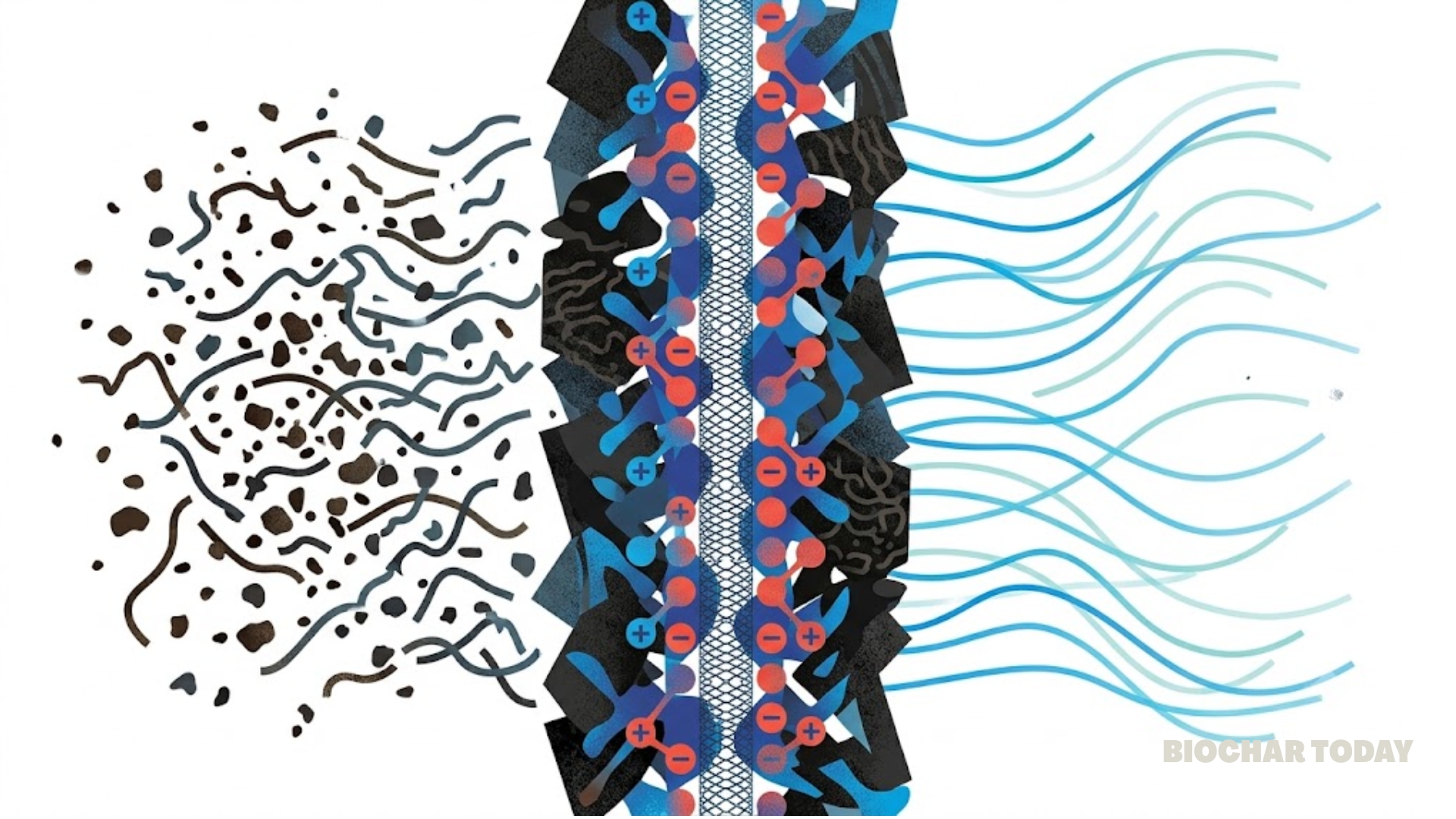
Finally, the study highlights an advanced electrochemical mechanism where highly carbonized biochar serves as a solid conduit for electricity. Biochar manufactured at high temperatures undergoes structural graphitization, allowing its surface to rapidly accept, store, and donate electrons. This internal electrical conductivity allows the material to function as a tiny underground battery and wire system. It facilitates direct electron transfer between different soil microbes and nearby chemical nutrients. This extra electron supply helps bypass internal biological bottlenecks, ensuring that soil microbes have enough electrical energy to fully complete their nitrogen transformations and reduce gas accumulation. Additionally, the high chemical binding affinity of biochar can physically trap volatile nitrogen compounds and reactive metals, preventing them from participating in spontaneous, non-biological chemical reactions that produce greenhouse gases. Ultimately, these combined physical, chemical, and electrical changes work together to create a more stable soil matrix that naturally retains nutrients while steadily lowering overall agricultural greenhouse gas emissions.
Source: Wang, X., Leite, C. N., Thamdrup, B., Bruun, S., & Hansen, H. C. B. (2026). How does biochar reduce N2O emission from soil? – a review of mechanisms. Soil Biology and Biochemistry, 221(110214).




Leave a Reply