
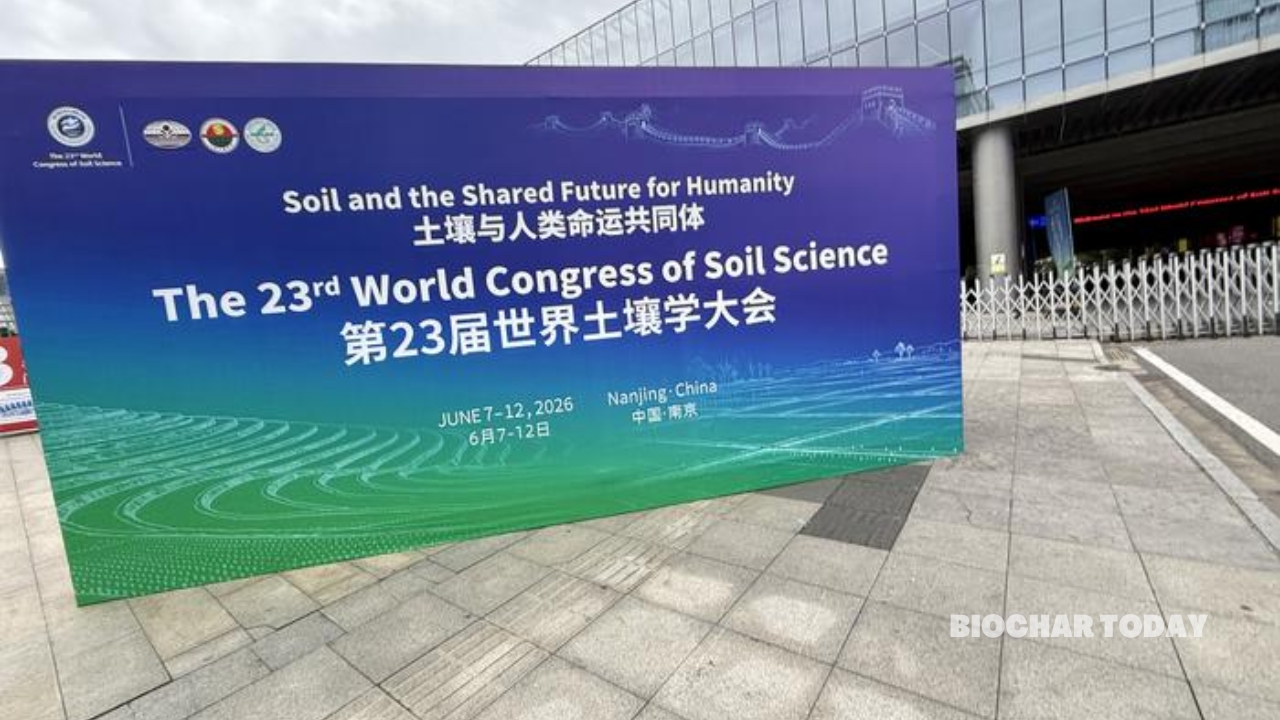
In China, the international scientific community convened for the opening of the 23rd World Congress of Soil Science in Nanjing, Jiangsu Province. Regarded as a premier global academic event, the multi-day congress gathered nearly 3,000 experts, scholars, policymakers, and industry representatives from more than 100 countries under the central theme of “Soil and the Shared Future of Humankind”. This gathering marked the first time in the event’s nearly century-long history that it was hosted in China, representing a significant milestone for international resource conservation and collaborative scientific exchange.
The major challenge addressed by this historic assembly is the accelerating threat of soil degradation, climate change, and food insecurity on a planetary scale. As global populations expand, the depletion of healthy soil resources disrupts the terrestrial carbon cycle and undermines long-term agricultural sustainability. Historically, progress has been hindered by fragmented research networks and a lack of standardized framework cooperation among nations, making it difficult to deploy synchronized, scalable solutions capable of achieving widespread carbon neutrality.
To solve these compounding ecological issues, the International Union of Soil Sciences and the Soil Science Society of China co-organized the extensive event, with the Institute of Soil Science, Chinese Academy of Sciences serving as the main host. The comprehensive program featured 9 symposia, 5 workshops, over 100 parallel sessions, and more than 2,000 oral presentations to unify research priorities. A key component of the solution was the prominent exhibition of NEW Community, an interdisciplinary academic network anchored by its flagship journals BiocharBiochar is a carbon-rich material created from biomass decomposition in low-oxygen conditions. It has important applications in environmental remediation, soil improvement, agriculture, carbon sequestration, energy storage, and sustainable materials, promoting efficiency and reducing waste in various contexts while addressing climate change challenges. More and Carbon Research, which actively promotes cross-disciplinary research pathways, advanced carbon management models, and environmental health technologies.
The foundational outcomes of the congress include the structural formulation of the Nanjing Action Initiative, a strategic document designed to guide global soil science research and international policy cooperation over the next decade. The event successfully elevated China’s collaborative role within the global scientific community while expanding international interest in specialized carbon management networks. Furthermore, five distinguished scientists were formally named Honorary Members of the International Union of Soil Sciences, securing a reinforced global commitment to sustainable agriculture and ecosystem protection.

Leave a Reply