


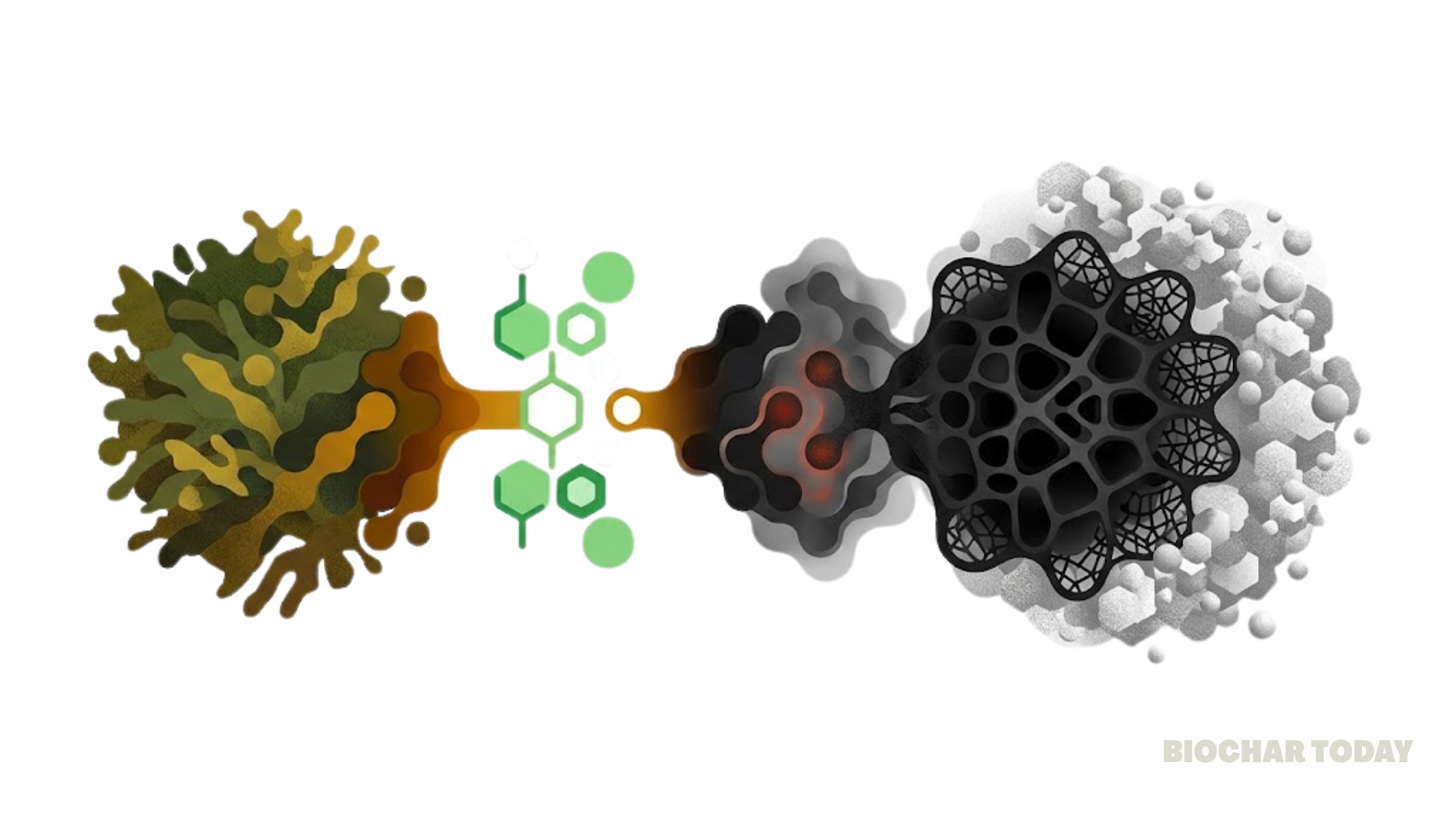
In a world grappling with 1.6 billion tons of annual food waste, spent coffee grounds (SCG) contribute a significant portion, amounting to almost 15 million tons annually. Looking towards sustainable solutions, a recent study sheds light on the potential of transforming this waste into a valuable resource. Specifically, the research focuses on utilizing SCG for the creation of activated biochar, a powerful adsorbent with applications in wastewater treatment.
The study, particularly relevant in regions like the Middle East and North Africa (MENA) facing wastewater challenges from the gas and oil industries, hones in on the removal of lithium (Li+) from synthetic aqueous solutions. With Li+ being a notable pollutant in “produced water,” its recovery holds economic and environmental significance. Activated biochar from SCG, produced using potassium hydroxide (KOH) and phosphoric acid (H3PO4) in the presence of catalysts, demonstrated remarkable efficiency. At 600 °C, the activated biochar exhibited a high adsorption capacity, removing 35 to 80 mg/g of Li+ across varying concentrations in the synthetic solution.
The results showcase the promise of SCG activated biochar as a sustainable and cost-effective adsorbent, removing over 95% of Li+ within just 2 hours of contact time. By repurposing coffee waste into a green solution for water treatment, this research points towards a circular economy approach that addresses both food waste and environmental pollution. As we move towards 2030, this innovative strategy offers hope for a more sustainable and efficient solid waste management system on a global scale.


Leave a Reply