
Key Takeaways
- Discarded microalgae material left over after making high-value products can be successfully recycled into an efficient water filter.
- This recycled filter material proves exceptionally powerful at removing highly toxic lead pollution from contaminated water.
- Cooking the leftover microalgae at a specific medium temperature creates the most stable and porous material for maximum pollution capture.
- The advanced filter locks lead onto its surface through a chemical process, stopping the metal from spreading further into the environment.
- These filters can be cleaned with a mild acid solution and reused multiple times, making the treatment process both affordable and eco-friendly.
The progressive deterioration of water security across the globe has forced researchers to look for creative ways to clean industrial effluents before they enter the environment. Writing in the journal ACS Sustainable Resource Management, authors Anjon Kumar Mondal, Cora Hinkley, C. I. Sathish, Ajayan Vinu, Stalin Kondaveeti, Farjana Akter, Peter Ralph, and Unnikrishnan Kuzhiumparambil investigate how a specific marine microalga can be utilized to address this crisis. Typically, microalgae are harvested to extract valuable lipids, proteins, and fatty acids for commercial products, leaving behind a massive amount of spent biomassBiomass is a complex biological organic or non-organic solid product derived from living or recently living organism and available naturally. Various types of wastes such as animal manure, waste paper, sludge and many industrial wastes are also treated as biomass because like natural biomass these More that is usually discarded as waste. The authors demonstrate that this leftover material can be systematically upcycled through oxygen-free heat treatment to create a high-capacity filter called biocharBiochar is a carbon-rich material created from biomass decomposition in low-oxygen conditions. It has important applications in environmental remediation, soil improvement, agriculture, carbon sequestration, energy storage, and sustainable materials, promoting efficiency and reducing waste in various contexts while addressing climate change challenges. More. This strategy transforms an industrial waste stream into a powerful resource, directly supporting a zero-waste circular bioeconomy while offering an inexpensive method to safeguard communities from heavy metal toxicity.
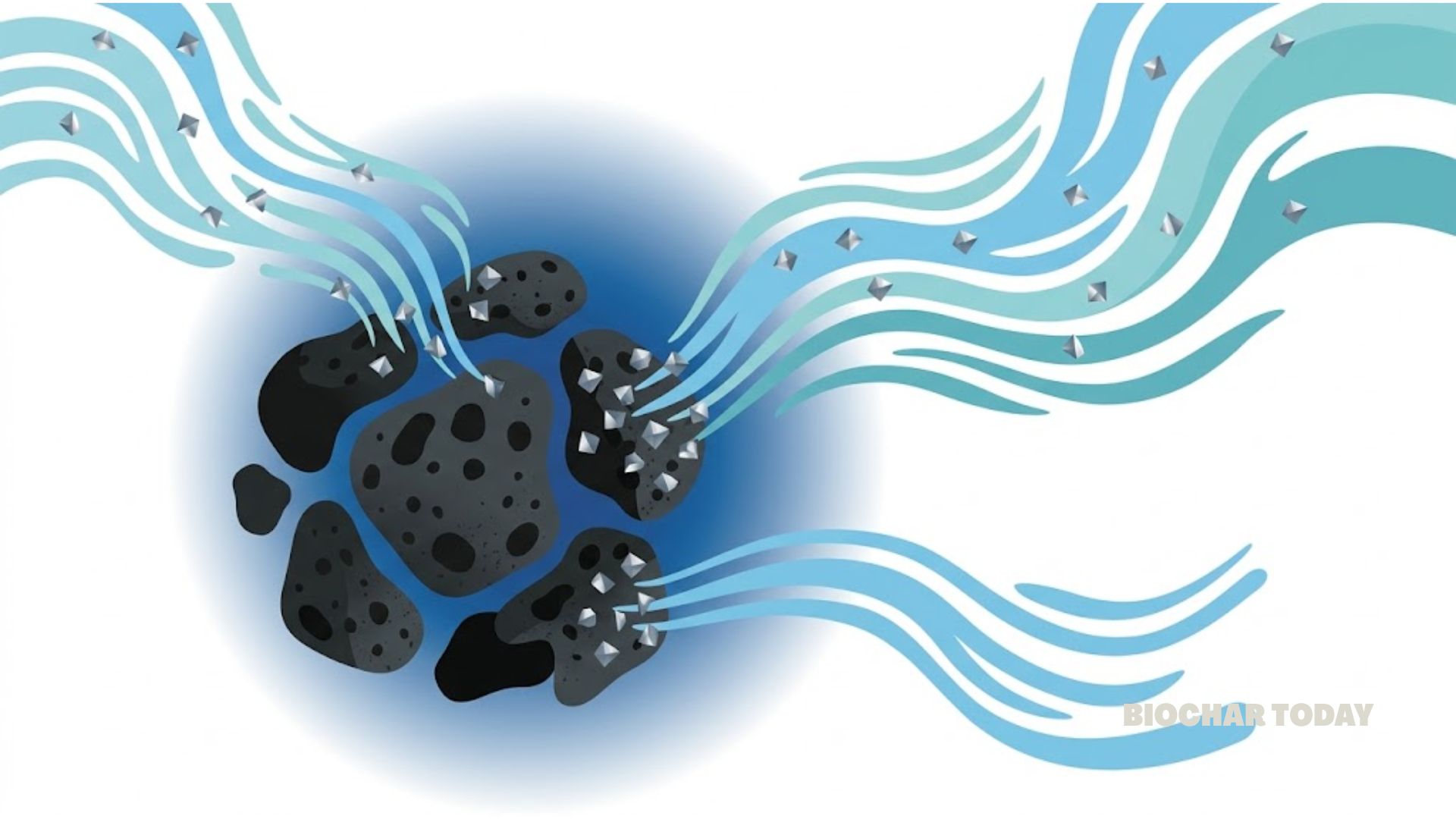
The primary target of this newly engineered filter is lead, which is widely recognized as one of the most persistent and destructive heavy metals found in industrial wastewater. Lead accumulates rapidly in living organisms and can cause severe health damage in humans, including high blood pressure, kidney failure, and permanent brain damage. Children are especially vulnerable, suffering from impaired neurological development and decreased psychological function when exposed to even tiny amounts of the metal. While standard wastewater treatments like membrane separation or reverse osmosis exist, they are often too expensive for large-scale deployment and produce highly toxic sludge that requires additional disposal. Using the microalgal biochar as an adsorbent solves these problems simultaneously because the material is naturally abundant, inexpensive, and structurally optimized to trap heavy metals out of solution without creating secondary industrial sludge.
The core breakthrough of the research lies in identifying how the cooking temperature entirely alters the physical and chemical behavior of the final material. The research team tested three distinct temperatures, discovering that processing the algae residue at a medium temperature of 550 degrees Celsius creates the ultimate filter. At this specific thermal sweet spot, the volatile organic matter inside the algae escapes evenly, etching out a complex network of tiny pores, channels, and cavities on the surface. This medium-temperature variant achieves a significantly larger surface area and internal pore volume compared to versions cooked at lower or higher temperatures, which either fail to develop enough pores or suffer a structural collapse from excessive heat. Additionally, this ideal version retains the highest volume of crucial inorganic nutrients and active chemical bonds, which act like magnets to bind heavy metals.
When tested in heavily polluted water, this optimized biochar achieved a maximum lead adsorption capacity of 476.19 milligrams per gram, outperforming a wide array of other algal and agricultural materials. The material works through multiple scientific mechanisms, primarily relying on a chemical sharing process where lead ions form tight, permanent bonds with oxygen-containing groups on the filter surface. Simultaneously, the natural minerals locked inside the biochar dissolve into the water and react with the lead, causing the toxic metal to precipitate out as harmless, solid mineral salts directly inside the filter’s microscopic pores. The final filtered water experienced a massive reduction in toxicity, highlighting the practical strength of the material.
Economic feasibility is a vital part of any real-world environmental solution, and the study confirms that these microalgae filters are built for longevity and repeated operation. The researchers discovered that the lead-loaded biochar can be effectively rinsed and regenerated using a mild hydrochloric acid solution. This washing process strips the trapped lead away, clearing out the clogged active sites without destroying the underlying porous framework of the carbon matrix. The filter maintained an exceptional removal efficiency of over 91 percent after its first completed cleaning cycle and continued to trap nearly 83 percent of available lead ions even after being used, cleaned, and reused five consecutive times. While long-term challenges like adapting the filters to complex real-world industrial mixtures still require further study, this discovery provides a clear, sustainable blueprint for turning commercial waste into a vital tool for global clean water preservation.
Source: Mondal, A. K., Hinkley, C., Sathish, C. I., Vinu, A., Kondaveeti, S., Akter, F., Ralph, P., & Kuzhiumparambil, U. (2026). Residual Phaeodactylum tricornutum-derived biochar for effective removal of Pb(II) from wastewater. ACS Sustainable Resource Management.



Leave a Reply