
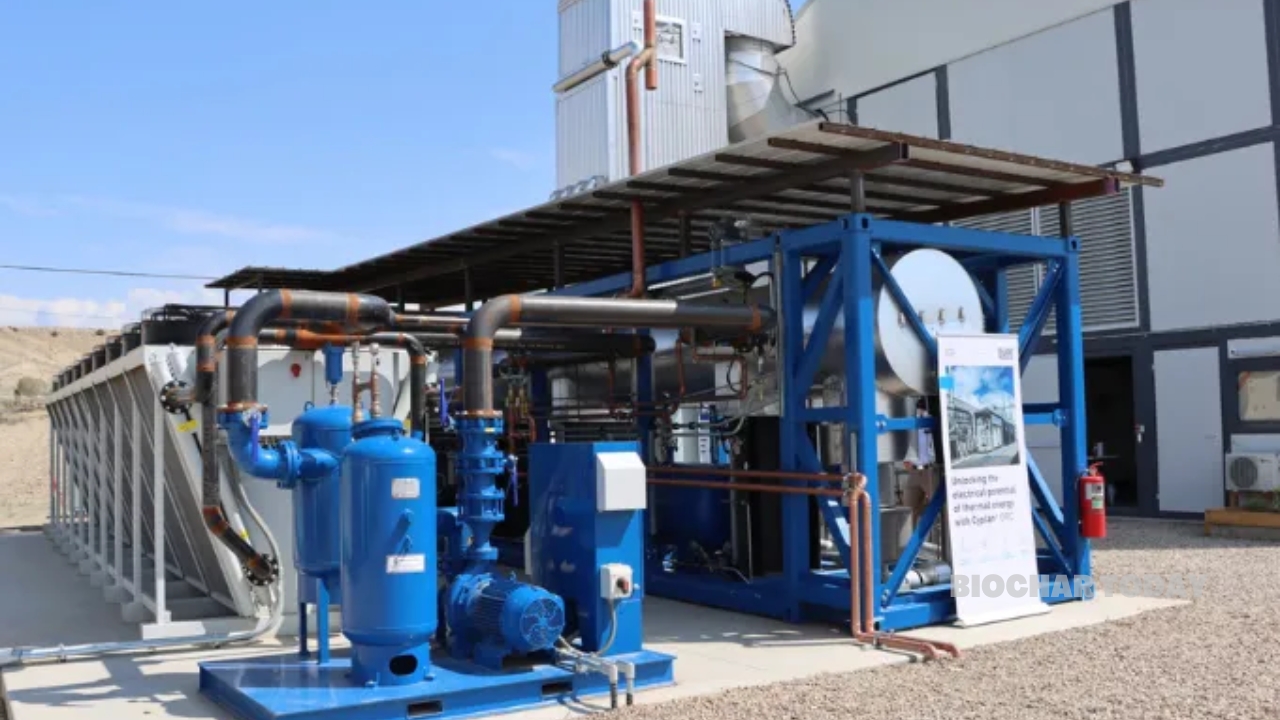
CO2 Sync, in partnership with technology provider Carbo-FORCE and supported by the Carbon County Chamber of Commerce, officially launched its new commercial pyrolysisPyrolysis is a thermochemical process that converts waste biomass into bio-char, bio-oil, and pyro-gas. It offers significant advantages in waste valorization, turning low-value materials into economically valuable resources. Its versatility allows for tailored products based on operational conditions, presenting itself as a cost-effective and efficient More and clean energy production plant in Price, Utah, United States. Headquartered in Charleston, Utah, CO2 Sync hosted a ribbon-cutting ceremony to mark the commercial operation of its CF-1000 facility. The new plant utilizes advanced pyrolysis technology to convert regional wood waste and dead forest biomassBiomass is a complex biological organic or non-organic solid product derived from living or recently living organism and available naturally. Various types of wastes such as animal manure, waste paper, sludge and many industrial wastes are also treated as biomass because like natural biomass these More into high-density biocharBiochar is a carbon-rich material created from biomass decomposition in low-oxygen conditions. It has important applications in environmental remediation, soil improvement, agriculture, carbon sequestration, energy storage, and sustainable materials, promoting efficiency and reducing waste in various contexts while addressing climate change challenges. More. Simultaneously, the facility harnesses the excess thermal energy generated during pyrolysis to produce 100% emissions-free electricity and heat.
The project directly targets the dual operational challenges of hazardous forest fuel buildup and agricultural nutrient inefficiency. In the western United States, accumulating dead biomass and beetle-killed timber pose severe wildfire risks to regional ecosystems and communities. In traditional agricultural systems, up to 60% to 80% of applied synthetic fertilizers wash away through run-off, creating economic loss and soil degradation. Additionally, rural forestry management frequently lacks local commercial outlets for low-value waste wood, treating residual biomass as an expensive liability rather than a productive resource.
To address these challenges, CO2 Sync deployed Carbo-FORCE’s CF-1000 commercial pyrolysis system to establish an integrated processing hub in Price, Utah. The facility intake processes dead biomass and forest waste, systematically removing hazardous fuels from surrounding firesheds to mitigate catastrophic wildfire risks. During pyrolytic processing, the system captures released thermal energy and integrates Organic Rankine Cycle technology to generate clean, distributed electricity for the grid. The resulting carbon-dense biochar is distributed to agricultural intermediaries and farmers for use in regenerative agriculture.
The launch of the Price facility successfully establishes a scalable, replicable model for distributed biochar production, renewable power generation, and durable carbon dioxide removal. Mechanically applying the produced biochar to agricultural soils improves soil water retention and binds nutrients directly at plant root zones, mitigating fertilizer run-off. Operationally, the plant diverts wood waste from open decomposition or burning, converting a regional environmental hazard into clean power and valuable soil amendments. CO2 Sync plans to leverage this inaugural facility to expand similar biomass-to-energy operations across Utah and the United States.


![Eucalyptus Wood Waste-Derived Biochar Achieves a Ninety-Eight Percent Removal Efficiency for Benzo[ghi]perylene in Vehicle-Wash Wastewater](https://biochartoday.com/wp-content/uploads/2026/10/SCIENCE-BLOGS-2026-2026-10-19T160523.703.jpg)

Leave a Reply