
Chen, et al (2025) Lifecycle environmental benefits of integrated rational fertilization, biocharBiochar is a carbon-rich material created from biomass decomposition in low-oxygen conditions. It has important applications in environmental remediation, soil improvement, agriculture, carbon sequestration, energy storage, and sustainable materials, promoting efficiency and reducing waste in various contexts while addressing climate change challenges. More, and constructed wetland in mitigating nutrient loading. Agricultural Water Management. https://doi.org/10.1016/j.agwat.2024.109202
Modern agriculture faces significant environmental challenges, including nutrient runoff that harms water ecosystems. A new study explores how integrating three green practices—rational fertilization, biochar amendment, and constructed wetlands—can mitigate nutrient pollution and reduce environmental impacts, focusing on plum cultivation as a case study.
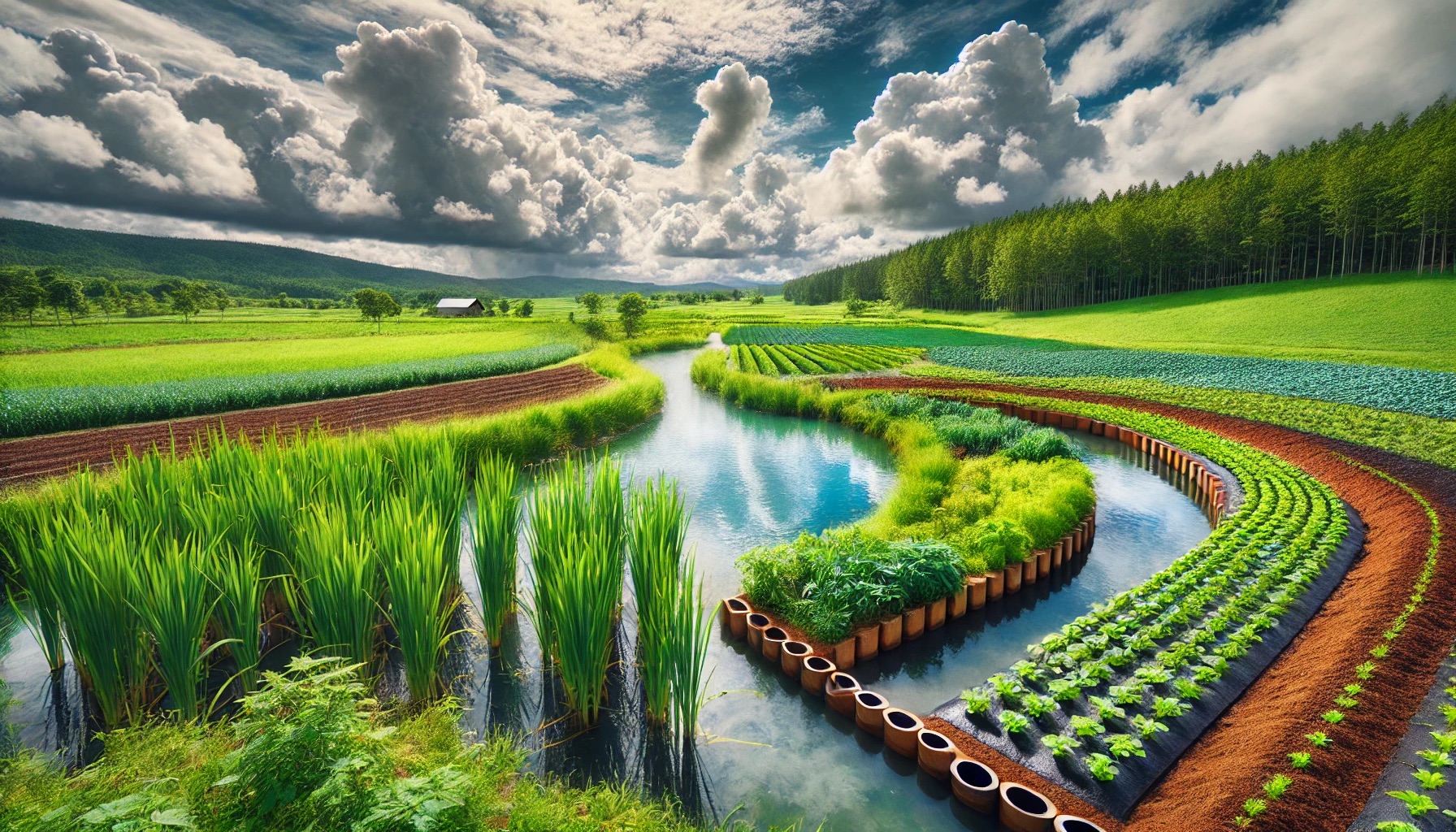
The research evaluates four scenarios: conventional farming, rational fertilization combined with biochar, conventional farming paired with constructed wetlands, and a combination of all three methods. Rational fertilization reduced fertilizer use by 50%, while biochar, derived from bamboo, enhanced soil fertility and retained nutrients. Constructed wetlands filtered agricultural runoff through physical and biological processes.
Key findings include:
• Rational fertilization and biochar reduced nitrogen runoff by 46.7% and nitrous oxide emissions by 54.3%.
• Constructed wetlands halved both freshwater and marine eutrophication impacts compared to conventional methods.
• Combining all three practices cut greenhouse gas emissions by 45.8%, lowering the carbon footprint of plum production from 300 to 138 kg CO2-equivalent per ton.
The life cycle analysis showed that biochar improved soil fertility and crop nutrient uptake (nitrogen from 57% to 89% and phosphorus from 9% to 63%), while constructed wetlands excelled at reducing water pollution. These green practices collectively support sustainable farming and address global challenges such as water pollution and climate change.
The study underscores the potential of integrated solutions in achieving sustainable agriculture, urging policy support and widespread adoption of these eco-friendly practices.





Leave a Reply