
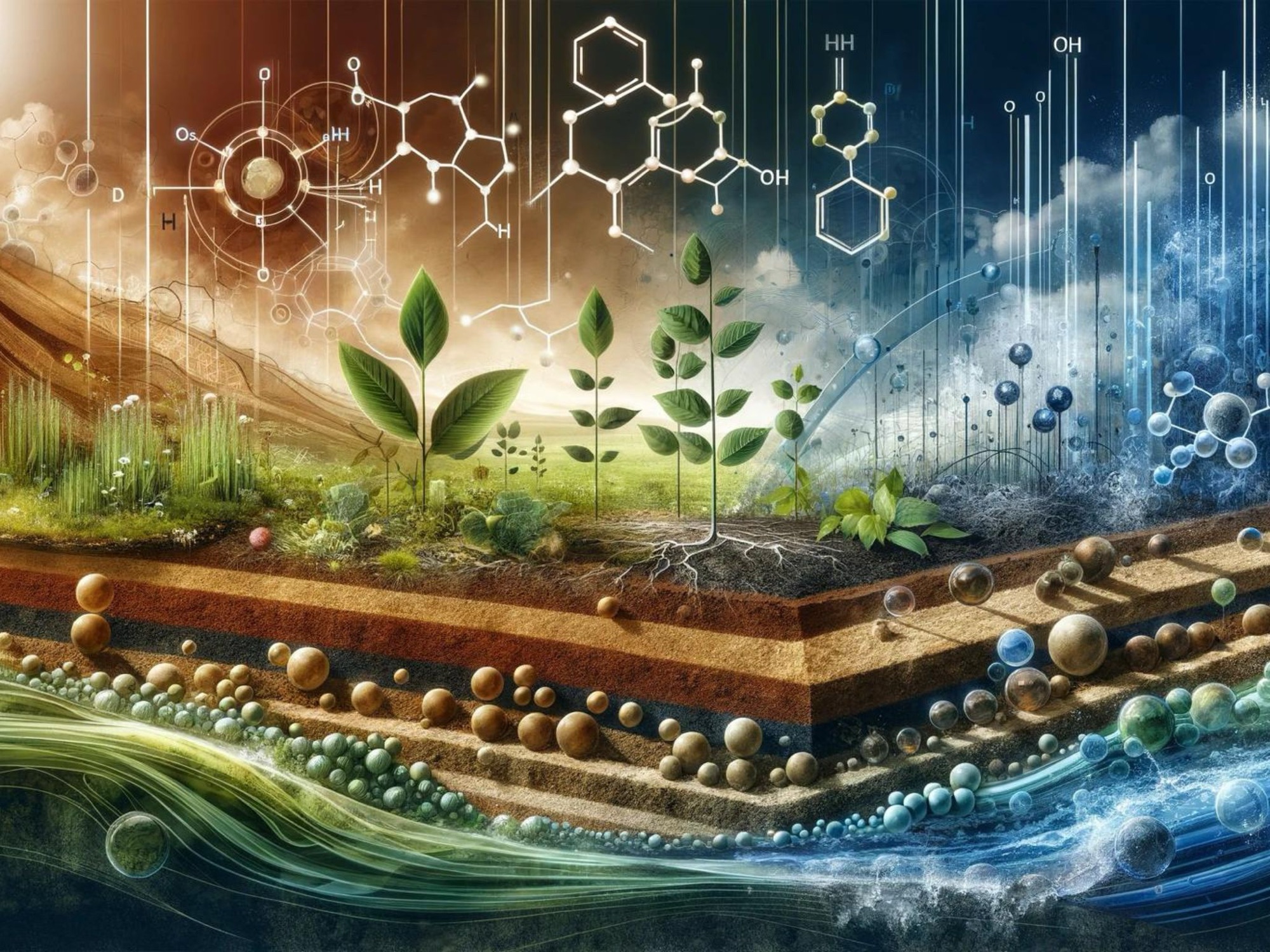
Zhu, et al (2024) Multifunctional N, Fe dual active site hydrothermal biocharBiochar is a carbon-rich material created from biomass decomposition in low-oxygen conditions. It has important applications in environmental remediation, soil improvement, agriculture, carbon sequestration, energy storage, and sustainable materials, promoting efficiency and reducing waste in various contexts while addressing climate change challenges. More for efficiently degrading paclobutrazol and promoting crop growth. Journal of Environmental Chemical Engineering. https://doi.org/10.1016/j.jece.2024.112872
In a study published in the Journal of Environmental Chemical Engineering, researchers have developed a new type of biochar that promises to revolutionize the way we handle persistent environmental pollutants and improve agricultural productivity. The study, led by Fangge Zhu and colleagues, introduces a multifunctional biochar with nitrogen and iron active sites, synthesized through a hydrothermal process using cotton straw, urea, and iron chloride.
This innovative material, termed NF-BC, showcases a high content of graphitic nitrogen and abundant Fe2+, which are crucial for activating peroxymonosulfate (PMS) to degrade paclobutrazol (PBZ), a stubborn pesticide known for its longevity in both soil and water environments. The degradation process leverages both free radical and non-free radical pathways, effectively breaking down PBZ, with pathways confirmed by advanced LC/MS and DFT studies.
Beyond its prowess in pollution remediation, the NF-BC/PMS system also enhances soil fertility. It notably increases the availability of potassium and hydrolyzed nitrogen, thereby boosting plant growth without altering the soil’s pHpH is a measure of how acidic or alkaline a substance is. A pH of 7 is neutral, while lower pH values indicate acidity and higher values indicate alkalinity. Biochars are normally alkaline and can influence soil pH, often increasing it, which can be beneficial More or organic matter content. The study details remarkable improvements in mung bean seedlings, including increased leaf area, biomassBiomass is a complex biological organic or non-organic solid product derived from living or recently living organism and available naturally. Various types of wastes such as animal manure, waste paper, sludge and many industrial wastes are also treated as biomass because like natural biomass these More accumulation, and root development, demonstrating the system’s dual benefit of detoxification and enhancement of plant health.
This research not only presents a sustainable approach to managing hard-to-degrade pollutants but also offers a low-cost solution to enhance soil fertility, making it a significant advancement in environmental science and agricultural practices. The dual-functionality of the NF-BC material addresses crucial ecological and agricultural challenges, providing a promising avenue for future developments in environmental remediation technologies.


Leave a Reply