
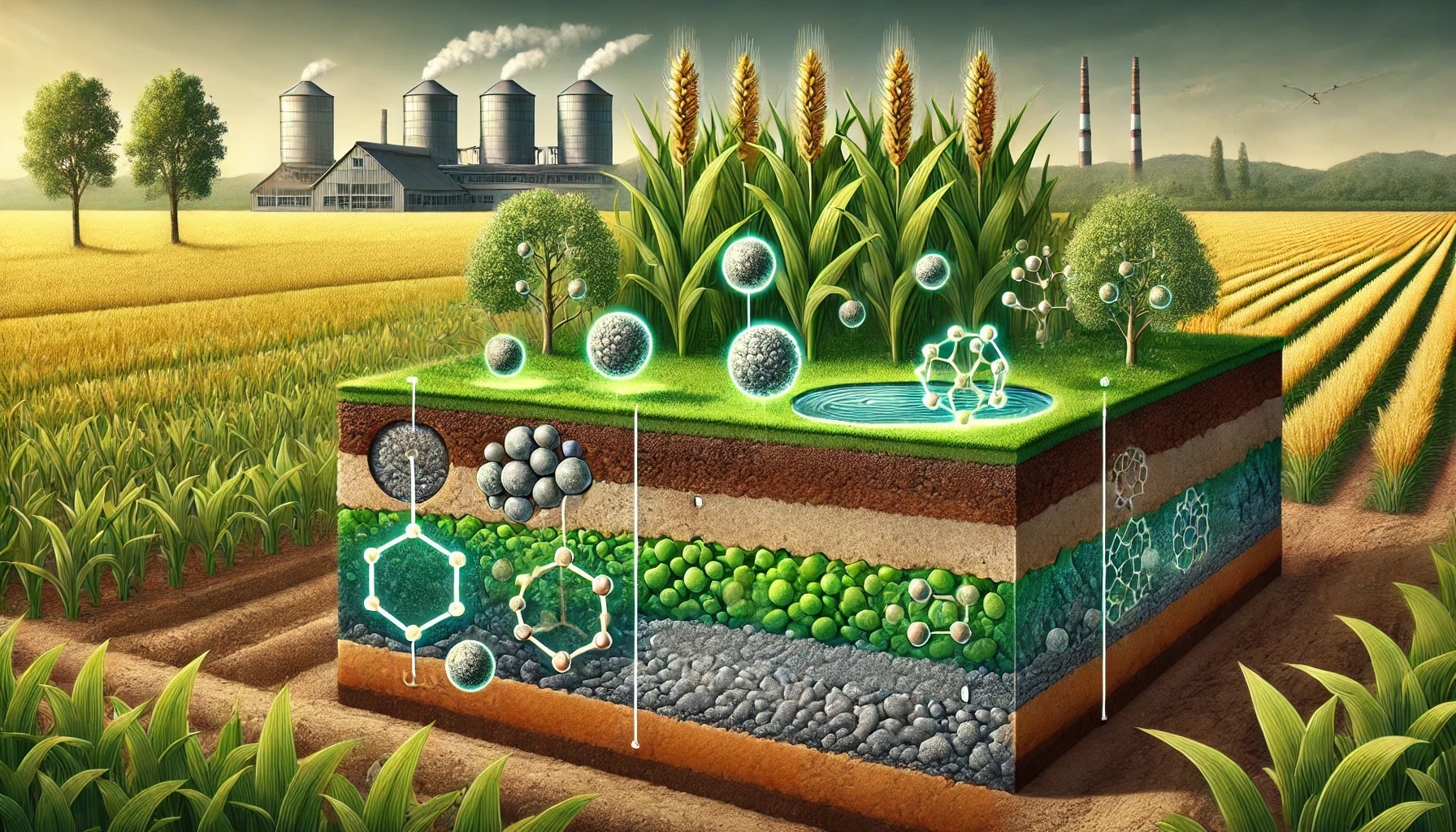
Rashid, et al (2024) Quantitative Soil Characterization for Biochar–Cd Adsorption: Machine Learning Prediction Models for Cd Transformation and Immobilization. Toxics. https://doi.org/10.3390/toxics12080535
Soil contamination with heavy metals like cadmium (Cd) is a significant environmental concern, impacting health and agriculture. A recent study examined how biocharBiochar is a carbon-rich material created from biomass decomposition in low-oxygen conditions. It has important applications in environmental remediation, soil improvement, agriculture, carbon sequestration, energy storage, and sustainable materials, promoting efficiency and reducing waste in various contexts while addressing climate change challenges. More (BC), a type of charcoalCharcoal is a black, brittle, and porous material produced by heating wood or other organic substances in a low-oxygen environment. It is primarily used as a fuel source for cooking and heating. More, can help mitigate Cd pollution in soils. By incorporating BC into various soil samples, researchers aimed to assess its effectiveness in reducing Cd levels and to develop predictive models using advanced machine learning techniques.
The study utilized several AI models—Long Short-Term Memory (LSTM), Bidirectional Gated Recurrent Unit (BiGRU), and a 5-layer Convolutional Neural Network (CNN)—to predict Cd concentrations based on soil properties such as pHpH is a measure of how acidic or alkaline a substance is. A pH of 7 is neutral, while lower pH values indicate acidity and higher values indicate alkalinity. Biochars are normally alkaline and can influence soil pH, often increasing it, which can be beneficial More, clay content, cation exchange capacity, organic carbon, and electrical conductivity. These properties were critical in understanding how BC influences Cd adsorption and immobilization in the soil.
BC’s role in soil remediation was evident through its impact on various soil characteristics. It significantly increased soil pH, organic carbon content, and cation exchange capacity, all of which contributed to lower Cd availability. The AI models demonstrated high accuracy in predicting Cd levels, with the CNN model showing the highest precision, explaining over 95% of the variance in Cd concentrations for BC-amended soils.
The LSTM and BiGRU models also performed well, particularly with BC-treated soils, indicating that these models can effectively capture the complex interactions between soil properties and Cd levels. This research highlights the potential of integrating BC into soil management practices to reduce heavy metal contamination and the use of AI models to predict and monitor soil health.
The findings suggest that adopting BC as a soil amendmentA soil amendment is any material added to the soil to enhance its physical or chemical properties, improving its suitability for plant growth. Biochar is considered a soil amendment as it can improve soil structure, water retention, nutrient availability, and microbial activity. More could play a crucial role in sustainable agriculture by mitigating heavy metal pollution and improving soil fertility. The study also underscores the value of AI in environmental monitoring, providing a robust framework for future soil remediation efforts.


Leave a Reply