
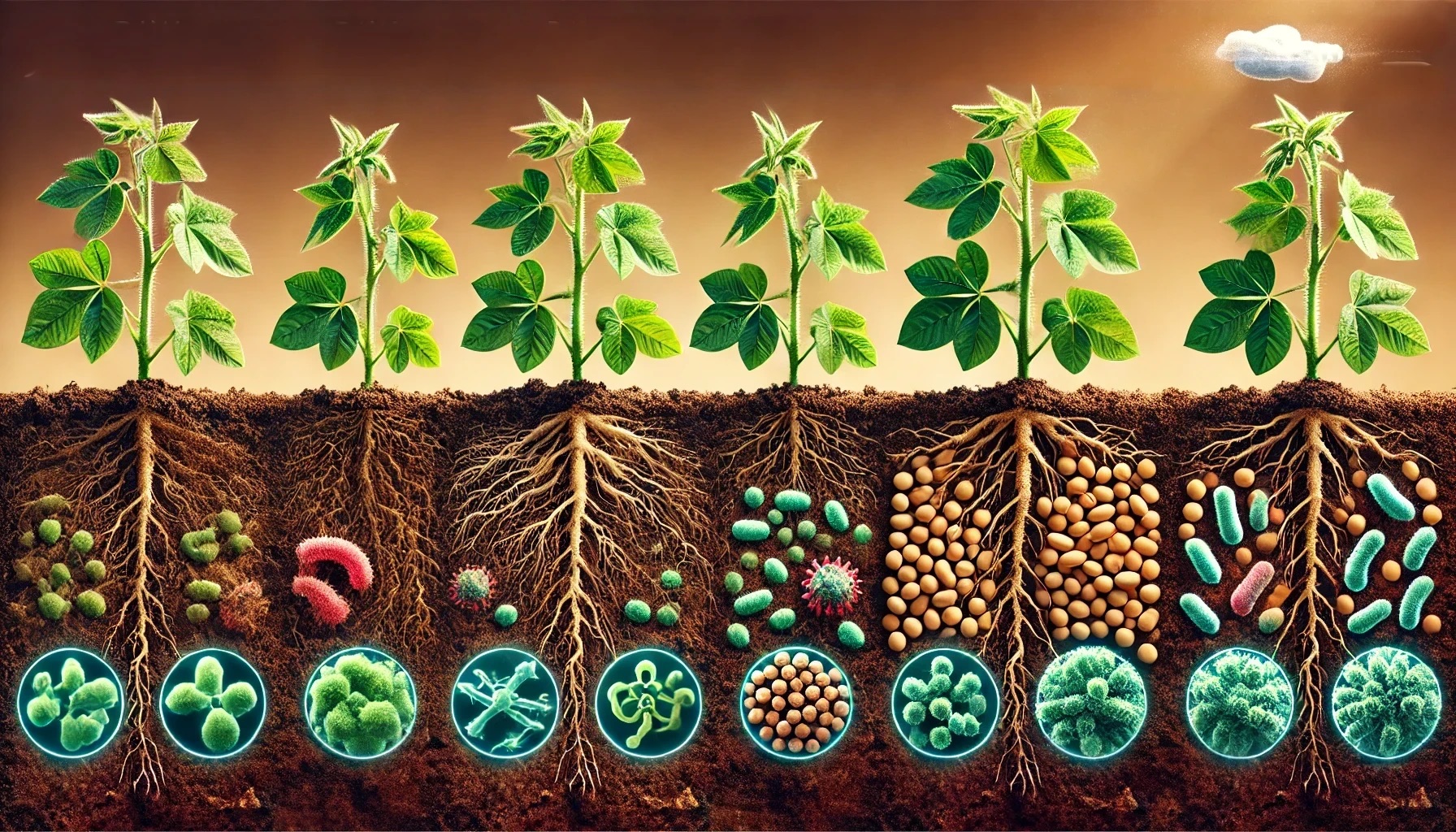
Wang, Y., Liu, C., Jiang, J. et al. Mechanism of KOH-Modified BiocharBiochar is a carbon-rich material created from biomass decomposition in low-oxygen conditions. It has important applications in environmental remediation, soil improvement, agriculture, carbon sequestration, energy storage, and sustainable materials, promoting efficiency and reducing waste in various contexts while addressing climate change challenges. More Application Under Water-Saving and Nitrogen-Reducing Conditions to Inhibit Soybean Root Rot and Improve Quality And Efficiency. J Soil Sci Plant Nutr (2024). https://doi.org/10.1007/s42729-024-01913-8
A study was conducted to investigate the effectiveness of raw biochar (BC) and modified biochar (KBC) in reducing soybean root rot and enhancing soybean quality. Various application rates were tested: 0 t·ha−1 (control), 15 t·ha−1, 30 t·ha−1, and 45 t·ha−1. The findings revealed that raw biochar’s impact on soybean root rot was minimal, reducing it by only about 7% at the highest application rate. In contrast, modified biochar showed significantly better results. The 30 t·ha−1 and 45 t·ha−1 KBC treatments reduced the disease index by 22.17% and 19.82%, respectively, compared to the control.
Both high application rates of BC and KBC improved soil aeration, bacterial abundance, and diversity in the soybean rhizosphere, as well as soil nutrient proportions. Notably, 30KBC and 45KBC increased the relative abundance of beneficial bacteria such as Acidobacteria, Mortierellomycota, Pseudomonas, Chryseolinea, Lysobacter, and Mortierella, while decreasing pathogenic bacteria like Bacteroidetes, Ascomycota, and Fusarium.
Soybean quality parameters, including oil content, potassium (K), phosphorus (P), and protein content, were enhanced with 30KBC. Overall, biochar improved soil physicochemical properties, reduced the relative abundance of pathogenic bacteria, and increased beneficial bacteria, leading to lower root rot incidence and better soybean quality. The study concluded that 30KBC is optimal for reducing water and nitrogen usage, alleviating continuous cropping obstacles, preventing disease, and improving soybean quality.



Leave a Reply