
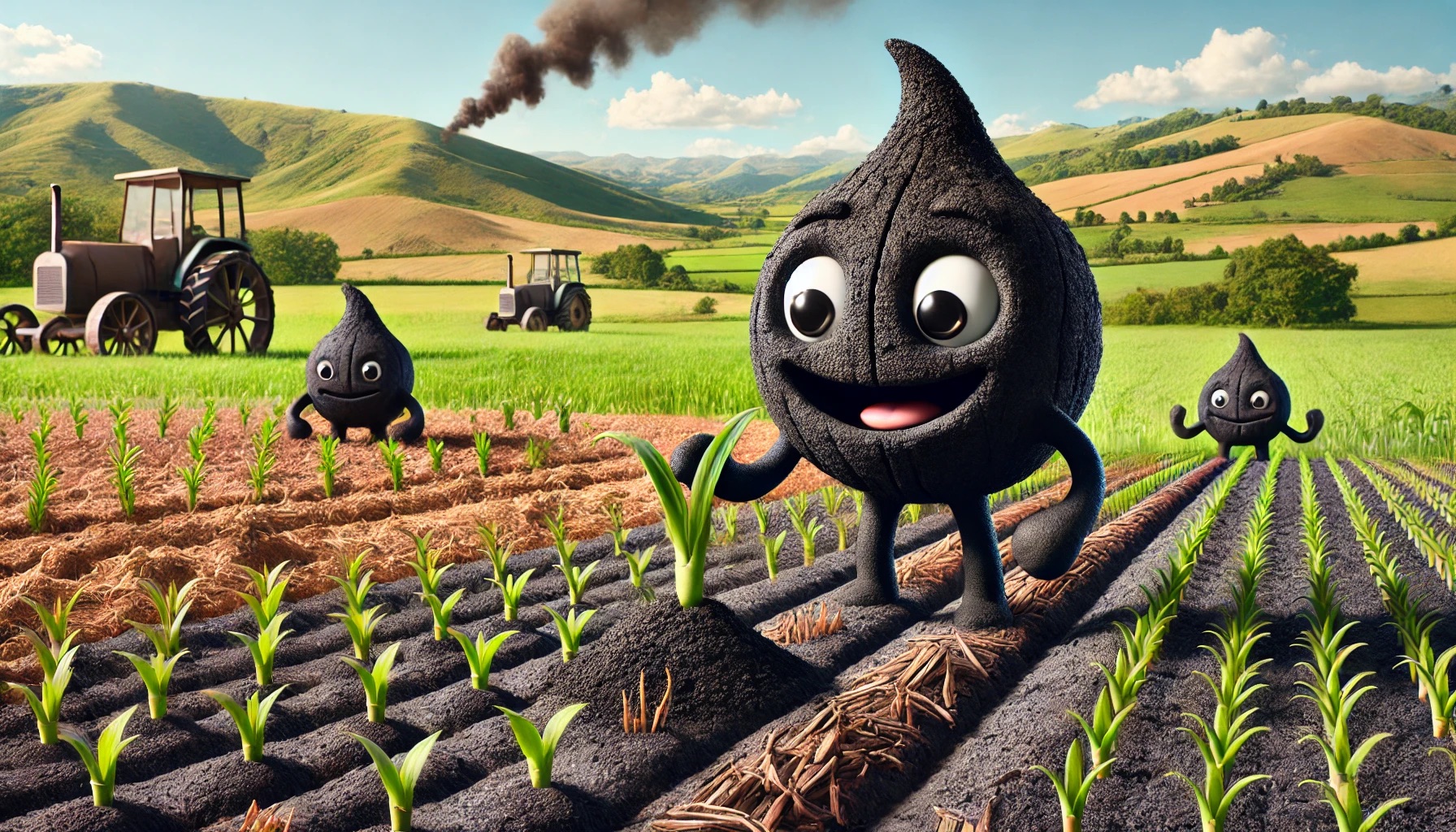
Gross, et al (2024) Long-term biocharBiochar is a carbon-rich material created from biomass decomposition in low-oxygen conditions. It has important applications in environmental remediation, soil improvement, agriculture, carbon sequestration, energy storage, and sustainable materials, promoting efficiency and reducing waste in various contexts while addressing climate change challenges. More and soil organic carbon stability – Evidence from field experiments in Germany. Science of the Total Environment. https://doi.org/10.1016/j.scitotenv.2024.176340
Biochar is gaining attention as a tool for carbon sequestration, yet its long-term effects on soil organic carbon (SOC) remain uncertain. A recent study from Germany provides valuable insights based on two long-term field experiments conducted in Bayreuth and Gartow. These experiments, initiated over a decade ago, explored the impact of biochar application on SOC stability in different soil types.
The findings indicate that biochar effectively increases SOC stocks, particularly in loamy soils like those in Bayreuth. Here, the application of high biochar quantities (31.5 Mg ha−1) resulted in a significant and stable SOC increase over eleven years. In contrast, on sandy soils in Gartow, biochar addition (40 Mg ha−1) initially boosted SOC but most of these gains dissipated over time, likely due to the soil’s inability to physically protect the carbon.
Key factors influencing the long-term effectiveness of biochar include soil texture and biochar composition. The stability of carbon in loamy soils, where biochar persists longer, contrasts with sandy soils where carbon loss is more rapid. Additionally, biochar with higher aromatic content, like that used in Bayreuth, demonstrated greater long-term stability compared to biochar with lower carbon content.
This study highlights that biochar can contribute to carbon sequestration, but its effectiveness varies with soil type and biochar quality. Further research is needed to better understand biochar’s long-term impact under different environmental conditions.


Leave a Reply