
Key Takeaways
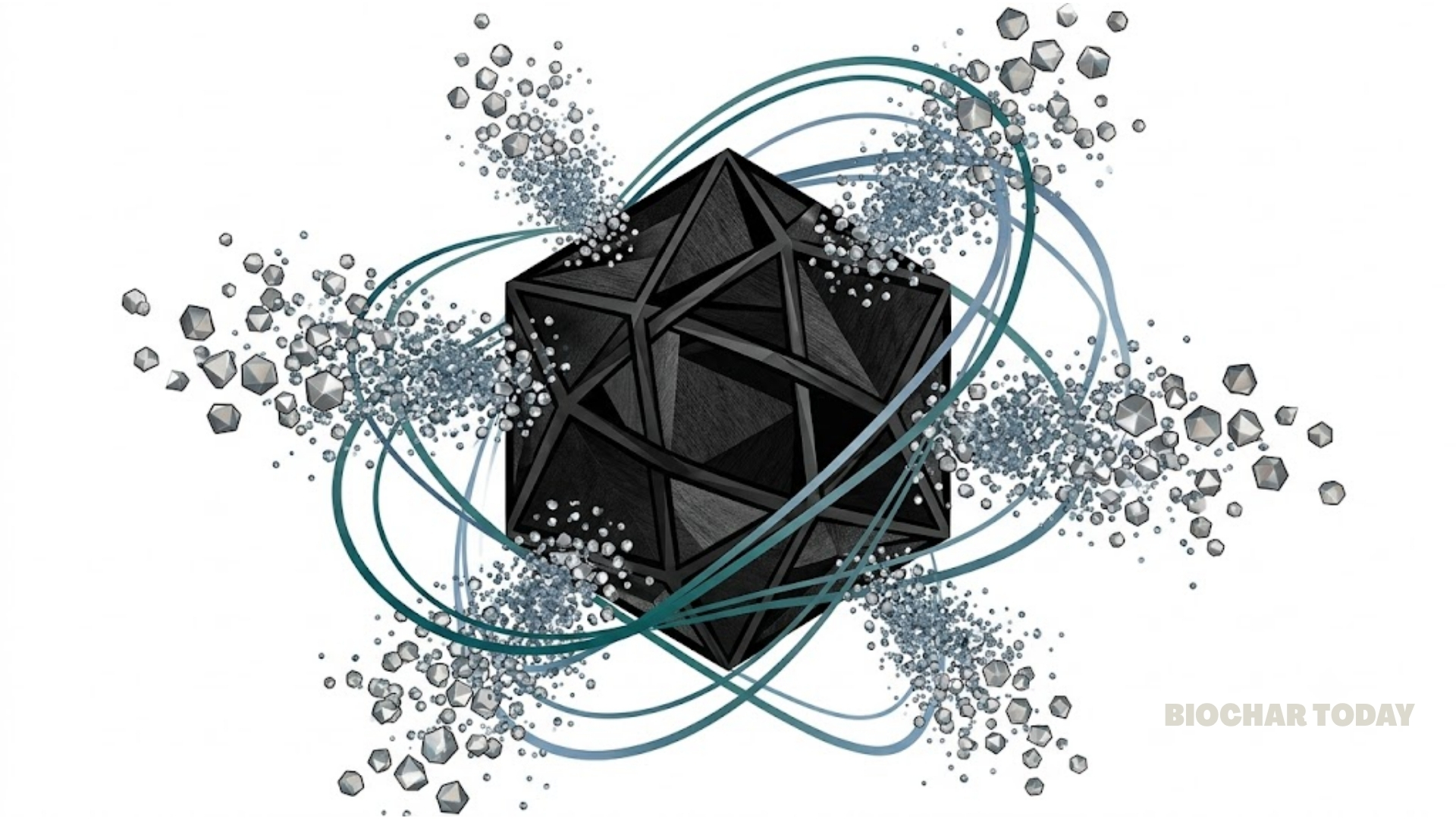
- Nano-biochar made from wood chips pyrolyzed at four hundred degrees Celsius reduces toxic silver ions into silver nanoparticles two point five times faster than nano-biochar made at seven hundred degrees Celsius.
- Converting toxic silver ions into silver nanoparticles reduces cell toxicity by ninety-nine percent, transforming a hazardous water pollutant into a manageable metallic resource.
- The conversion process requires weakly alkaline conditions between pHpH is a measure of how acidic or alkaline a substance is. A pH of 7 is neutral, while lower pH values indicate acidity and higher values indicate alkalinity. Biochars are normally alkaline and can influence soil pH, often increasing it, which can be beneficial More eight point five and nine point five, with no nanoparticle formation occurring in acidic or neutral water.
- Superoxide radicals produced by the interaction of persistent free radicals and deprotonated oxygen-containing groups serve as the primary drivers of silver reduction.
Silver ion contamination in aquatic systems poses significant ecological and human health threats due to high metal mobility and cellular toxicity. Industrial effluents can contain silver ion concentrations reaching up to five milligrams per liter, whereas silver nanoparticles exhibit a hundred-fold reduction in toxicity toward human cells. Transforming dissolved silver ions into solid silver nanoparticles offers a dual benefit by mitigating environmental toxicity and enabling the recovery of valuable precious metals from industrial wastewater. However, conventional nanoparticle synthesis methods often require toxic chemical reductants, external ultraviolet light, or lengthy biological incubation periods.
To address these limitations, researchers investigated the performance of nano-biochar synthesized via ball milling from wood chip biocharBiochar is a carbon-rich material created from biomass decomposition in low-oxygen conditions. It has important applications in environmental remediation, soil improvement, agriculture, carbon sequestration, energy storage, and sustainable materials, promoting efficiency and reducing waste in various contexts while addressing climate change challenges. More pyrolyzed at four hundred degrees Celsius and seven hundred degrees Celsius. The team discovered that the chemical reduction of silver ions by nano-biochar is strictly regulated by solution pH. In acidic and neutral environments ranging from pH six point five to seven point five, surface functional groups on the nano-biochar remain protonated, blocking electron transfer and preventing nanoparticle formation. When the solution is adjusted to weakly alkaline conditions between pH eight point five and nine point five, surface functional groups deprotonate, triggering rapid silver ion reduction that peaks at pH nine point five.
The superior performance of lower-temperature nano-biochar stems directly from its surface chemistry. Lower pyrolysisPyrolysis is a thermochemical process that converts waste biomass into bio-char, bio-oil, and pyro-gas. It offers significant advantages in waste valorization, turning low-value materials into economically valuable resources. Its versatility allows for tailored products based on operational conditions, presenting itself as a cost-effective and efficient More temperatures preserve vital oxygen-containing functional groups, providing three point zero one millimoles per gram of phenolic hydroxyl groups—more than two point six times the amount found in high-temperature nano-biochar. This higher concentration of phenolic groups provides an electron-donating capacity one point five six times greater than that of high-temperature material. Under alkaline conditions, these deprotonated groups work synergistically with persistent free radicals embedded in the carbon matrix to transfer electrons to dissolved oxygen, generating superoxide radical intermediates that drive the conversion of silver ions into metallic nanoparticles.
The study also identified critical operational limits regarding material dosage. While moderate dosages of nano-biochar effectively catalyze silver reduction, excessive dosages above ten milligrams per liter for low-temperature material or twenty milligrams per liter for high-temperature material inhibit nanoparticle yield. High material concentrations lead to particle aggregation, reduced availability of interfacial reactive sites, and self-consumption of reactive oxygen species. High-resolution transmission electron microscopy confirmed that the resulting silver nanoparticles are quasi-spherical with face-centered cubic crystalline structures ranging from five point eight eight to twenty-three point five three nanometers in diameter.
By clarifying the pH-dependent mechanism and identifying superoxide radicals as the primary reaction intermediate, this research provides a theoretical foundation for using engineered nano-biochar in sustainable wastewater treatment. Operating without external energy inputs or hazardous chemical additives, pH-regulated nano-biochar offers a rapid, low-cost platform for capturing toxic heavy metals and recovering valuable industrial materials from aquatic systems.
Source: Gu, S., Wang, D., Wang, T., & Zhu, W. (2026). pH-regulated surface chemistry of nano-biochar for selective silver ion reduction: the pivotal role of superoxide radicals. Biochar, 8(1), 133.


Leave a Reply