
Shao, et al (2024) Lead ions removal from water by tartaric acid modified biocharBiochar is a carbon-rich material created from biomass decomposition in low-oxygen conditions. It has important applications in environmental remediation, soil improvement, agriculture, carbon sequestration, energy storage, and sustainable materials, promoting efficiency and reducing waste in various contexts while addressing climate change challenges. More materials: Equilibrium, kinetic studies and mechanism. Desalination and Water Treatment. https://doi.org/10.1016/j.dwt.2024.100601
The modern industrial era has brought numerous advancements, but it has also introduced various environmental challenges, including heavy metal pollution. Lead (Pb2+), in particular, poses significant health risks, contributing to various disorders and diseases. Traditional methods for mitigating metal pollution, such as membrane filtration, ion exchange, and bioremediation, often involve high costs and complex processes. In contrast, adsorption using biochar has emerged as a cost-effective and efficient alternative.
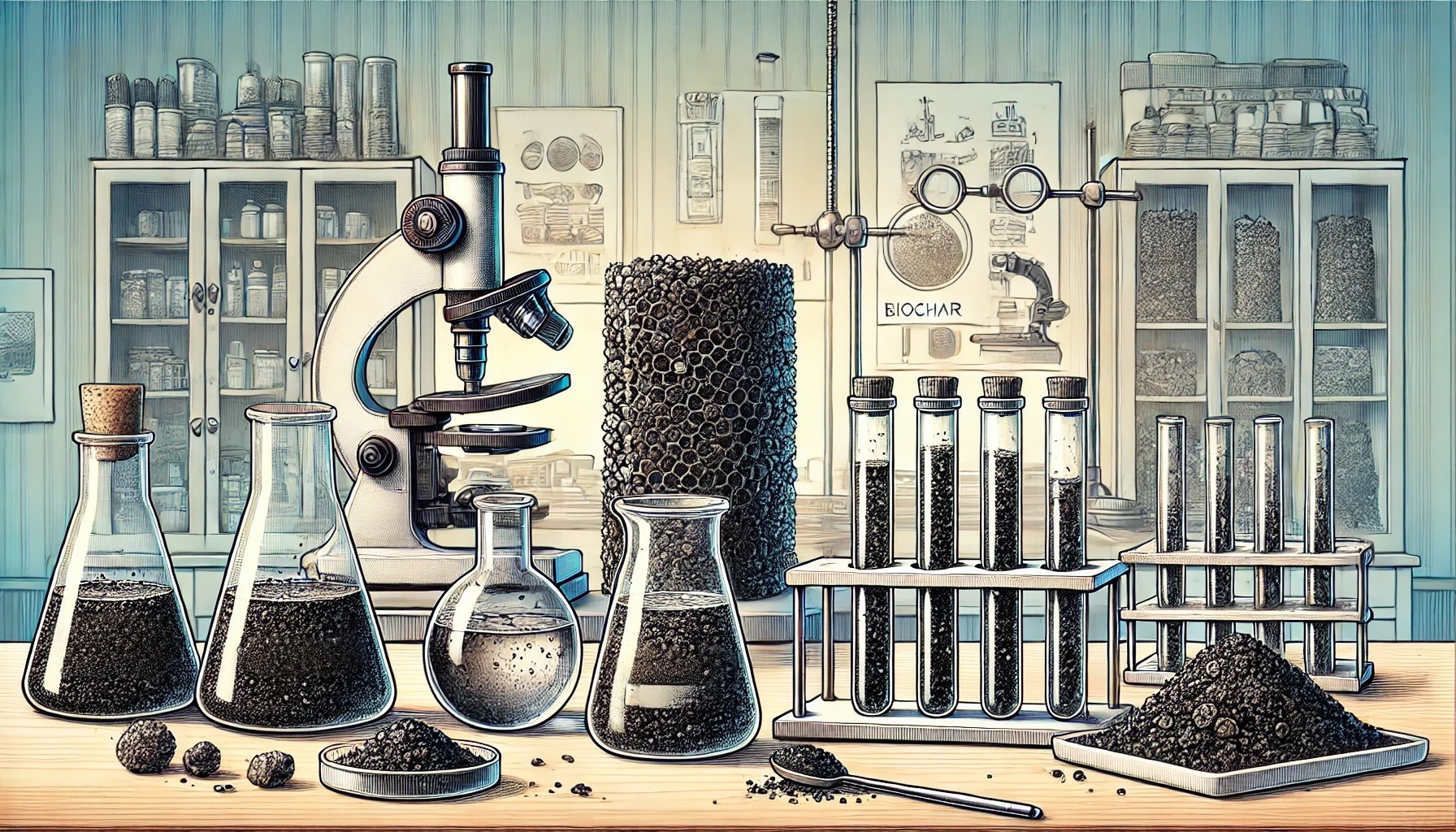
A recent study focused on the use of tartaric acid-modified biochar, derived from municipal and pharmaceutical sludge, to enhance the adsorption of lead ions from water. This innovative approach not only addresses the issue of waste sludge utilization but also improves the efficiency of pollutant removal. The study involved a detailed analysis of the physicochemical properties of the biochar, using techniques like scanning electron microscopy (SEM), Fourier-transform infrared spectroscopy (FTIR), and X-ray diffraction (XRD).
The research demonstrated that tartaric acid modification significantly improves the adsorption capacity of biochar by increasing its surface area and functional groups. The modified biochars, referred to as MBC-TA and PBC-TA, exhibited a substantial increase in adsorption capacity, with values of 22.58 mg/g and 22.86 mg/g, respectively. These modifications primarily enhance chemisorption, as indicated by the pseudo-second-order kinetic model.
Various factors affecting adsorption were systematically examined, including adsorbent dosage, reaction time, and pHpH is a measure of how acidic or alkaline a substance is. A pH of 7 is neutral, while lower pH values indicate acidity and higher values indicate alkalinity. Biochars are normally alkaline and can influence soil pH, often increasing it, which can be beneficial More levels. The study found that the optimal adsorption conditions involved a pH of 6.0, a reaction time of 120 minutes, and an adsorbent dosage of 0.6 g/L. Under these conditions, the removal efficiencies of MBC-TA and PBC-TA reached 74.93% and 76.79%, respectively.
The study also explored the impact of competing ions in the solution, such as K+, Na+, Ca2+, and Mg2+. While monovalent ions like K+ and Na+ showed minimal impact on adsorption efficiency, divalent ions like Ca2+ and Mg2+ significantly inhibited Pb2+ removal due to competition for adsorption sites. This underscores the importance of considering the presence of other ions in real-world water treatment scenarios.
Furthermore, the reusability of the modified biochar was tested through desorption experiments. After three cycles, MBC-TA and PBC-TA retained a significant portion of their adsorption capacity, highlighting their potential for practical applications. The study also simulated industrial wastewater conditions, demonstrating that MBC-TA and PBC-TA could achieve removal efficiencies of 70.64% and 72.94%, respectively, even in complex water matrices.
This research presents a promising solution for both waste sludge management and heavy metal pollution control. By enhancing the adsorption capacity of biochar through tartaric acid modification, it is possible to develop efficient, cost-effective, and sustainable methods for water purification. The findings provide a solid foundation for future studies and practical applications aimed at mitigating environmental pollution and promoting resource recovery.




Leave a Reply