
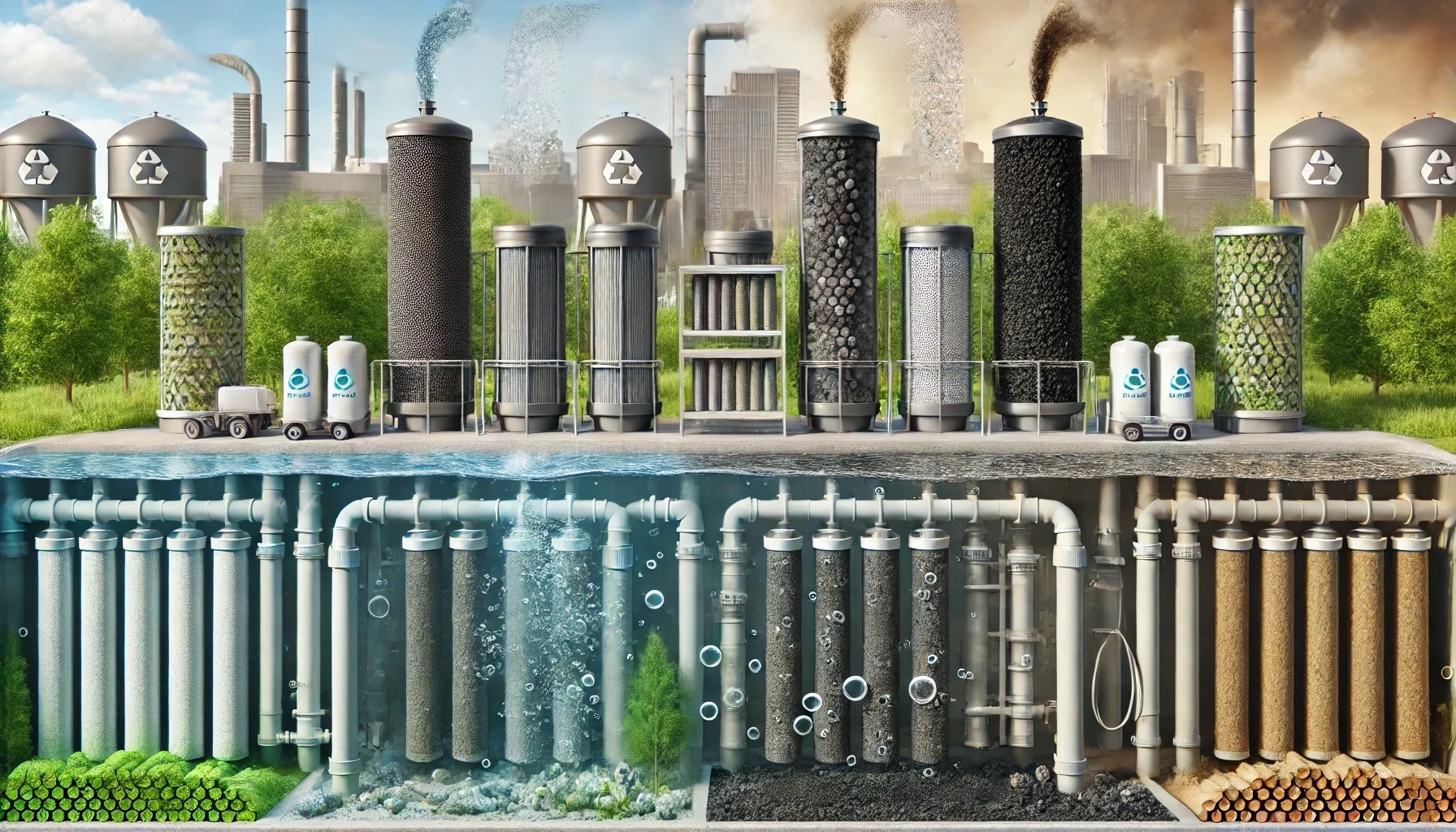

Greywater (GW) treatment is essential for water reuse and sustainability, particularly in water-scarce regions. A recent study compared the effectiveness of activated carbon (AC) and woodchip biochar (BC) in removing contaminants such as chemical oxygen demand (COD) and surfactants from GW. Surfactants, commonly used in cleaning products, pose environmental risks and need efficient removal for safe greywater reuse.
The study found that both AC and BC are effective adsorbents for GW treatment, but they excel at different tasks. AC demonstrated superior performance in removing COD and anionic surfactants (ASU), while BC was more effective at removing non-ionic surfactants (NISU). This makes biochar an attractive, cost-effective option for short-term applications where non-ionic surfactants are the primary concern. However, AC offers greater longevity and higher overall capacity for treating water with high organic content and anionic surfactants.
Both treatments reduced contaminant levels to meet Italian and Australian standards for non-potable water reuse, making treated greywater suitable for applications like irrigation or cleaning. Biochar, produced from low-cost, sustainable feedstocks, offers an environmentally friendly alternative to the more expensive and resource-intensive AC, particularly for short-term or specific pollutant removal needs.
This study highlights the potential for biochar to serve as a sustainable option for greywater treatment, contributing to water conservation and reuse in urban settings.




Leave a Reply