
Mobarak, et al (2024) Unveiling the reactor effect: a comprehensive characterization of biocharBiochar is a carbon-rich material created from biomass decomposition in low-oxygen conditions. It has important applications in environmental remediation, soil improvement, agriculture, carbon sequestration, energy storage, and sustainable materials, promoting efficiency and reducing waste in various contexts while addressing climate change challenges. More derived from rubber seed shell viapyrolysis and in-house reactor. RSC Advances. https://doi.org/10.1039/D4RA05562D
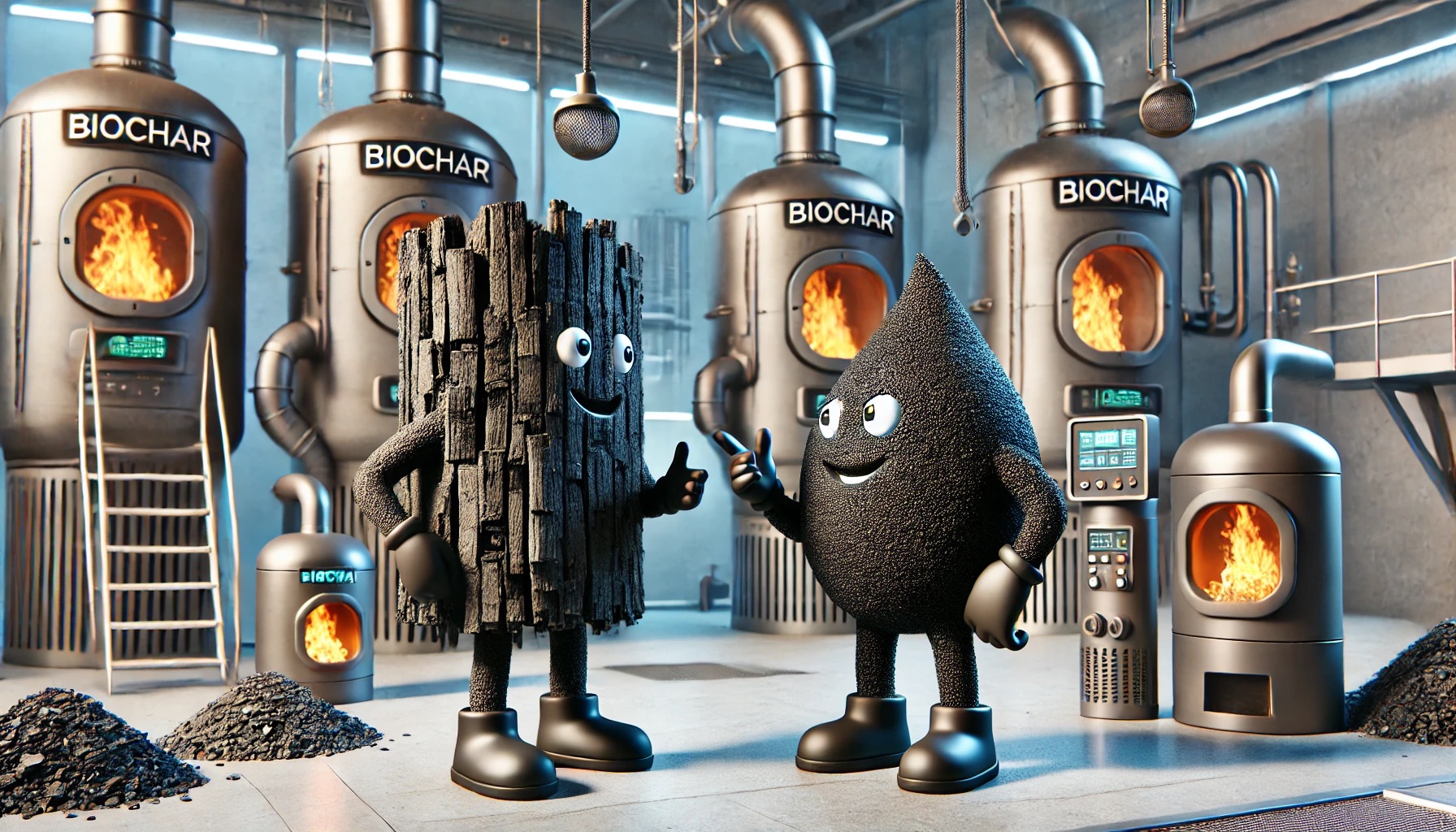
In a recent study, biochar was produced from rubber seed shell (RSS) using two different reactors: an in-house built pyrolysisPyrolysis is a thermochemical process that converts waste biomass into bio-char, bio-oil, and pyro-gas. It offers significant advantages in waste valorization, turning low-value materials into economically valuable resources. Its versatility allows for tailored products based on operational conditions, presenting itself as a cost-effective and efficient More reactor (RSSBC-1) and a commercial pyrolysis reactor (RSSBC-2). The research aimed to compare the properties of biochar derived from each reactor under identical conditions (600°C for 3 hours), revealing significant differences.
Key findings included higher carbon (C) and nitrogen (N) content in RSSBC-1, while hydrogen (H) and oxygen (O) were higher in RSSBC-2. The specific surface area was also greater for RSSBC-1 at 336.02 m²/g compared to 299.09 m²/g for RSSBC-2, highlighting RSSBC-1’s potential for superior adsorption capabilities.
Other analyses, such as XPS and FTIR, confirmed that both biochars displayed an amorphous carbon structure, but RSSBC-2 had a slightly higher defect density and greater average hydrodynamic diameter. Thermogravimetric analysis (TGA) showed that both biochars had good thermal stability, but RSSBC-2 exhibited slightly higher stability.
The results suggest that biochar prepared using the in-house reactor had superior properties, such as higher carbon content and larger surface area, indicating its potential as a cost-effective alternative for applications in waste valorization, carbon sequestration, and environmental remediation.




Leave a Reply