
Key Takeaways
- Advanced artificial intelligence can now predict how quickly biocharBiochar is a carbon-rich material created from biomass decomposition in low-oxygen conditions. It has important applications in environmental remediation, soil improvement, agriculture, carbon sequestration, energy storage, and sustainable materials, promoting efficiency and reducing waste in various contexts while addressing climate change challenges. More materials will break down harmful antibiotic pollution in our water systems.
- Scientists identified that the most effective biochar materials have a high volume of internal pores and specific types of reactive molecules on their surface.
- The study created a user-friendly web tool that allows researchers to quickly design better materials for water treatment without doing expensive laboratory tests.
- This new technology helps protect public health by finding faster and more efficient ways to remove medicine residues that can lead to dangerous drug-resistant bacteria.
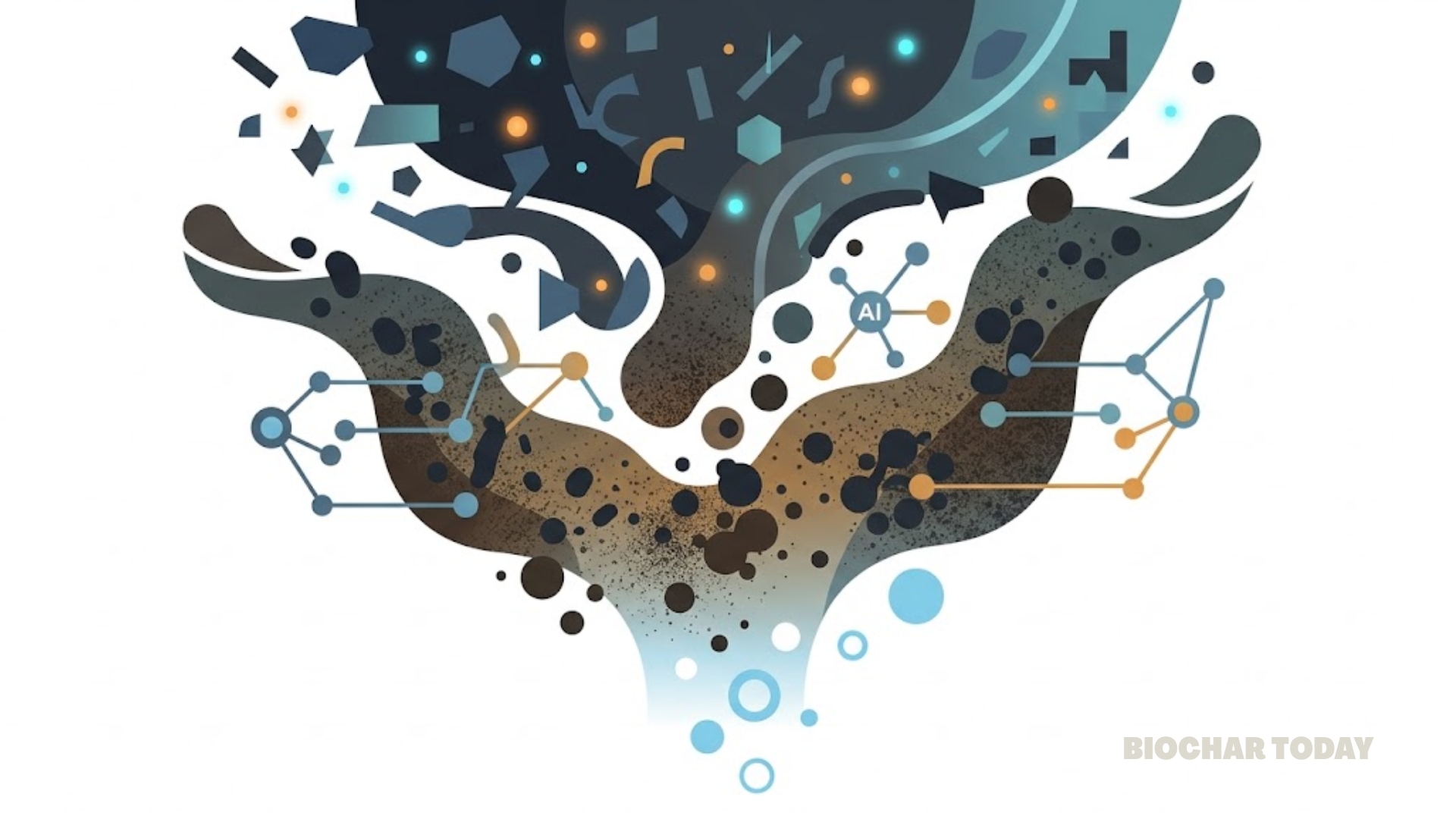
The persistent presence of antibiotics in our global water systems has emerged as a severe threat to both public health and aquatic ecosystems. A recent study in the journal Biochar by Junaid Latif and colleagues addresses this urgent challenge by applying sophisticated artificial intelligence to improve how we clean our water. In China alone, annual antibiotic consumption reaches approximately 163,000 tons, and these substances often bypass traditional treatment plants to enter the food chain. When humans and wildlife are continually exposed to these low levels of medication, it can trigger allergic reactions and, more critically, fuel the rise of drug-resistant bacteria that make common infections much harder to treat.
Biochar, a charcoal-like substance produced from heated organic waste, has become a promising and sustainable tool for breaking down these chemical pollutants. However, the science behind how biochar works is incredibly complex because its effectiveness depends on a delicate mix of its physical structure, its chemical makeup, and the specific conditions of the water it is treating. This complexity has historically made it difficult for scientists to design the perfect biochar for every situation. To solve this, the research team turned to deep learning to find patterns that the human eye might miss, compiling a massive dataset from previous studies to train a computer model.
The researchers tested several different types of artificial intelligence and discovered that a specific model called a Tabular Prior-data Fitted Network, or TabPFN, was the clear winner. This model was able to predict the speed of antibiotic degradation with over 91 percent accuracy. Unlike traditional models that require a lot of manual adjustment, this AI was pre-trained on millions of synthetic data points, allowing it to understand the science of water treatment with remarkable precision. The study found that the properties of the biochar itself are responsible for nearly 60 percent of the performance, while the specific reaction conditions, like the amount of oxidant added to the water, account for about 26 percent.
The findings highlight that two specific features make biochar a powerhouse for water cleaning. First, the presence of persistent free radicals, which are special reactive molecules formed when biomassBiomass is a complex biological organic or non-organic solid product derived from living or recently living organism and available naturally. Various types of wastes such as animal manure, waste paper, sludge and many industrial wastes are also treated as biomass because like natural biomass these More is heated to specific temperatures, helps jumpstart the chemical reactions needed to destroy antibiotics. Second, a high total pore volume is essential. When biochar has a high volume of internal tiny spaces, it provides more room for pollutants and cleaning agents to interact. The study also revealed that there is a sweet spot for water treatment conditions, noting that too much of certain cleaning chemicals can actually slow down the process through a self-quenching effect.
To ensure these findings have a real-world impact, the team developed an interactive web-based tool for other scientists to use. This tool allows researchers to enter information about a new biochar material and instantly see how well it will work to remove antibiotics, with an error rate of less than 20 percent. This digital approach bridges the gap between complex computer modeling and practical environmental cleanup. By using AI to guide the design of these materials, cities can more effectively manage urban waste and protect their water supplies from the growing threat of pharmaceutical pollution.
Source: Latif, J., Chen, N., Xie, J., Ni, Z., Zhu, L., Saleem, A., Li, K., & Jia, H. (2026). Deep learning-aided prediction and mechanistic analysis of reaction kinetics in biochar-catalyzed antibiotic degradation. Biochar, 8(88).



Leave a Reply