
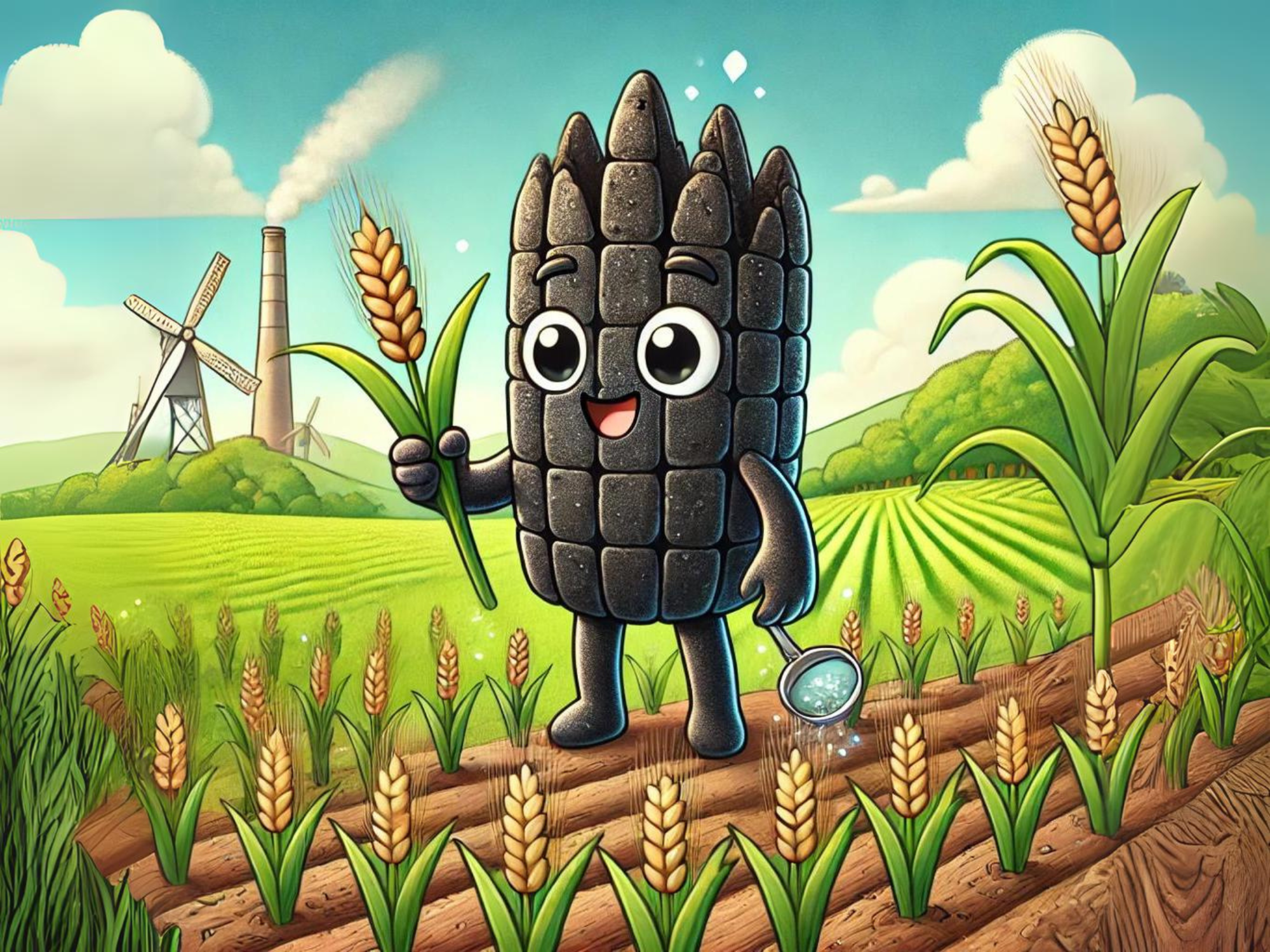
Kubar, et al (2024) Enhancing Wheat Crop Yield and Growth with Integrated Application of Banana Derived Biochar and Press Mud. Jammu Kashmir Journal of Agriculture. DOI: 10.56810/jkjagri.004.02.0124
Wheat is a crucial cereal crop globally, with major cultivation in Pakistan. However, soil fertility is declining due to overuse of chemical fertilizers, leading to environmental damage and increased costs for farmers. To address this, a study was conducted at Lasbela University, Balochistan, to evaluate the effects of banana-derived biocharBiochar is a carbon-rich material created from biomass decomposition in low-oxygen conditions. It has important applications in environmental remediation, soil improvement, agriculture, carbon sequestration, energy storage, and sustainable materials, promoting efficiency and reducing waste in various contexts while addressing climate change challenges. More and sugarcane press mud on wheat crop growth and yield.
Five treatment groups were established: no amendment (control), biochar only (40 tons/ha), press mud only (25 tons/ha), and two combinations of biochar and press mud. The study revealed significant improvements in wheat yield when biochar and press mud were applied together, particularly at the highest tested rates (40 tons/ha biochar + 25 tons/ha press mud). Results showed a 123.2% increase in shoot fresh weight, a 65% rise in shoot dry weight, and a 65% boost in grains per spike compared to the control. Additionally, plant height, root length, and spike length all improved notably under the combined treatments.
This research demonstrates that integrating banana biochar and press mud not only enhances wheat growth and yield but also helps improve soil quality by adding organic matter. These findings suggest that biochar and press mud could offer a sustainable, cost-effective alternative to chemical fertilizers, benefiting both crop productivity and the environment. Long-term field studies are recommended to further validate these results.



Leave a Reply