
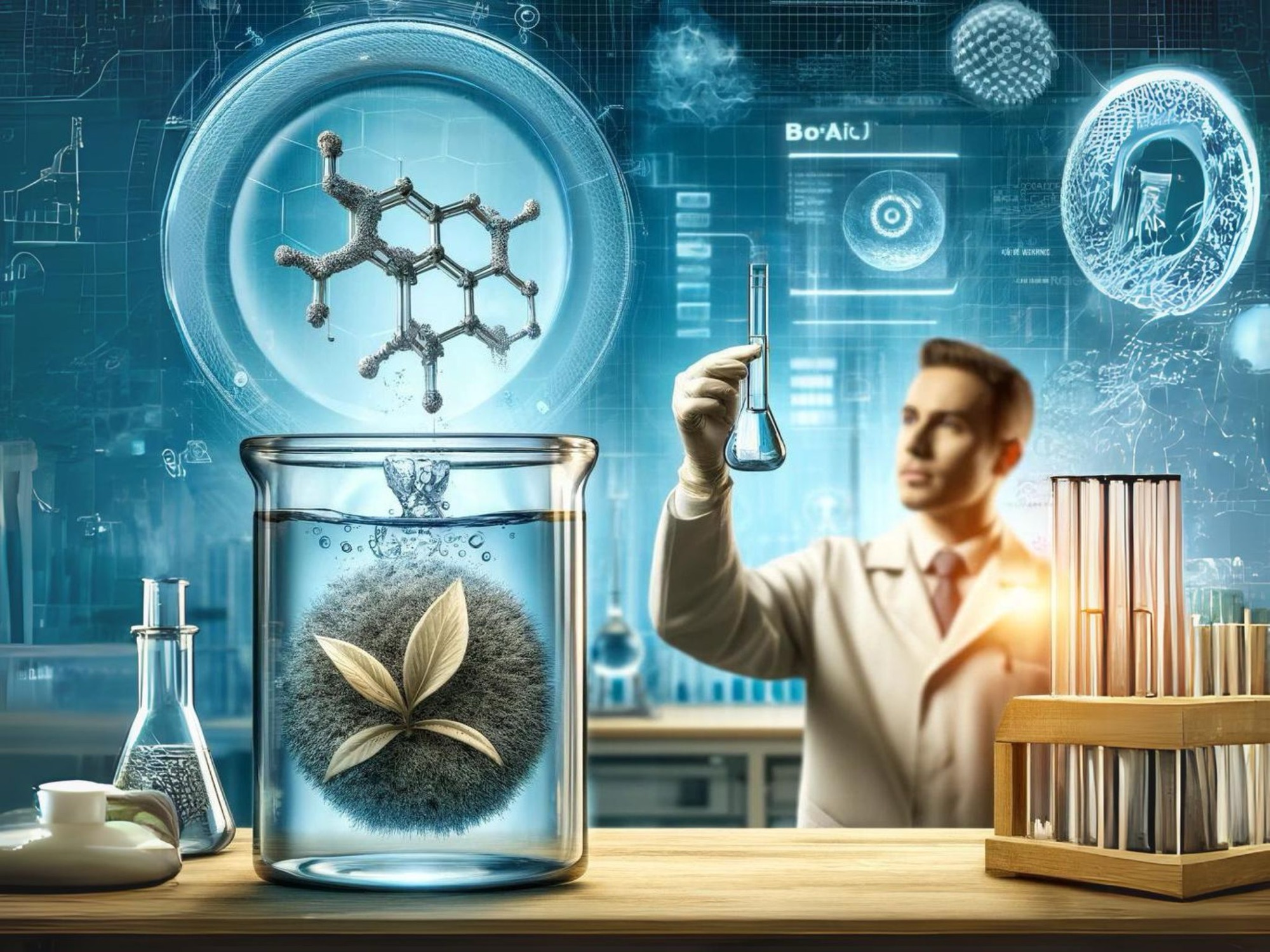

In recent environmental research, a pioneering method to tackle the challenge of trivalent antimony (Sb(III)) contamination in water has been developed. Researchers have synthesized a novel material, Fe/graphene-loaded biochar (FeGB) gel, through a straightforward in-situ self-assembly process. This innovative substance has demonstrated a remarkable fourfold increase in Sb(III) adsorption capacity compared to traditional biochar. The effectiveness of FeGB gel is attributed to two main mechanisms: Fe–O–Sb complexation and π–π stacking, which enhance its adsorption performance. Furthermore, the material’s superior electron exchange capacity facilitates the oxidation of Sb(III), making it an efficient adsorbent.The inclusion of graphene not only supports the anchoring of iron oxides on the biochar but also promotes electron transfer, improving the adsorption process. Spectroscopic and electrochemical analyses have shown that FeGB-gel exhibits an enhanced ability to interact with Sb(III) at the molecular level, owing to the formation of Fe-related functional groups. Additionally, theoretical calculations based on density functional theory (DFT) have provided insights into the improved adsorption energy and mechanisms, highlighting the role of orbital hybridization in strengthening chemical interactions during the Sb(III) removal process.This study not only offers a new approach to enhancing biochar’s adsorption efficiency but also opens avenues for the development of a variety of biochar-based adsorbents. By functionalizing the surface characteristics of biochar with Fe/graphene, there is potential for addressing a broad spectrum of environmental concerns, particularly those related to water contamination.


Leave a Reply