

Researchers have developed biochars loaded with Bacillus aryabhattai (B10) to address heavy metal pollution in soils. The study focuses on arsenic (As) and cadmium (Cd) stabilization, showing a significant decrease in their bioavailability. The biochar-functionalized bacterial composites, created through physisorption (BBC) and sodium alginate embedding (EBC), exhibit promising results in simultaneously immobilizing these toxic elements in co-contaminated soil.
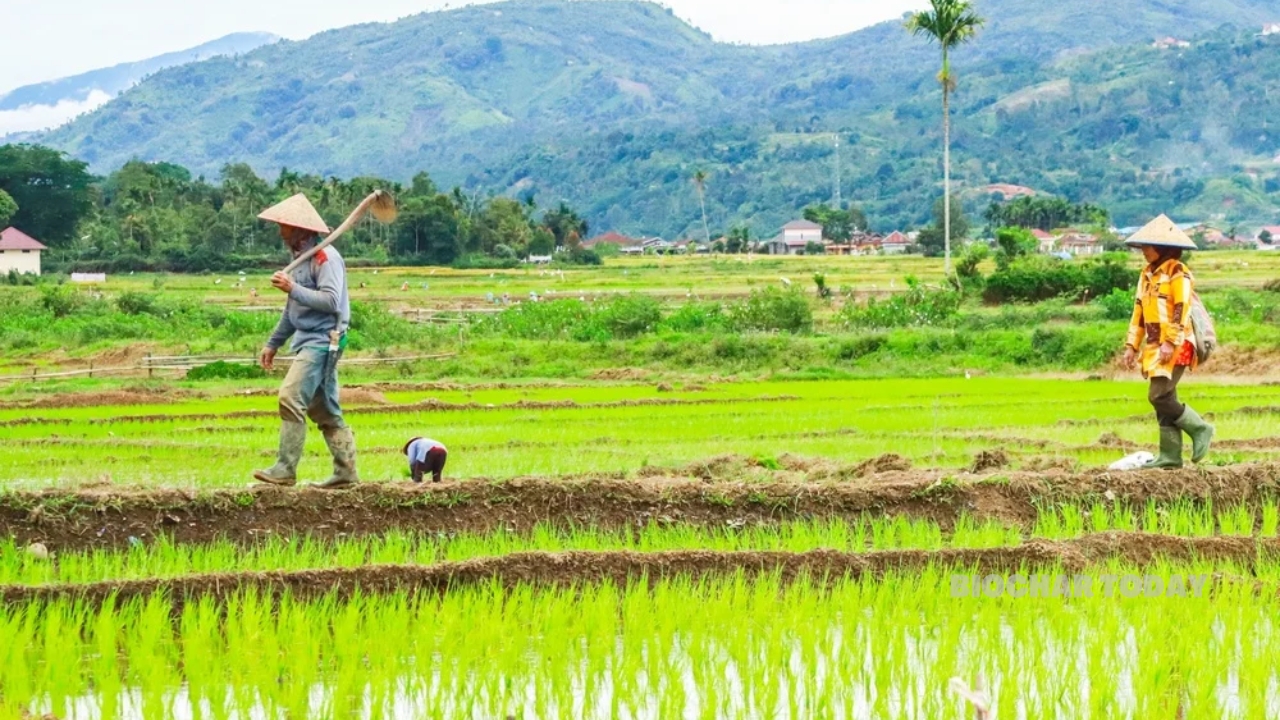
The research extends its impact to agricultural production, demonstrating the potential of the bacteria-loaded biochars to meet food safety standards for heavy metals. Water spinach cultivated in pots with a 3% dosage of the composite shows edible portions with As and Cd contents within safe limits. Furthermore, the study highlights improvements in rhizosphere soil quality, promoting organic matter, cation exchange capacity, and enzyme activity.
Microbial analysis underscores the positive influence of the composite on the rhizosphere microbial community, favoring beneficial bacteria and reducing plant pathogenic fungi. The research provides an effective strategy for the simultaneous immobilization of As and Cd in soil, addressing heavy metal accumulation in vegetables. By combining the benefits of biochar and heavy metal-resistant bacteria, the study offers a practical and cost-effective solution for soil remediation and safe agricultural production. This approach aims to contribute to sustainable agriculture while tackling the challenges of severe soil heavy metal pollution, particularly in regions like China.


![Eucalyptus Wood Waste-Derived Biochar Achieves a Ninety-Eight Percent Removal Efficiency for Benzo[ghi]perylene in Vehicle-Wash Wastewater](https://biochartoday.com/wp-content/uploads/2026/10/SCIENCE-BLOGS-2026-2026-10-19T160523.703.jpg)

Leave a Reply