
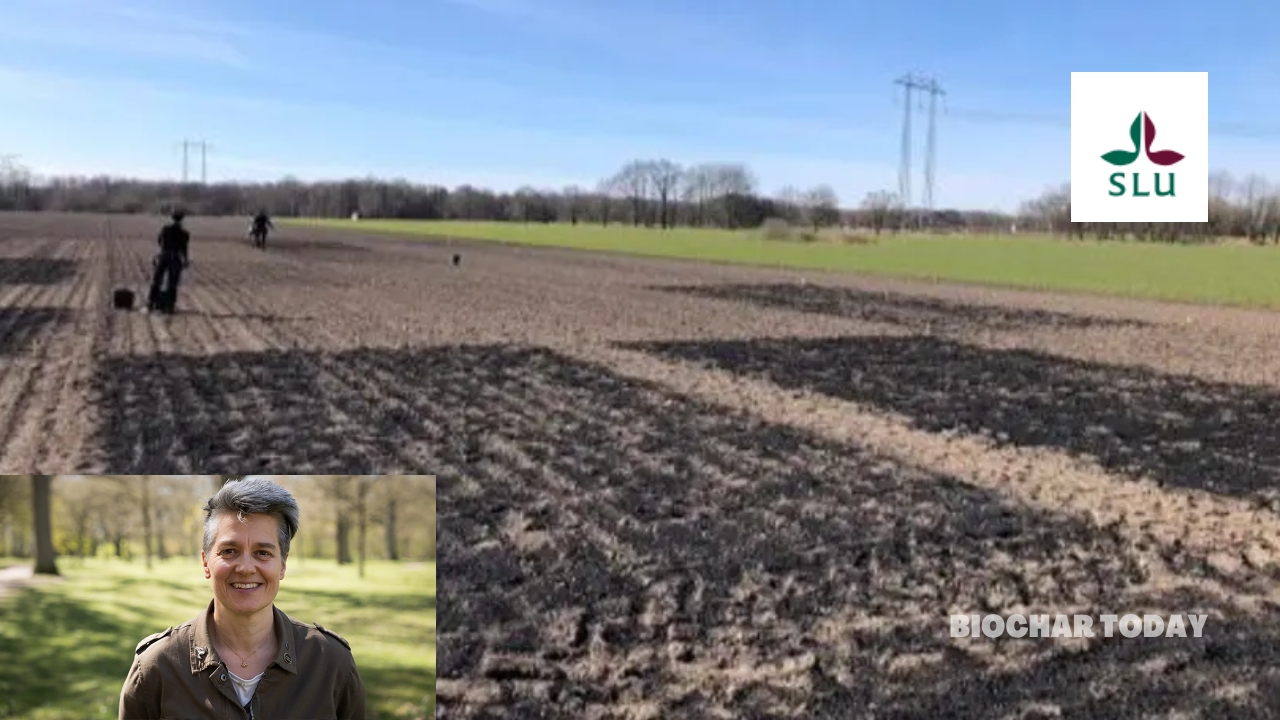
A researcher at the Swedish University of Agricultural Sciences (SLU) has initiated a comprehensive evaluation of biocharBiochar is a carbon-rich material created from biomass decomposition in low-oxygen conditions. It has important applications in environmental remediation, soil improvement, agriculture, carbon sequestration, energy storage, and sustainable materials, promoting efficiency and reducing waste in various contexts while addressing climate change challenges. More applications in farming to transition the material from a generalized soil amendmentA soil amendment is any material added to the soil to enhance its physical or chemical properties, improving its suitability for plant growth. Biochar is considered a soil amendment as it can improve soil structure, water retention, nutrient availability, and microbial activity. More into a structured agronomic practice. Helene Larsson Jönsson, a newly appointed docent at the Department of Biosystems and Technology, is analyzing how varying material properties interact with different crop types in Sweden. The research seeks to address the overly generalized claims surrounding biochar performance by gathering long-term field data. Ultimately, this effort intends to provide standardized, practical advice for farmers, helping them move past trial-and-error implementations.
The primary challenge facing the widespread agricultural adoption of biochar is the high degree of variability in both material inputs and crop responses. Biochar properties differ significantly based on the source biomass—such as forestry residues, agricultural waste, or sewage sludge—meaning no single variety serves as a universal solution for higher crop yields. Furthermore, agricultural crops exhibit distinct physiological responses to these different variations. Compounding this technical complexity is a major economic barrier: the current market price of biochar remains prohibitively expensive for large-scale agricultural use, which restricts its integration into standard farming operations.
To resolve these interconnected challenges, the Swedish University of Agricultural Sciences is focusing field trials on specific crop reactions, particularly water-demanding crops like potatoes that stand to benefit from enhanced soil water-holding capacity. Larsson Jönsson’s methodology involves evaluating the agronomic effects of multiple biochar varieties over extended periods to establish reliable, general conclusions. To overcome the economic hurdles, the research highlights a dual-benefit funding solution using carbon credits. Under this model, corporate entities finance the biochar as climate compensation to secure carbon storage, enabling farmers to acquire the soil amendment without prohibitive upfront costs.
The ongoing research at SLU outlines clear pathways toward circular agricultural models and improved resource management. By defining the parameters for safe utilization of sewage sludge biochar from wastewater treatment plants, the project introduces a viable mechanism to recirculate phosphorus and minimize reliance on synthetic fertilizers. Standardizing these application guidelines will allow the agricultural sector to maximize the environmental advantages of carbon sequestration while stabilizing crop yields. This systematic framework ensures that the green industries can predictably deploy biochar to improve soil structure, retain moisture, and support sustainable food production.





Leave a Reply