

Key Takeaways
- Fast-growing bamboo serves as an effective renewable substitute for fossil fuels, wood, and steel across modern industries.
- Processing bamboo culms into activated carbonActivated carbon is a form of carbon that has been processed to create a vast network of tiny pores, increasing its surface area significantly. This extensive surface area makes activated carbon exceptionally effective at trapping and holding impurities, like a molecular sponge. It is commonly More creates thousands of microscopic pores that capture dangerous industrial chemicals and dyes from polluted water.
- Heating bamboo under controlled temperatures changes its chemical composition, creating stable soil additives that balance acidity and boost plant nutrients.
- Environmentally friendly plasma treatments allow natural bamboo fibers to bond strongly with modern materials without creating toxic chemical wastewater.
- Converting agricultural bamboo waste into engineered carbons reduces global industrial emissions while supporting a clean circular bioeconomy.
A editorial review published in Advances in Bamboo Science by Toshiki Tsubota, Toufiq Reza, and Dimitrios Kalderis establishes bamboo as a versatile powerhouse for the global transition toward a circular bioeconomy. As global industries seek sustainable alternatives to carbon-intensive fossil fuels, timber, and synthetic polymers, bamboo stands out due to its rapid growth rate, high carbon storage capacity, and exceptional structural performance. Modern engineering techniques can now transform raw bamboo into advanced functional carbon materials that address pressing environmental concerns while replacing traditional heavy-emission manufacturing inputs.
In structural applications, raw bamboo culms and hybrid engineered composites demonstrate remarkable mechanical strength, including high tensile strength and advantageous strength-to-weight ratios that allow them to compete directly with timber and structural steel. Beyond physical construction, thermochemical processing transforms agricultural bamboo biomassBiomass is a complex biological organic or non-organic solid product derived from living or recently living organism and available naturally. Various types of wastes such as animal manure, waste paper, sludge and many industrial wastes are also treated as biomass because like natural biomass these More into porous biocharBiochar is a carbon-rich material created from biomass decomposition in low-oxygen conditions. It has important applications in environmental remediation, soil improvement, agriculture, carbon sequestration, energy storage, and sustainable materials, promoting efficiency and reducing waste in various contexts while addressing climate change challenges. More designed for advanced water treatment. By carefully adjusting thermal activation methods, scientists can tailor the surface chemistry of bamboo carbon to attract and filter heavy metals, organic toxins, and emerging pollutants, offering a low-cost and reusable alternative to traditional water purification media.
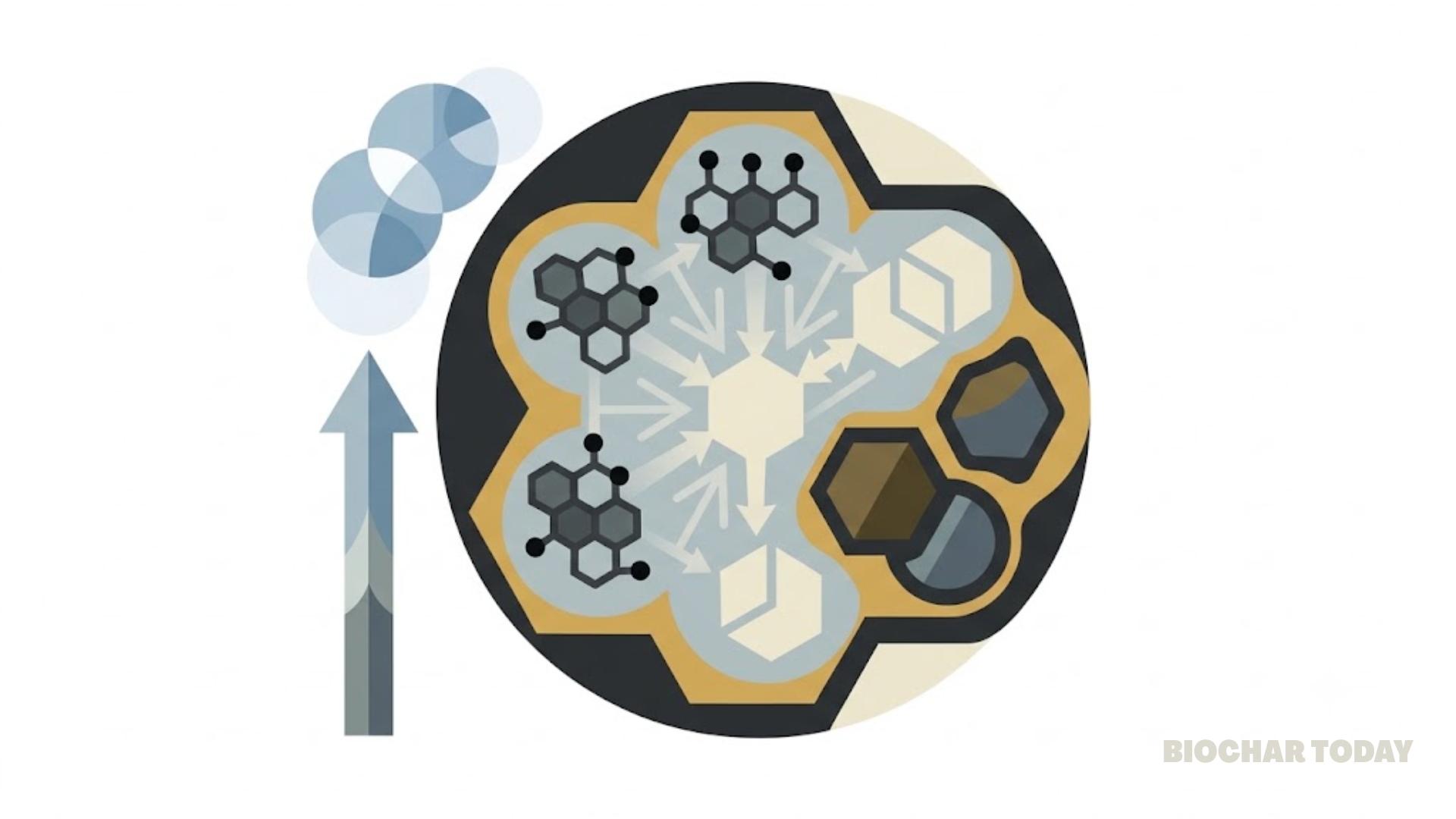
Thermal degradation dynamics reveal how heat treatment alters the internal architecture of bamboo, raising fixed carbon density and energy content to produce high-value biochar. When raw bamboo undergoes thermal processing at temperatures reaching eight hundred degrees Celsius, its internal structure becomes increasingly ordered, expanding surface area and boosting alkalinity to a stable level around nine point five. This basic chemical nature helps neutralize acidic soil environments, making bamboo charcoalCharcoal is a black, brittle, and porous material produced by heating wood or other organic substances in a low-oxygen environment. It is primarily used as a fuel source for cooking and heating. More an ideal soil amendmentA soil amendment is any material added to the soil to enhance its physical or chemical properties, improving its suitability for plant growth. Biochar is considered a soil amendment as it can improve soil structure, water retention, nutrient availability, and microbial activity. More that enhances nutrient retention in agricultural land while permanently trapping absorbed carbon dioxide.
Even without extensive chemical activation, raw bamboo charcoal exhibits notable adsorption capabilities for industrial wastewater management, reaching maximum adsorption capacities of eighteen point eight milligrams per gram for organic dyes like methylene blue. Monolayer surface attraction allows the untreated porous matrix to capture pollutant molecules directly from liquid solutions, presenting a cost-effective remediation option for small-scale industrial applications. Furthermore, refining surface engineering through orthophosphoric acid activation dramatically expands the internal network of the material, elevating total surface area to nine hundred three point seven square meters per gram and achieving an overall removal efficiency of eighty point sixty-eight percent for endocrine disruptors like bisphenol A in water systems.
To integrate bamboo fibers into lightweight high-performance biocomposites without generating toxic wastewater, modern dry plasma etching treatments provide a clean surface modification approach. This high-power, short-duration plasma method bridges the natural structural boundary between water-attracting plant fibers and synthetic polymers, maximizing composite stiffness while accelerating industrial production cycles. Meanwhile, global publication trends confirm a rapid expansion of bamboo research since 2010, shifting from basic environmental adsorption toward advanced energy storage devices, catalysis, and multifunctional nanostructured materials. By converting underutilized agricultural residues into high-value functional components, bamboo-derived carbon technologies provide a practical foundation for sustainable resource management and zero-waste industrial growth.
Source: Tsubota, T., Reza, T., & Kalderis, D. (2026). Bamboo-derived carbon materials for a sustainable circular bioeconomy. Advances in Bamboo Science, 15, 100257.




Leave a Reply