
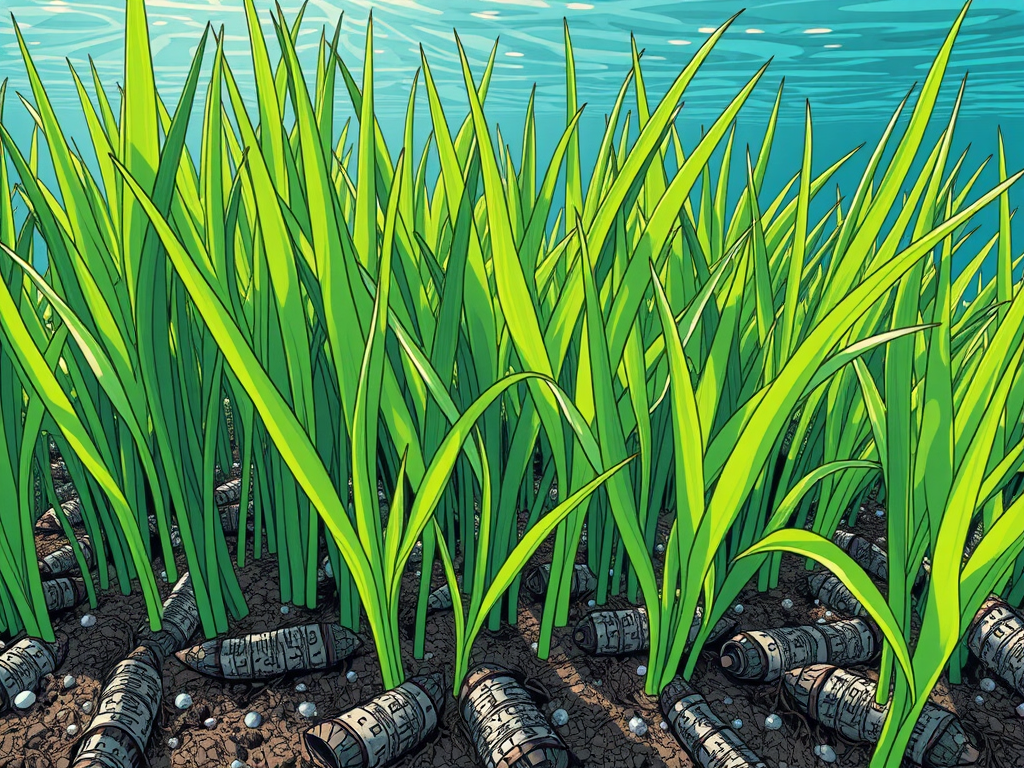
Seagrass meadows, vital coastal ecosystems, face increasing threats from human activities, including heavy metal pollution. In a recent study published in Ecotoxicology and Environmental Safety, Jian Zhang and colleagues explored an innovative solution using biocharBiochar is a carbon-rich material created from biomass decomposition in low-oxygen conditions. It has important applications in environmental remediation, soil improvement, agriculture, carbon sequestration, energy storage, and sustainable materials, promoting efficiency and reducing waste in various contexts while addressing climate change challenges. More to remediate heavy metal-polluted seagrass meadows. The research investigated biochar’s capacity to reduce heavy metal bioavailability and restore the health of seagrass ecosystems.
The study simulated heavy metal pollution by introducing copper (Cu) and cadmium (Cd) to seagrass Thalassia hemprichii. The researchers then assessed the remediation effects of biochar by monitoring various factors, including seagrass physiology, the dynamics of root-associated microbial communities, and heavy metal concentrations.
The results indicated that biochar effectively reduced heavy metal bioavailability and aided in the recovery of seagrass health. The addition of biochar mitigated the negative impacts of heavy metal pollution on seagrasses and contributed to the restoration of microbial community dynamics. This study highlights biochar’s promising role in the ecological restoration of seagrass meadows affected by heavy metal pollution. This study highlights biochar’s promising role in seagrass meadow restoration impacted by heavy metal pollution.
SOURCE: Zhang, J., Liu, C., Ling, J., Zhou, W., Wang, Y., Cheng, H., Huang, X., Yang, Q., Zhang, W., Liang, T., Zhang, Y., & Dong, J. (2025). Revealing the potential of biochar for heavy metal polluted seagrass remediation from microbial perspective. Ecotoxicology and Environmental Safety, 292, 117991.




Leave a Reply