
Key Takeaways
- Adding a specific type of recycled plastic to soil creates a strong, glue-like bond that helps the ground hold onto water much better.
- Using biocharBiochar is a carbon-rich material created from biomass decomposition in low-oxygen conditions. It has important applications in environmental remediation, soil improvement, agriculture, carbon sequestration, energy storage, and sustainable materials, promoting efficiency and reducing waste in various contexts while addressing climate change challenges. More alongside this plastic polymer significantly stops the soil from cracking and shrinking as it dries out.
- This new mixture makes landfill barriers stronger and more reliable, which helps prevent harmful waste from leaking into the environment.
- The process provides a double environmental benefit by repurposing plastic waste and agricultural leftovers to protect groundwater.
- Even in very dry conditions, this treated soil stays packed together and keeps its shape, ensuring long-term safety for waste storage sites.
In a detailed study published in the Canadian Geotechnical Journal, researchers Usmita Adhikari, Sumi Siddiqua, and Alok Chandra investigated a sustainable alternative for waste disposal facility liners. Their work focuses on the intersection of waste management and geotechnical engineering, specifically examining how materials like biochar and depolymerized plastic can transform the physical properties of soil. By testing various mixtures of silty sand, bentonite clay, biochar, and a polymer derived from recycled PET bottles known as bis(2-hydroxyethyl) terephthalate, or BHET, the team established a new framework for creating high-performance hydraulic barriers. These barriers are essential for landfills to prevent hazardous leachate from migrating into groundwater and local ecosystems.
The findings indicate that the inclusion of biochar and BHET polymer drastically alters how soil interacts with water. One of the most significant results is the enhancement of the soil’s water retention capacity. Biochar, which is a porous material produced from waste biomassBiomass is a complex biological organic or non-organic solid product derived from living or recently living organism and available naturally. Various types of wastes such as animal manure, waste paper, sludge and many industrial wastes are also treated as biomass because like natural biomass these More, naturally acts like a sponge within the soil matrix. When paired with the BHET polymer, which forms a thick hydrogel network, the soil becomes exceptionally efficient at holding moisture even under high suction or dry conditions. This is a critical discovery because landfill liners that stay saturated are much more effective at blocking the movement of contaminants. The research showed that the air entry value, a measurement of how well soil stays saturated, increased by over 500 percent in the most optimized mixtures compared to untreated soil.
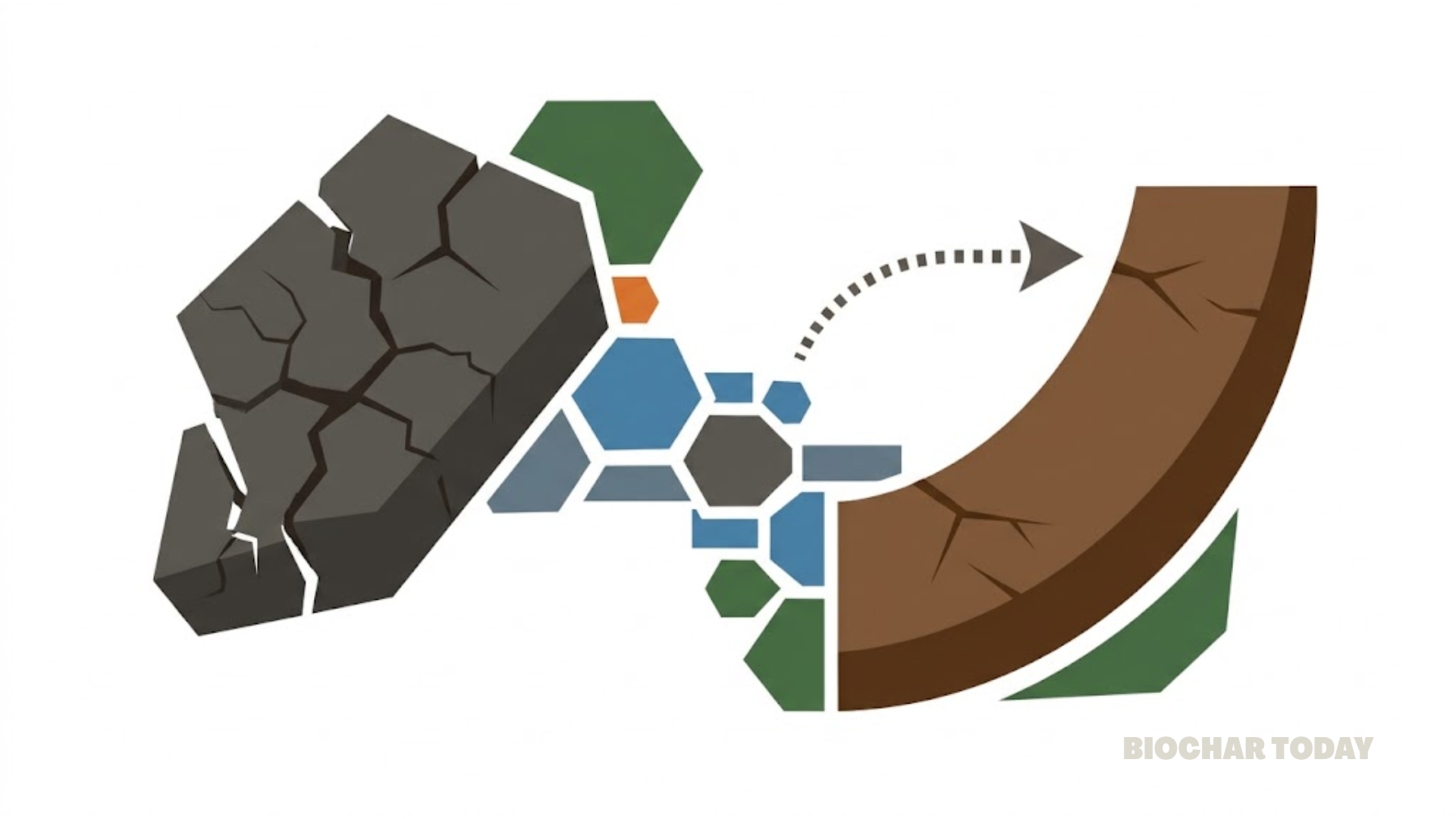
Beyond water retention, the study highlights a major breakthrough in controlling soil shrinkage. Standard clay liners are notoriously prone to desiccation cracking, where the soil shrinks as it dries, creating paths for toxic liquids to leak out. The experimental results demonstrated that increasing the dosage of biochar and polymer significantly mitigates this risk. Specifically, the volumetric shrinkage of the soil decreased as the content of these additives rose. This stabilization occurs because the polymer acts as a binding agent, creating microscopic films and connections between soil particles and biochar. This reinforced structure limits the movement of particles during the drying process, ensuring the liner remains a solid, unbroken barrier rather than a cracked surface.
The mechanical strength of these soil composites also saw impressive gains. While biochar alone can sometimes weaken soil because of its lightweight and brittle nature, the addition of the BHET polymer compensated for this deficiency. The study found that the unconfined compressive strength of the samples increased as the polymer formed interparticle bridges and hydrogen bonds with the clay minerals. After a 28-day curing period, the polymer hydrogel dehydrated into a dense, mechanically strong network that further toughened the soil matrix. This ensures that the liner can withstand the heavy loads of waste placed on top of it without deforming or losing its protective qualities.
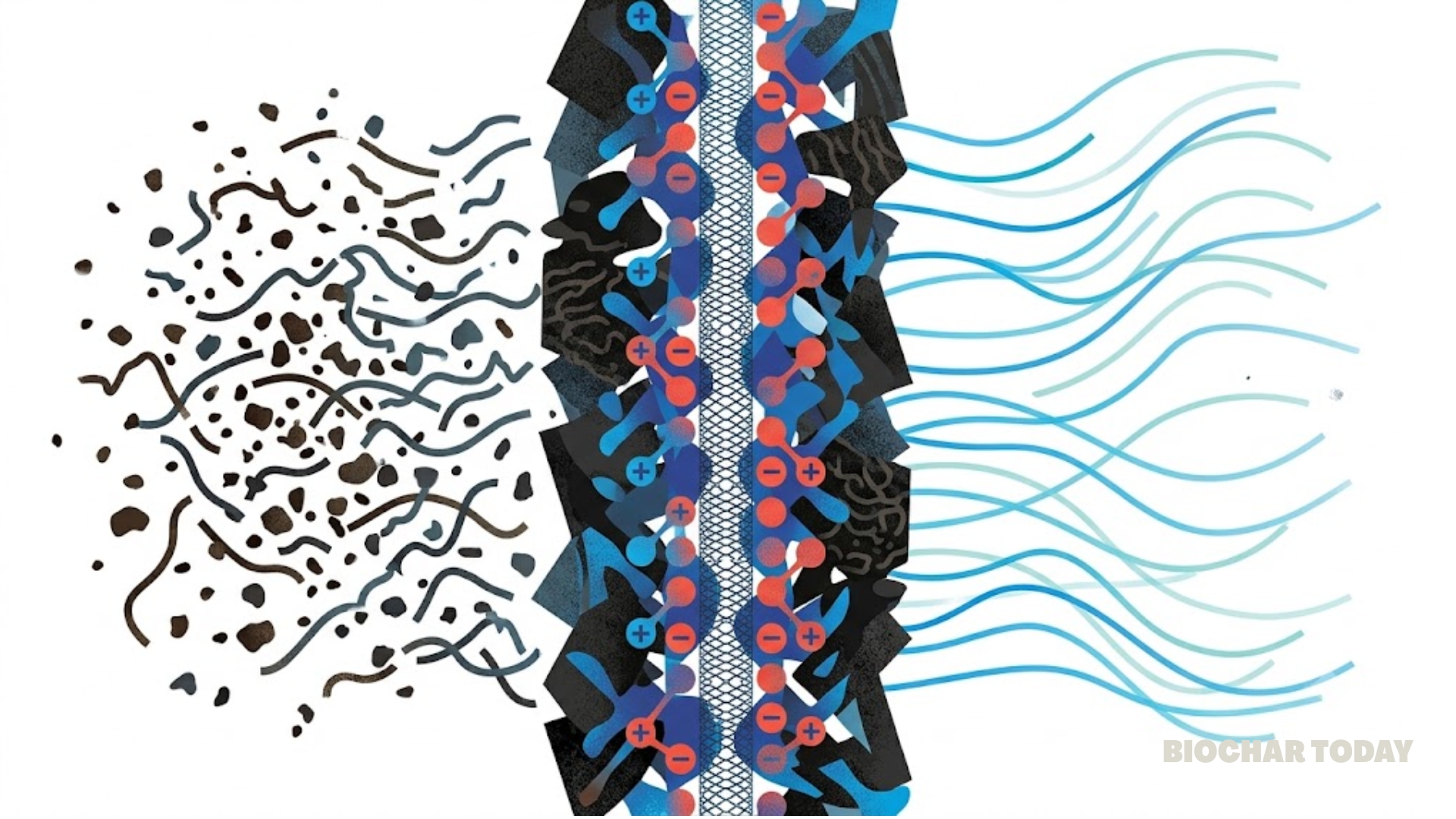
Another interesting outcome of the research involves the electrical conductivity of the amended soil. The researchers found that as they added more biochar and polymer, the soil’s ability to conduct electricity increased. This change is linked to the increased density of the material and the presence of more water-filled pathways for ions to move through. From a practical perspective, this allows engineers to use electrical sensors to monitor moisture levels and structural health within a liner more accurately. The presence of functional groups in the polymer facilitates ion mobility, making the entire system more “connected” at a molecular level.
Ultimately, this research provides a dual-purpose solution to environmental challenges. It offers a way to utilize problematic waste streams—specifically plastic waste and agricultural residues—to create a superior engineering material. By diverting PET plastic from landfills and converting it into a stabilizing polymer, the industry can move toward a circular economy while simultaneously building safer infrastructure. The study concludes that the synergy between biochar and BHET polymer creates a durable, resilient composite that outperforms traditional soil-clay mixtures. These results suggest a future where infrastructure is not only built to protect the environment but is actually made from the very waste it seeks to manage.
Source: Adhikari, U., Siddiqua, S., & Chandra, A. (2026). Influence of depolymerized polyethylene terephthalate (PET) polymer on shrinkage and water retention characteristics of biochar-treated soil. Canadian Geotechnical Journal, 63(1), 1-25.




Leave a Reply