
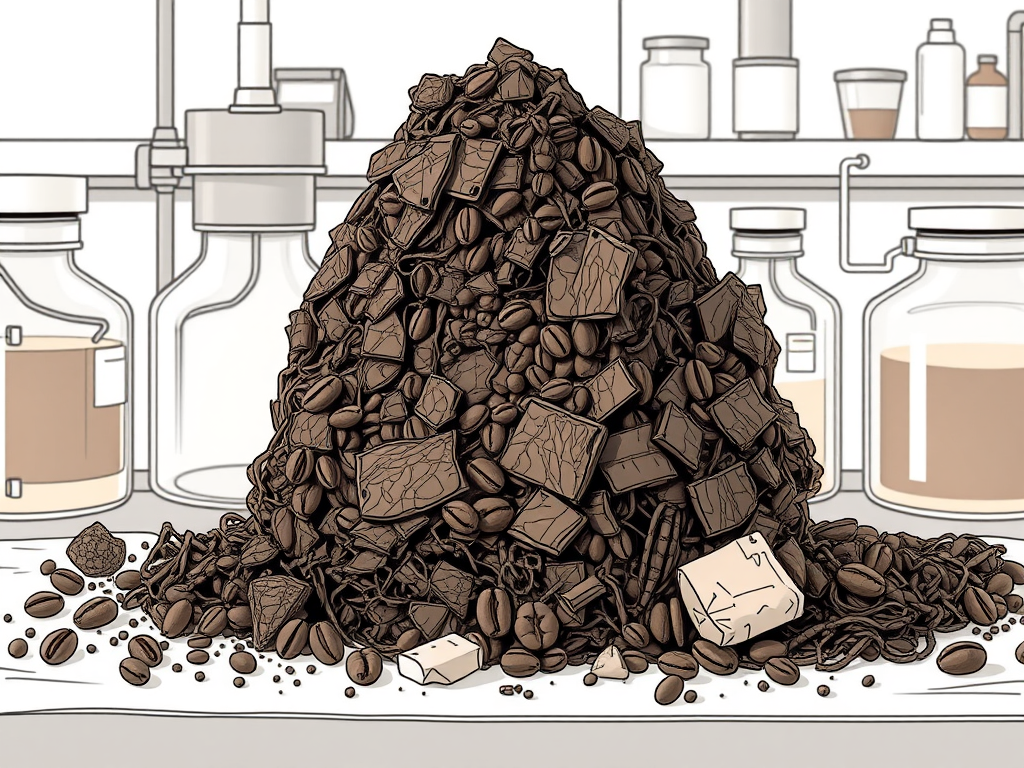
In a study published in Separation and Purification Technology, Byung-Moon Jun and colleagues explored the use of biocharBiochar is a carbon-rich material created from biomass decomposition in low-oxygen conditions. It has important applications in environmental remediation, soil improvement, agriculture, carbon sequestration, energy storage, and sustainable materials, promoting efficiency and reducing waste in various contexts while addressing climate change challenges. More derived from coffee waste to remove uranium (U(VI)) from acidic effluents, a byproduct of uranium-contaminated soil remediation. This approach offers a sustainable solution to a real-world contamination problem.
The researchers synthesized two types of biochar: pristine and ZnFe-modified, and thoroughly examined their ability to adsorb U(VI). Despite the ZnFe-modified biochar having a much larger surface area (1218.4 m2/g) compared to pristine biochar (40.8 m2/g), the pristine biochar demonstrated superior U(VI) adsorption at pHpH is a measure of how acidic or alkaline a substance is. A pH of 7 is neutral, while lower pH values indicate acidity and higher values indicate alkalinity. Biochars are normally alkaline and can influence soil pH, often increasing it, which can be beneficial More 4. This was attributed to the pristine biochar’s negative surface charge, which favors electrostatic interactions with positively charged U(VI) ions.
The study also employed machine learning (ML) models to predict adsorption capacity and analyze key factors. The Shapley Additive exPlanations (SHAP) analysis identified initial uranium concentration, exposure time, and pH as the most influential factors in the adsorption process.
The findings highlight the effectiveness of pristine biochar derived from coffee waste as a sustainable material for U(VI) removal from acidic effluents.
SOURCE: Jun, B.-M., Chae, S. H., Kim, D., Son, C., Kim, T.-J., Hong, S. W., Yoon, Y., Chon, K., & Rhod, H. (2025). Remediation of acidic effluents from Uranium-Contaminated soil using coffee Residue Biochar: A Combined experimental and Machine learning approach. Separation and Purification Technology, 366, 132844.




Leave a Reply