
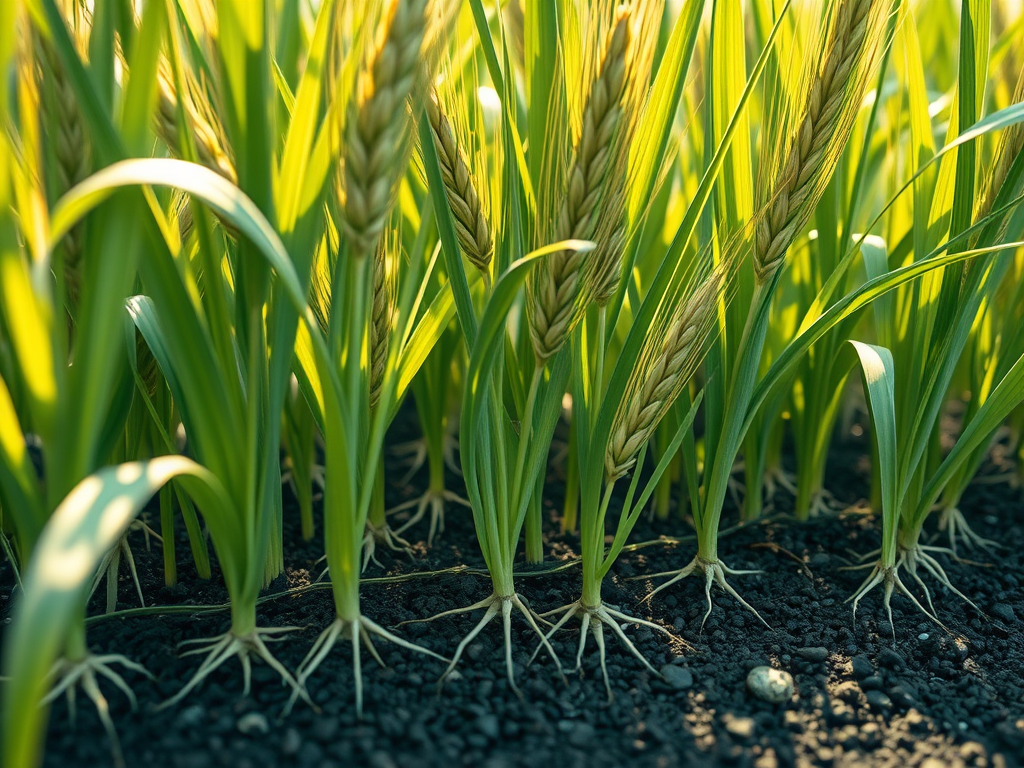
Cadmium (Cd) contamination in soil and water poses a significant threat to human health and food security, particularly for cereal crops like wheat, which readily absorb and accumulate Cd from contaminated environments. Traditional methods for remediating heavy metal-contaminated soils often involve chemical treatments or physical removal, which can be expensive and environmentally damaging. In their research published in BiocharBiochar is a carbon-rich material created from biomass decomposition in low-oxygen conditions. It has important applications in environmental remediation, soil improvement, agriculture, carbon sequestration, energy storage, and sustainable materials, promoting efficiency and reducing waste in various contexts while addressing climate change challenges. More, Rana et al. (2025) explored a novel approach to address this challenge by combining biochar derived from the invasive plant Mikania micrantha (IPMM) with molybdenum nanoparticles (Mo NPs).
This strategy not only mitigates Cd pollution but also utilizes an invasive plant species, offering a sustainable solution for both heavy metal contamination and ecological concerns. The researchers found that the combined application of IPMM biochar and Mo NPs significantly improved wheat growth and physiological characteristics, including root architecture, elemental profile, osmoregulation, and photosynthetic efficiency. The biochar acted as a filter, reducing Cd translocation and accumulation in wheat roots and shoots by 30.54% and 53.59%, respectively. Additionally, this approach preserved mesophyll cell structures, maintained membrane integrity, and strengthened the oxidative defense systems in wheat plants.
This study demonstrates the potential of integrating biochar and nanotechnology for the remediation of heavy metal-contaminated soils and highlights the possibility of utilizing invasive plant species as a valuable resource for biochar production. By addressing both heavy metal pollution and ecological challenges, this synergistic approach offers a promising solution for safer and more sustainable crop production in Cd-contaminated environments.
Source: Rana, M. S., Chen, H., Deng, S., Imran, M., Abdellah, Y. A. Y., Li, W., Lin, J., Li, J., & Wang, R. (2025). Biological insights into alleviating heavy metal toxicity through the simultaneous supply of biochar biofilters derived from the Mikania micrantha and molybdenum nanoparticles. Biochar, 7(1), 23. https://doi.org/10.1007/s42773-024-00414-2




Leave a Reply