
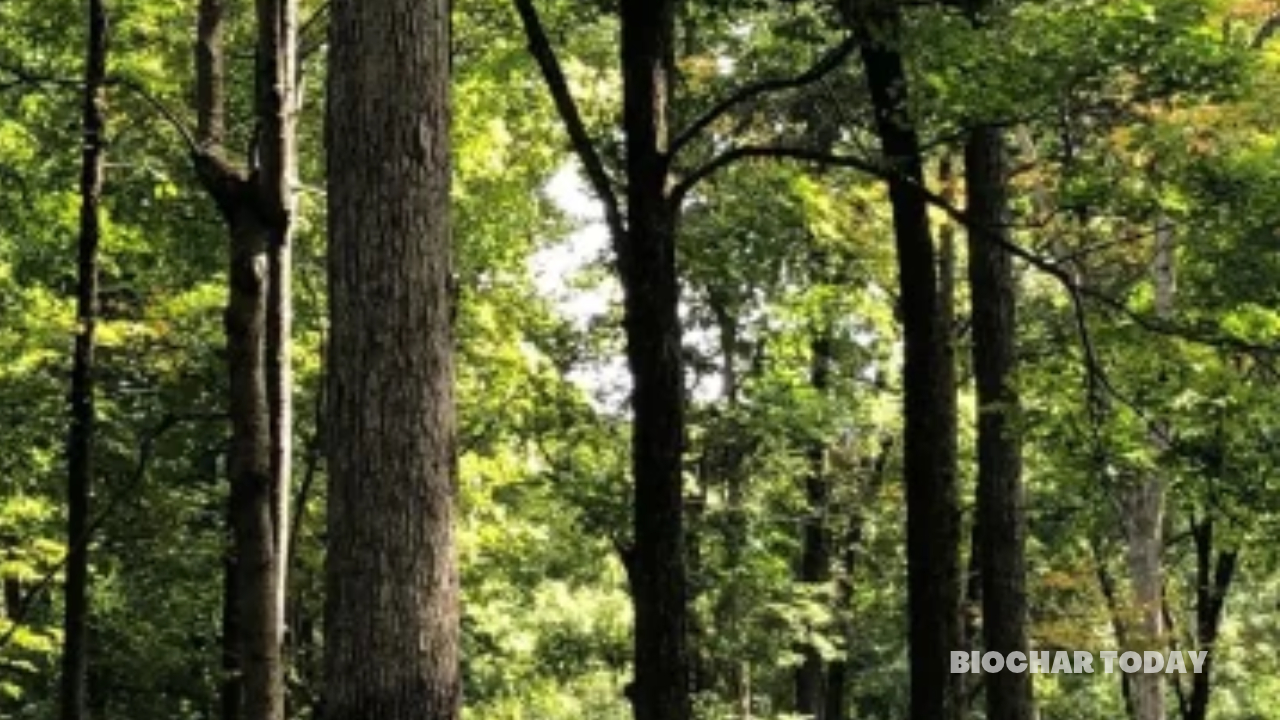
Researchers at Michigan State University, supported by newly announced funding from the United States Department of Agriculture (USDA), are investigating the commercial viability of converting storm-damaged timber into biocharBiochar is a carbon-rich material created from biomass decomposition in low-oxygen conditions. It has important applications in environmental remediation, soil improvement, agriculture, carbon sequestration, energy storage, and sustainable materials, promoting efficiency and reducing waste in various contexts while addressing climate change challenges. More in northern Michigan, in the United States. Led by Emily Silver, the initiative assesses how localized biochar production can absorb excess woody biomassBiomass is a complex biological organic or non-organic solid product derived from living or recently living organism and available naturally. Various types of wastes such as animal manure, waste paper, sludge and many industrial wastes are also treated as biomass because like natural biomass these More generated by severe weather events while simultaneously supplying agricultural producers with soil amendments for marginal croplands.
The research addresses a severe supply-chain bottleneck created by a historic ice storm that impacted more than three million acres across northern Michigan the previous year. Large-scale weather events leave substantial volumes of downed or damaged timber on the forest floor. While much of this wood retains potential economic value, local sawmills and wood-processing facilities rapidly reach maximum capacity following major disasters. When mills cannot accept additional material, landowners and forest managers face mounting debris-management costs and lost revenue from unmarketable timber.
To resolve this processing deficit, Silver and her colleagues are evaluating the market conditions and infrastructure required to establish commercial-scale biochar production in disaster-affected regions. Because regulatory frameworks and timber density vary across heavily forested landscapes, the researchers are comparing two primary deployment models: mobile pyrolysisPyrolysis is a thermochemical process that converts waste biomass into bio-char, bio-oil, and pyro-gas. It offers significant advantages in waste valorization, turning low-value materials into economically valuable resources. Its versatility allows for tailored products based on operational conditions, presenting itself as a cost-effective and efficient More units capable of operating near harvest sites and centralized processing hubs. By establishing an alternative off-take pathway for downed wood, the project aims to create a resilient secondary market that relieves pressure on traditional timber mills during peak recovery periods.
The anticipated outcomes span both forestry recovery and regional agricultural productivity. For forest landowners and timber operators, commercial biochar conversion provides a practical outlet to monetize storm-damaged wood that would otherwise decompose or pose fire hazards. Simultaneously, the resulting biochar addresses agronomic constraints in the surrounding agricultural sector. As Silver notes, biochar yields its most pronounced benefits in poor, sandy soils, making it well suited for improving nutrient and moisture retention on Michigan’s marginal croplands. Ultimately, the USDA-backed study will define the economic and regulatory parameters necessary to replicate disaster-response biochar systems across other storm-prone regions.



Leave a Reply