
Overuse of nitrogen (N) and phosphorus (P) fertilizers in greenhouse vegetable cultivation has led to a significant buildup of these nutrients in soil, raising concerns about environmental risks such as nutrient leachingLeaching is the process where nutrients are dissolved and carried away from the soil by water. This can lead to nutrient depletion and environmental pollution. Biochar can help reduce leaching by improving nutrient retention in the soil. More. While biocharBiochar is a carbon-rich material created from biomass decomposition in low-oxygen conditions. It has important applications in environmental remediation, soil improvement, agriculture, carbon sequestration, energy storage, and sustainable materials, promoting efficiency and reducing waste in various contexts while addressing climate change challenges. More is a known adsorbent for various cations, its capacity to adsorb anions like nitrate (NO3−) and phosphate (PO43−) is limited. A recent study in Environmental Technology & Innovation by Yaling Wang, Yuyang Cheng, and their colleagues presents an effective solution: magnesium-modified biochar (Mg-BC). The research, based on a combination of lab experiments and pot trials, demonstrates that Mg-BC not only significantly enhances the soil’s ability to retain N and P but also improves crop growth, offering a promising strategy for sustainable agriculture.
The study began with the creation of raw biochar (BC) from sheep manure, which was then modified with magnesium chloride (MgCl2) to produce Mg-BC. Characterization of the Mg-BC confirmed that the modification successfully loaded magnesium onto the biochar’s surface, forming MgO and Mg(OH)2 crystals. X-ray photoelectron spectroscopy (XPS) and Fourier-transform infrared spectroscopy (FTIR) analyses showed that the Mg-BC had more surface oxygen-containing functional groups compared to the raw biochar, which are crucial for attracting and binding to N and P anions. This structural and chemical enhancement directly translated to superior adsorption performance.
Adsorption isotherm experiments, analyzed with the Langmuir model, revealed the full extent of this improvement. The maximum adsorption capacity of Mg-BC for NO3− was 1.38 times that of raw biochar, and for PO43−, it was an impressive 1.84 times greater. This is particularly significant because in the presence of both N and P, phosphate typically has a stronger affinity for binding sites on the biochar, but the modified material showed a strong capacity for both. This superior performance is a result of chemisorption, where the Mg-BC’s crystal structure and functional groups facilitate chemical bonding and precipitation of the nutrients.
The practical impact of this enhanced adsorption was tested through soil column leaching and pot experiments. In the soil column tests, Mg-BC proved to be highly effective at preventing nutrient loss. Compared to raw biochar, the Mg-BC treatment reduced total nitrogen leaching by 30.98% and total phosphorus leaching by 51.25%. This effectively inhibited the loss of dissolved inorganic N and soluble reactive P, which are the main culprits behind water contamination and eutrophication.
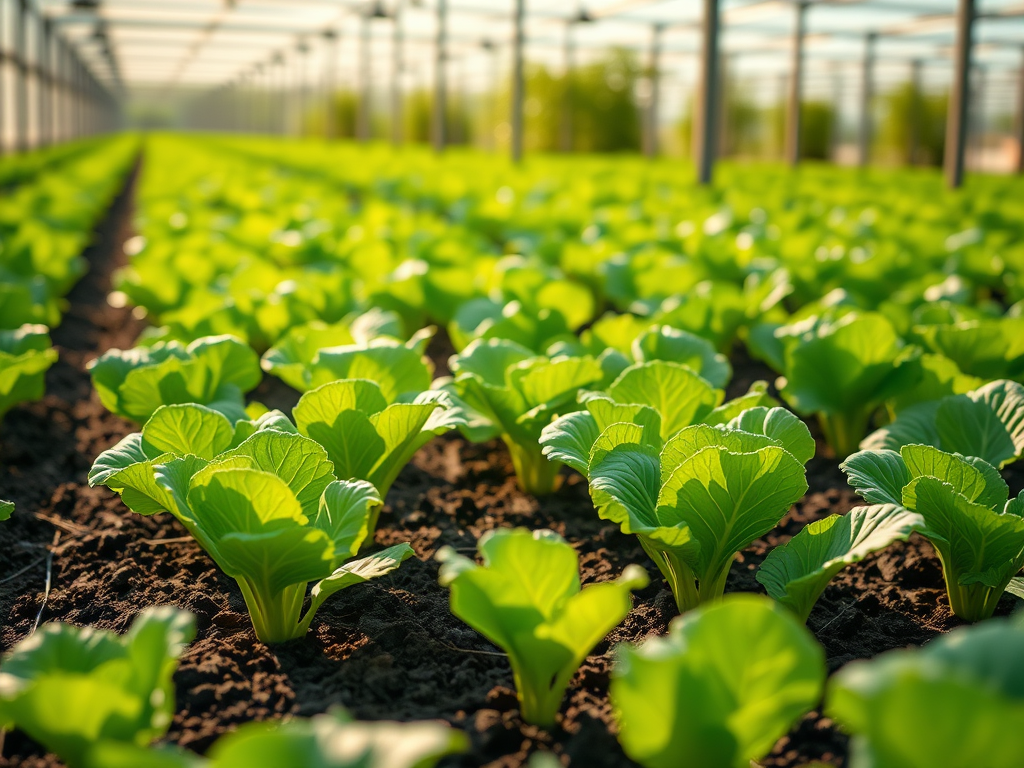
The pot experiment further validated the benefits of Mg-BC in a real-world growing scenario. The researchers grew pakchoi (Chinese cabbage) in soil treated with either raw biochar or Mg-BC. The results were compelling: the Mg-BC treatment increased pakchoi biomassBiomass is a complex biological organic or non-organic solid product derived from living or recently living organism and available naturally. Various types of wastes such as animal manure, waste paper, sludge and many industrial wastes are also treated as biomass because like natural biomass these More by 17.28% compared to the raw biochar. This increase was directly linked to improved nutrient availability in the soil. Specifically, soil treated with Mg-BC had 128.22% more nitrate-N, 44.67% more ammonium-N, and 52.94% more available P compared to the raw biochar treatment. The Mg-BC’s unique ability to form slow-release complexes like struvite balances nutrient retention with plant supply, ensuring that nutrients are available when the plant needs them most.
In conclusion, this study successfully demonstrates that Mg-modified biochar can address the dual challenges of nutrient accumulation and fertilizer efficiency in greenhouse vegetable cultivation. By reducing nutrient leaching and simultaneously boosting plant growth, this eco-friendly material offers a viable pathway toward more sustainable and productive agricultural practices.
Source: Wang, Y., Cheng, Y., Wang, H., Peng, Z., Wen, X., Mei, X., Liu, C., & Wang, X. (2025). Mg-modified biochar increases adsorption and retention of nitrogen and phosphorus in greenhouse vegetable soil. Environmental Technology & Innovation, 40, 104423.





Leave a Reply