
Key Takeaways
- Waste materials like crop residues and wood chips can be converted into powerful water-cleaning platforms.
- Modifying these carbon surfaces helps trap and break down persistent chemical pollutants and heavy metals.
- The cleaning process works through both highly active particles and direct chemical reactions on the material surface.
- These smart materials can clean complex industrial and city wastewater more effectively than standard filters.
- Magnetic features can be added to the carbon particles so they can be easily collected and reused multiple times.
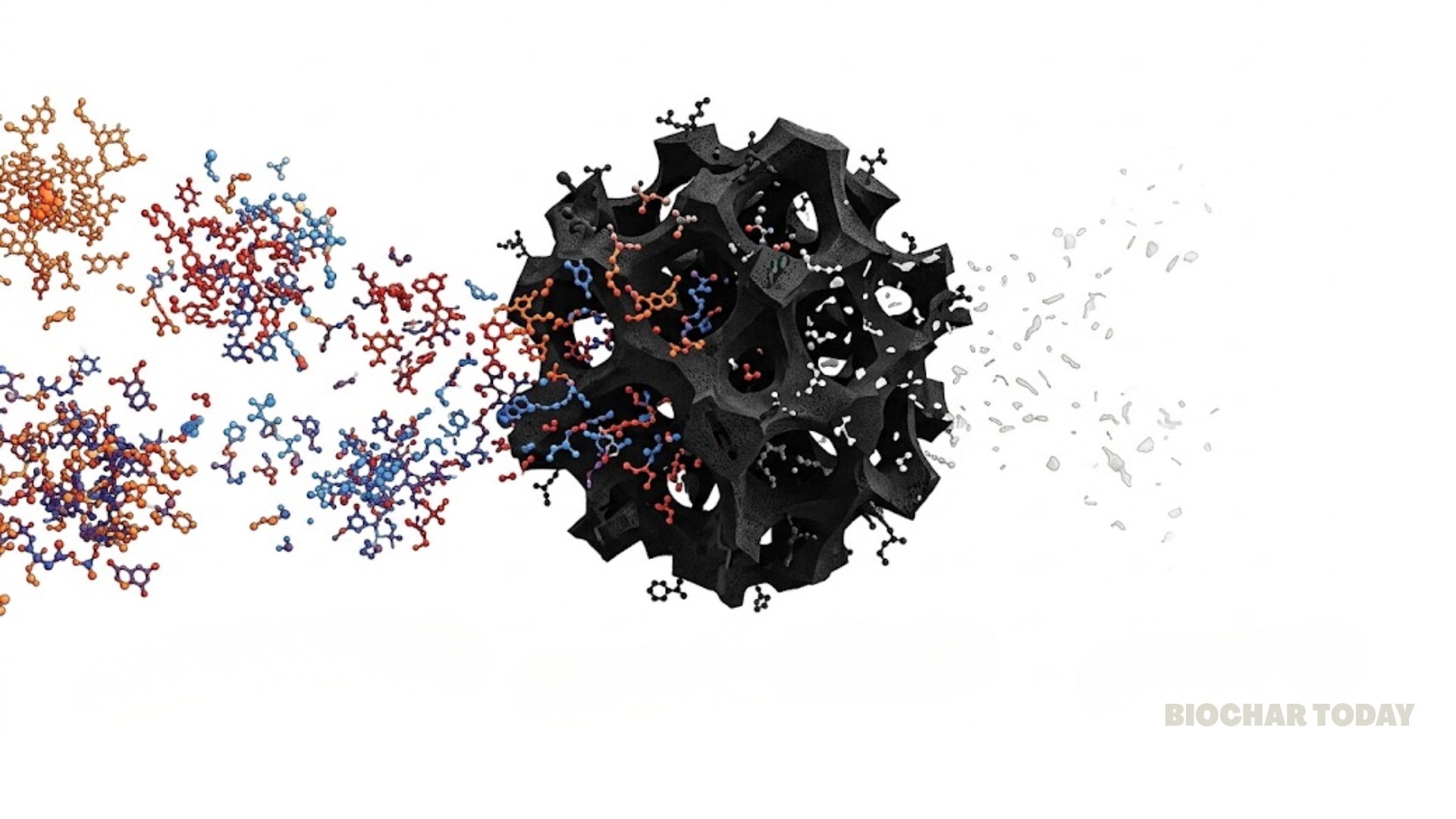
Rapid urbanization and population growth have significantly increased global wastewater production, resulting in complex mixtures of persistent organic compounds, heavy metals, and emerging contaminants like pharmaceuticals and pesticides. Traditional primary, secondary, and tertiary treatment plants often fail to fully eliminate these persistent substances, frequently transferring pollutants from the liquid phase into residual sludge rather than completely destroying them. In a recent review published in the journal Catalysts, authors Aminur Rahman, Md Mahbubur Rahman, Md Azizul Haque, Pottathil Shinu, Muhammad Muhitur Rahman, Aftab Ahmad Khan, and Sayeed Rushd evaluate how incorporating biocharBiochar is a carbon-rich material created from biomass decomposition in low-oxygen conditions. It has important applications in environmental remediation, soil improvement, agriculture, carbon sequestration, energy storage, and sustainable materials, promoting efficiency and reducing waste in various contexts while addressing climate change challenges. More into advanced catalytic processes solves these systemic shortcomings. The research highlights that these sustainable carbon platforms enhance the breakdown of complex pollutants when integrated into advanced oxidation processes and solar-driven photocatalysis, presenting a viable pathway toward a circular economy.
The primary findings of the compiled research demonstrate that modifying the raw carbon matrix through transition metal loading, heteroatom doping, or semiconductor coupling dramatically improves clean-up performance. For example, loading the carbon structure with transition metals like iron, manganese, copper, or cobalt accelerates the breakdown of chemical oxidants, routinely achieving pollutant decomposition rates between eighty-four and one hundred percent across various antibiotics and industrial phenols. Similarly, joining the carbon base with common semiconductors like titanium dioxide, zinc oxide, or graphitic carbon nitride creates composite materials that prevent energy loss during light-activated cleaning cycles. These structural modifications allow the combined platforms to achieve total color removal for synthetic dyes and degrade stubborn pharmaceutical compounds far more effectively than pure semiconductor materials alone.
Beyond simply trapping pollutants, the manuscript results focus heavily on the diverse chemical pathways that occur directly on the engineered surfaces. The researchers emphasize a shift in understanding from traditional radical pathways, which rely on highly reactive but short-lived molecules, toward non-radical pathways that utilize direct electron transfer and singlet oxygen. Introducing non-metallic elements like nitrogen, sulfur, or phosphorus changes the internal electron density and forms structural defects that favor these non-radical reactions. The major advantage of these non-radical mechanisms is their high selectivity and durability in real-world environments, meaning they can successfully target and destroy specific organic toxins without being weakened by natural organic matter or common salts present in the water matrix.
While these materials display remarkable versatility, the compiled results also reveal clear operational limits regarding long-term reuse and secondary pollution risks. In metal-loaded systems, active components can gradually dissolve back into the water under acidic or highly oxidizing conditions, which reduces the overall lifetime of the catalyst and introduces risks of secondary metal contamination. Additionally, incomplete chemical breakdown can sometimes produce intermediate byproducts that remain toxic, highlighting the need for thorough total organic carbon analysis rather than just measuring how quickly the main pollutant disappears. To address the practical challenge of reclaiming loose powders from large water basins, the study notes that embedding magnetic iron oxide nanoparticles allows for rapid collection using an external magnetic field, preserving high cleaning performance across multiple operational cycles.
Ultimately, the study outlines a clear roadmap for transitioning these sustainable carbon platforms from small-scale laboratory tests to industrial field applications. Future development must shift away from empirical trial-and-error testing toward data-driven optimization, utilizing artificial intelligence and machine learning models to accurately predict how different crop wastes and processing temperatures will alter the final chemical activity. Combining these engineered carbon materials with existing biological treatment steps or membrane filtration units will allow treatment facilities to process complex industrial effluents and agricultural runoff safely. By resolving the current challenges around material consistency and structural stability, these custom-tailored carbon platforms can provide an affordable, energy-efficient, and globally scalable solution for advanced water purification.
Source: Rahman, A., Rahman, M. M., Haque, M. A., Shinu, P., Rahman, M. M., Khan, A. A., & Rushd, S. (2026). Biochar-Based Catalysts for Sustainable Wastewater Treatment: Advances, Mechanisms, and Future Perspectives. Catalysts, 16(6), 538.





Leave a Reply