
Key Takeaways
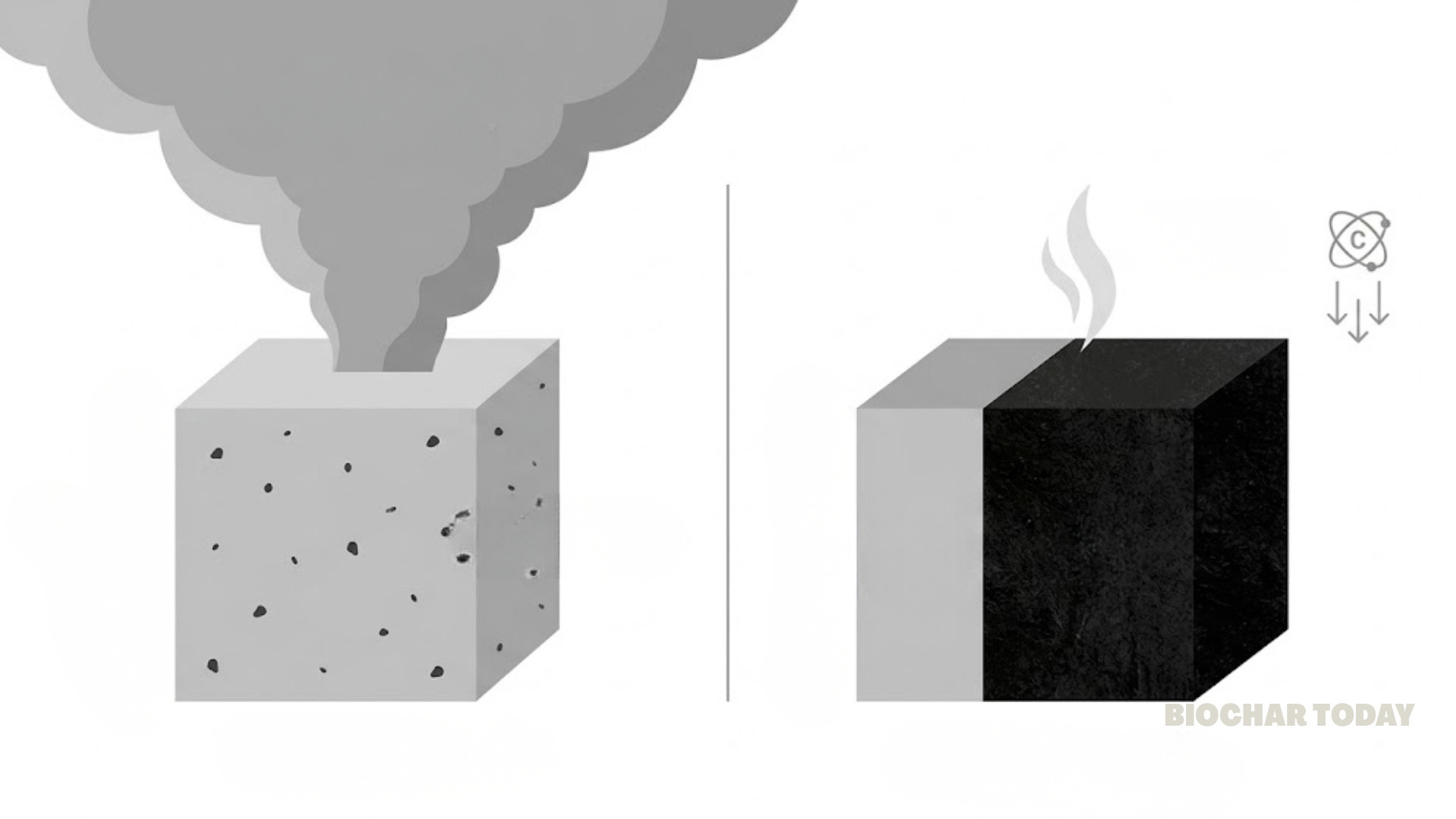
- Manufacturing concrete with biocharBiochar is a carbon-rich material created from biomass decomposition in low-oxygen conditions. It has important applications in environmental remediation, soil improvement, agriculture, carbon sequestration, energy storage, and sustainable materials, promoting efficiency and reducing waste in various contexts while addressing climate change challenges. More dramatically lowers greenhouse gas emissions.
- Adding more biochar to the mixture makes the material dry faster and sets quicker.
- Higher amounts of biochar reduce the overall thickness and fluidity of fresh concrete.
- Heavy replacement of cement with biochar causes a significant drop in final strength.
- This eco-friendly concrete is ideal for non-structural items like simple building blocks.
The building sector remains under heavy pressure to lower its global carbon footprint, and innovative material science is leading the charge toward sustainable development. A recent study published in Sustainability by researchers Ali A. Abbas and Sagar J. Thapa highlights a promising strategy that utilizes biochar as a partial substitute for traditional cement binder. Cement production is well known as a primary driver of industrial carbon dioxide pollution, making the search for viable alternatives a top environmental priority. By exploring a wide spectrum of replacement levels ranging from zero to sixty percent, the experimental work establishes exactly how this carbon-rich biomassBiomass is a complex biological organic or non-organic solid product derived from living or recently living organism and available naturally. Various types of wastes such as animal manure, waste paper, sludge and many industrial wastes are also treated as biomass because like natural biomass these More byproduct interacts with standard concrete components.
The experimental findings reveal a clear trade-off between the environmental benefits and the mechanical performance of the resulting mixture. When biochar is added to the concrete matrix, it alters the properties of both the fresh paste and the hardened final product. Because biochar particles possess a highly porous structure and an incredibly high water absorption capacity, they immediately soak up a large portion of the mixing liquid. This absorption reduces the free water available within the mixture, which causes a substantial decrease in the fluidity of the fresh concrete. For instance, the maximum replacement level tested led to a slump reduction of over fifty-two percent, indicating a much stiffer material that is less workable during casting.
Beyond workability, the physical presence of biochar drastically accelerates the setting process of the concrete paste. The research shows that the internal absorption of water shortens the time required for the mixture to stiffen and solidify. At the highest replacement dosage of sixty percent, the initial setting time plummeted by sixty-four percent compared to the standard control batch. This rapid drying mechanism means that builders would have a much shorter window to pour and finish the material. Additionally, the lightweight nature of biochar consistently decreases the final weight of the cured cubes, creating a lower-density concrete as more cement is replaced.
The most critical impact of heavy biochar substitution occurs within the strength profile of the hardened concrete. The cured specimens experienced a progressive decline in compressive strength as the biochar content increased. While the standard control concrete achieved its target strength, the batches mixed with biochar showed significant strength losses, culminating in a ninety percent reduction at the highest substitution level. This severe structural decline happens because the porous biochar diminishes the load-bearing capacity of the internal matrix and limits full cement hydration. Consequently, the authors conclude that concrete featuring high percentages of biochar cannot be used for critical structural elements like columns or beams.
Despite the loss in structural strength, the environmental data provides a powerful argument for using this material in alternative construction applications. The life cycle carbon calculations demonstrate that reducing cement content directly slashes manufacturing emissions. Even without factoring in the natural carbon storage of the biomass, the sixty percent replacement mix decreased embodied carbon by over fifty-eight percent. When the certified carbon offset value of the biochar is fully included in the assessment, the mixtures containing thirty percent or more biochar actually cross the threshold into carbon-negative status. This means the material captures and stores more greenhouse gases than it releases during production, offering a massive win for green building initiatives.
Ultimately, this research provides a clear roadmap for balancing mechanical limitations with exceptional ecological advantages. While high-dosage biochar concrete lacks the necessary strength for heavy engineering tasks, its low-carbon and carbon-negative variations remain highly valuable. The material is perfectly suited for low-load-bearing or non-structural construction items, including masonry partition walls, paving blocks, and lightweight insulation panels. By shifting the usage of this alternative concrete to non-structural elements, the modern building industry can successfully divert carbon emissions and make meaningful progress toward global net-zero goals.
Source: Abbas, A. A., & Thapa, S. J. (2025). Experimental investigation of low-carbon concrete using biochar as partial cement replacement. Sustainability, 17(23), 10744.



Leave a Reply