
Key Takeaways
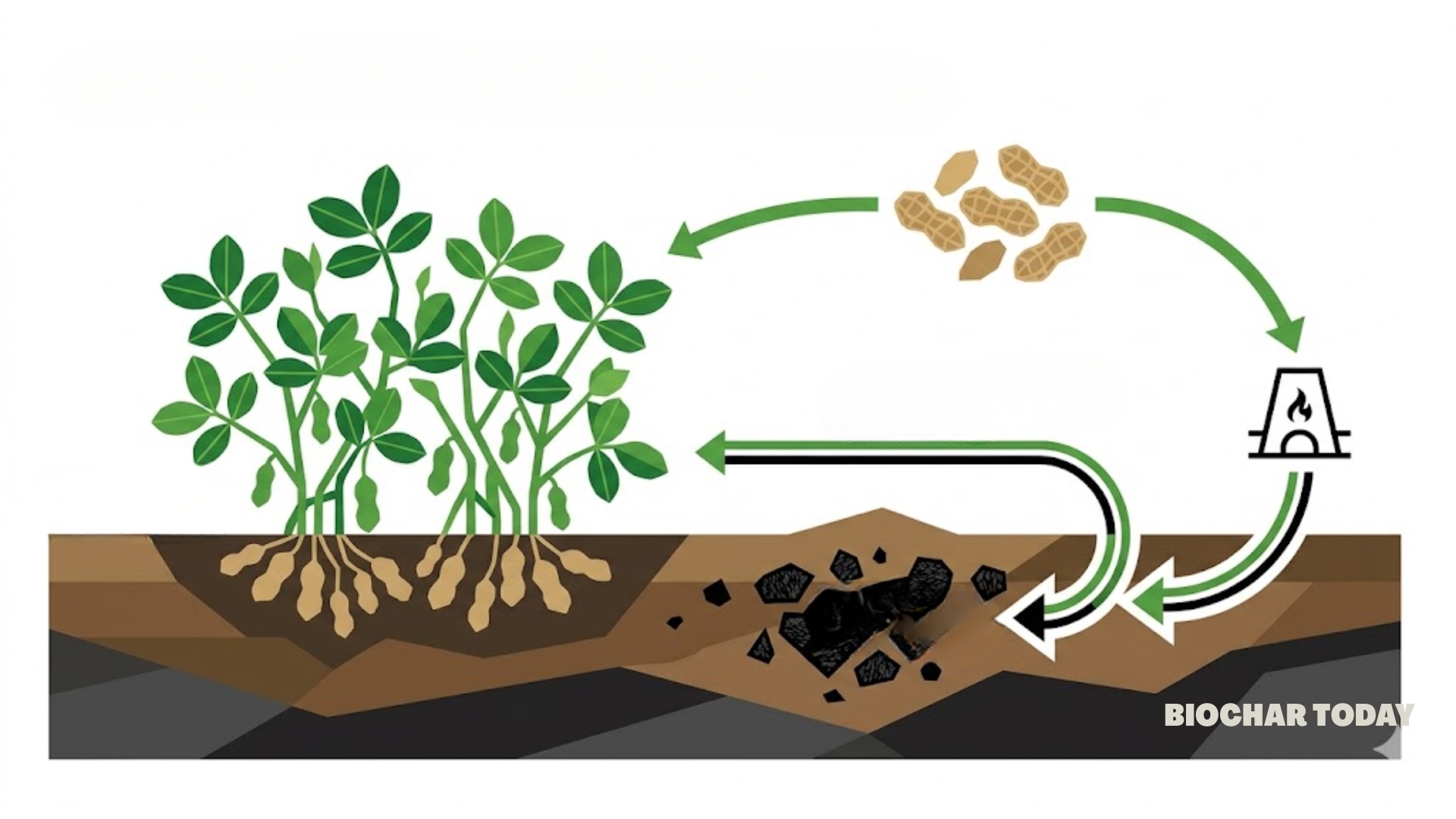
- Converting farm waste into charcoal-like material significantly heals poor soils and improves groundnut harvesting yields.
- Smallholder farm families who apply this organic soil treatment generate much larger crop surpluses to sell for profit in local markets.
- Using this sustainable farming method leads to measurable increases in monthly family incomes and general living standards.
- Access to training, agricultural extension officers, and flexible group credit alternatives are the main elements that help families adopt this technology.
- Farm communities achieve notable yield growth without needing to clear more natural forests or expand the size of their cultivated land.
Smallholder agricultural production across Sub-Saharan Africa faces persistent challenges from climate change, severe soil nutrient depletion, and low market integration, which trap rural populations in cycles of poverty and food insecurity. Traditional farming practices often fail to optimize output due to declining soil organic matter, forcing a structural reliance on rainfed systems that remain highly vulnerable to erratic weather patterns. To resolve these limitations, modern agricultural economics focuses on sustainable intensification strategies under the Climate-Smart Agriculture framework. This field study addresses these core issues by investigating the socioeconomic dimensions of biocharBiochar is a carbon-rich material created from biomass decomposition in low-oxygen conditions. It has important applications in environmental remediation, soil improvement, agriculture, carbon sequestration, energy storage, and sustainable materials, promoting efficiency and reducing waste in various contexts while addressing climate change challenges. More adoption among smallholder groundnut farmers in the Upper West Region of Ghana, providing a tangible pathway to link environmental care with human welfare.
The findings of this comprehensive research demonstrate that adopting biochar delivers highly significant improvements in farm output and production efficiency. Farmers who utilized biochar for soil amendmentA soil amendment is any material added to the soil to enhance its physical or chemical properties, improving its suitability for plant growth. Biochar is considered a soil amendment as it can improve soil structure, water retention, nutrient availability, and microbial activity. More achieved forty-two to forty-six percent higher predicted frontier groundnut yields compared to non-adopters. This dramatic yield expansion indicates that productivity gains are driven by sustainable intensification per unit of land rather than the clearance or expansion of cultivated fields. Furthermore, the study notes that managing selection bias and unobserved farmer characteristics reveals that adopters operate closer to their technological frontier, outperforming non-adopters in technical efficiency scores across all evaluated spatial groups.
Beyond improving field-level harvests, the results show that biochar adoption functions as a primary driver for agricultural commercialization. Adopting families experienced a two and a half to five percent increase in commercialization rates, explicitly choosing market-oriented sales over pure subsistence farming. The high yield consistency and large crop surpluses generated by biochar application enable smallholders to transition from farming for survival to farming for profit. This market integration is heavily supported by membership in farmer-based organizations and access to public extension services, which lower transaction costs and provide the operational confidence required to navigate local output markets successfully.
The socioeconomic ripple effects of this technology translate directly into enhanced family well-being and reduced rural vulnerability. The econometric analysis establishes that biochar adopters gain an extra GHC 0.94 in per capita income per month and GHC 0.97 in per capita expenditure per month. These gains allow smallholders to allocate more resource buffers toward essential needs, including improved nutrition, schooling, and healthcare. While the labor-intensive nature of biochar production can sometimes burden larger households with high dependency ratios, the overall economic payoffs show that the long-term rewards far outweigh the early operational and setup costs.
To scale this innovation effectively, the study emphasizes that policymakers must establish community-based biochar production systems to minimize logistical constraints. Local governments, development agencies, and research networks should coordinate to strengthen technical training, input availability, and targeted sensitization initiatives. Providing tailored credit programs with flexible repayment structures through group loans will further relieve financial liquidity boundaries. By integrating these institutional and market-driven support structures, development partners can ensure that the widespread adoption of biochar serves as a scalable, inclusive tool for climate resilience and sustainable economic growth across rural Africa.
Source: Abdulai, H. (2026). Enhancing Farm Performance and Welfare of Groundnut-Producing Households: The Role of Biochar Adoption in Upper West Region of Ghana (Doctoral dissertation, Department of Agricultural and Food Economics, University for Development Studies). Retrieved from UDS Space Institutional Repository.



Leave a Reply