
The Canadian startup ITER Technologies, originating from research at Western University’s Institute for Chemicals and Fuels from Alternative Resources (ICFAR), has successfully transitioned its specialized biocharBiochar is a carbon-rich material created from biomass decomposition in low-oxygen conditions. It has important applications in environmental remediation, soil improvement, agriculture, carbon sequestration, energy storage, and sustainable materials, promoting efficiency and reducing waste in various contexts while addressing climate change challenges. More production technology to the commercial scale. This milestone was achieved through a strategic partnership with the Colombian manufacturer, JCT Calderas. The venture focuses on converting diverse agricultural residues into highly specialized, value-added biochar, marking a crucial step in operationalizing large-scale carbon sequestration and advancing circular economy principles within the industry. The successful deployment of their prototype reactor, ‘Valentina,’ demonstrates the potential for rapidly scaling decentralized biochar facilities globally.
The primary challenge addressed by the ITER team centers on two interconnected global issues: managing escalating agricultural waste streams and the urgent need for scalable, effective atmospheric carbon dioxide removal (CDR). While conventional pyrolysisPyrolysis is a thermochemical process that converts waste biomass into bio-char, bio-oil, and pyro-gas. It offers significant advantages in waste valorization, turning low-value materials into economically valuable resources. Its versatility allows for tailored products based on operational conditions, presenting itself as a cost-effective and efficient More exists, the industry often struggles to consistently produce a high-quality, toxin-free biochar necessary for advanced industrial applications. Furthermore, the reliance on external fuel for traditional thermochemical conversion processes presents a major barrier to realizing financially viable, large-scale deployment without subsidy.
The core of ITER’s solution lies in its proprietary reactor design. This technology optimizes the pyrolysis process by ensuring an even distribution of heat, which is critical for yielding biochar with a uniform physical and chemical composition. Crucially, the reactor is engineered for energy self-sustainability. Once initiated, the system runs autonomously by recovering excess energy from the combustion of synthesis gases. This innovation significantly lowers operational expenditure while simultaneously capturing heat and carbon dioxide, which can be leveraged for adjacent processes, such as greenhouse cultivation.
The commercial-size Valentina reactor, built in collaboration with JCT Calderas in Colombia, has proven highly efficient. Test runs produced 405 kilograms of biochar in just three days without requiring external fuel input, confirming the net energy positive design. Furthermore, the technology enables the engineering of biochar for high-value applications, including superior filtration of persistent contaminants like “forever chemicals,” strengthening cement, and facilitating the recycling of mixed ocean plastics. ITER is now in discussions for the deployment of multiple reactors across Ontario, Canada.
The success of ITER Technologies underscores the vital role of university-industry collaboration in de-risking and scaling complex biochar technology. Technical excellence must be paired with robust, application-focused engineering. Developing reactors that are not only efficient but also self-sustaining and capable of producing highly engineered biochar opens pathways to high-value industrial markets far beyond traditional soil amendments.
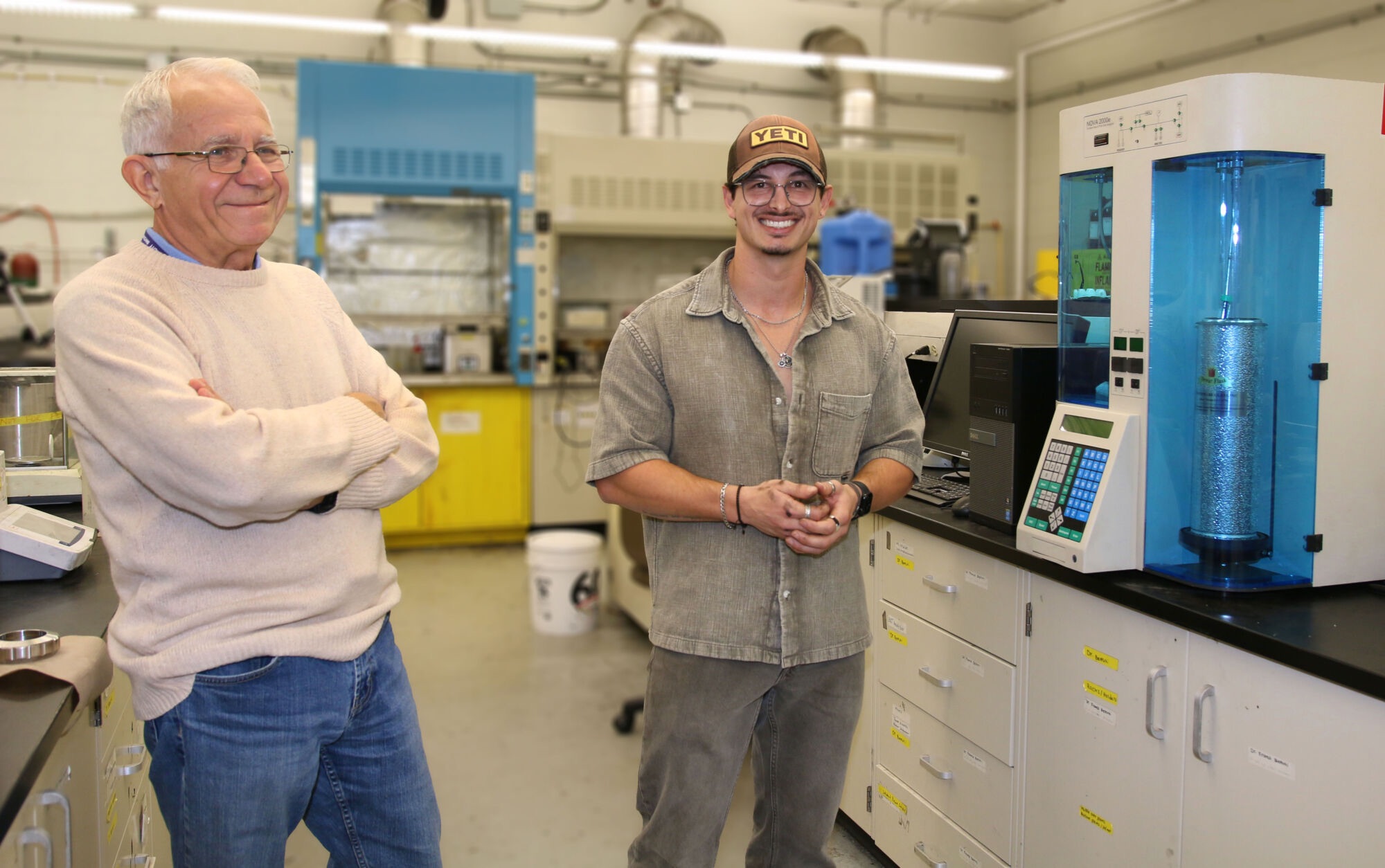
Header image: Franco Berruti (left) and Stephanos Horvers, two of the three co-founders of ITER Technologies, examine the chemical composition of biochar in the lab at Western’s Institute for Chemicals and Fuels from Alternative Resources. (Colleen MacDonald/Western News)





Leave a Reply