
Key Takeaways
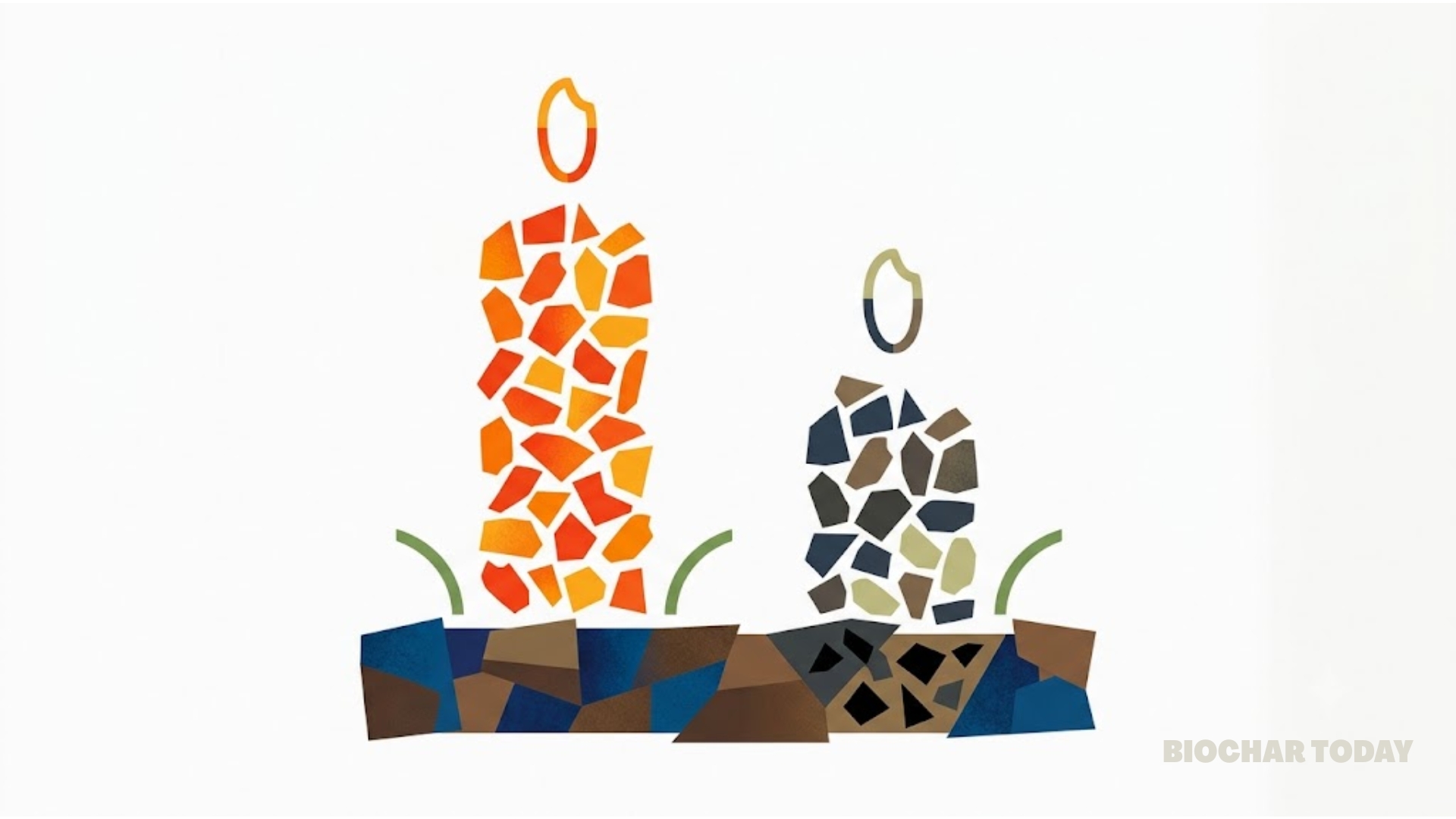
- Direct returning of unburned rice straw to agricultural fields significantly increases the amount of toxic arsenic that enters the edible grain.
- Converting the agricultural plant waste into biocharBiochar is a carbon-rich material created from biomass decomposition in low-oxygen conditions. It has important applications in environmental remediation, soil improvement, agriculture, carbon sequestration, energy storage, and sustainable materials, promoting efficiency and reducing waste in various contexts while addressing climate change challenges. More instead completely prevents the unwanted rise of heavy metals in the food supply.
- Introducing the pyrolyzed biomassBiomass is a complex biological organic or non-organic solid product derived from living or recently living organism and available naturally. Various types of wastes such as animal manure, waste paper, sludge and many industrial wastes are also treated as biomass because like natural biomass these More material at a low rate helps reduce the plant uptake of other hazardous toxins like copper and lead.
- The processing of raw straw into stable carbon helps farmers maintain healthy crop yields and boosts total plant growth.
- Utilizing this biochar processing method prevents dangerous air pollution from open field burning and lowers overall greenhouse gas emissions.
Managing large volumes of leftover crop residues represents a persistent challenge for global agriculture, especially in regions relying heavily on staple grain production. The standard agricultural practice of plowing raw rice straw back into fields is highly favored due to its convenience and its ability to return vital nutrients back into the earth. However, this management choice generates severe unintended consequences when fields are contaminated with persistent heavy metals. Decades of industrial activity and historical chemical treatments have left many agricultural soils rich in elements that threaten human wellness. When raw plant residues decompose in the wet, oxygen-limited environment of a traditional flooded field, the breakdown process fundamentally alters how these toxic elements move through the root zone. Understanding the precise relationship between organic waste management and the movement of multiple metals at the same time is essential for preserving food security.
The recent investigation published in Environmental and Biogeochemical Processes by researchers Jiannan Liao, Wenjing Ning, Yu Gong, Wenli Tang, and Huan Zhong demonstrates that direct straw addition causes a stark rise in grain arsenic concentrations, increasing the toxic load by nearly three-quarters compared to fields where the straw was removed. While the raw plant matter successfully lowered the presence of copper and lead within the edible portions of the plant, it failed to provide any true protection against other hazardous contaminants like cadmium, nickel, or zinc. Attempting to fix this problem using common field techniques, such as accelerating the decomposition using commercial biological agents, altering the soil chemistry by adding calcium carbonate to raise the pHpH is a measure of how acidic or alkaline a substance is. A pH of 7 is neutral, while lower pH values indicate acidity and higher values indicate alkalinity. Biochars are normally alkaline and can influence soil pH, often increasing it, which can be beneficial More, or limiting the water supply during the key flowering stage, proved entirely ineffective. Instead of lowering the risks, these secondary interventions often worsened the problem, in some cases causing alternative toxins like cadmium to surge dramatically past safe international consumption limits.
To provide a safe and highly effective alternative for farmers worldwide, the research team evaluated the impacts of processing the exact same plant waste into a stable, highly porous carbon material through a low-oxygen heating process known as pyrolysisPyrolysis is a thermochemical process that converts waste biomass into bio-char, bio-oil, and pyro-gas. It offers significant advantages in waste valorization, turning low-value materials into economically valuable resources. Its versatility allows for tailored products based on operational conditions, presenting itself as a cost-effective and efficient More. When the resulting biochar was reapplied to the fields at a modest concentration of roughly 0.3 percent by weight, the results were profoundly different from direct straw disposal. The charcoal-like material did not trigger any increase in grain arsenic levels, completely eliminating the primary health threat associated with raw straw return. At the same time, this processed carbon retained all the positive benefits of the original material, achieving an identical and valuable reduction in the accumulation of copper and lead within the final harvest.
The successful utilization of straw-derived biochar delivers a vital double benefit by improving the physical characteristics of the field while maximizing the safety of the food produced. Beyond blocking the transfer of dangerous elements into the human food chain, the low-dose biochar application strongly supported the physical development of the crops, leading to marked improvements in overall plant height, root volume, and final harvest weight. Transitioning to this processing framework allows agricultural communities to move away from the highly destructive practice of open-air crop burning, which acts as a primary contributor to dangerous particulate matter emissions and regional smog. Furthermore, because the carbon in biochar is highly stable, it remains locked in the earth rather than breaking down into powerful greenhouse gases like methane and carbon dioxide, providing a practical blueprint for climate-resilient farming and global health protection.
Source: Liao, J., Ning, W., Geng, Y., Tang, W., & Zhong, H. (2026). Incorporating rice straw in the form of biochar: a sustainable measure to protect humans from heavy metal exposure. Environmental and Biogeochemical Processes, 2, e012.




Leave a Reply