
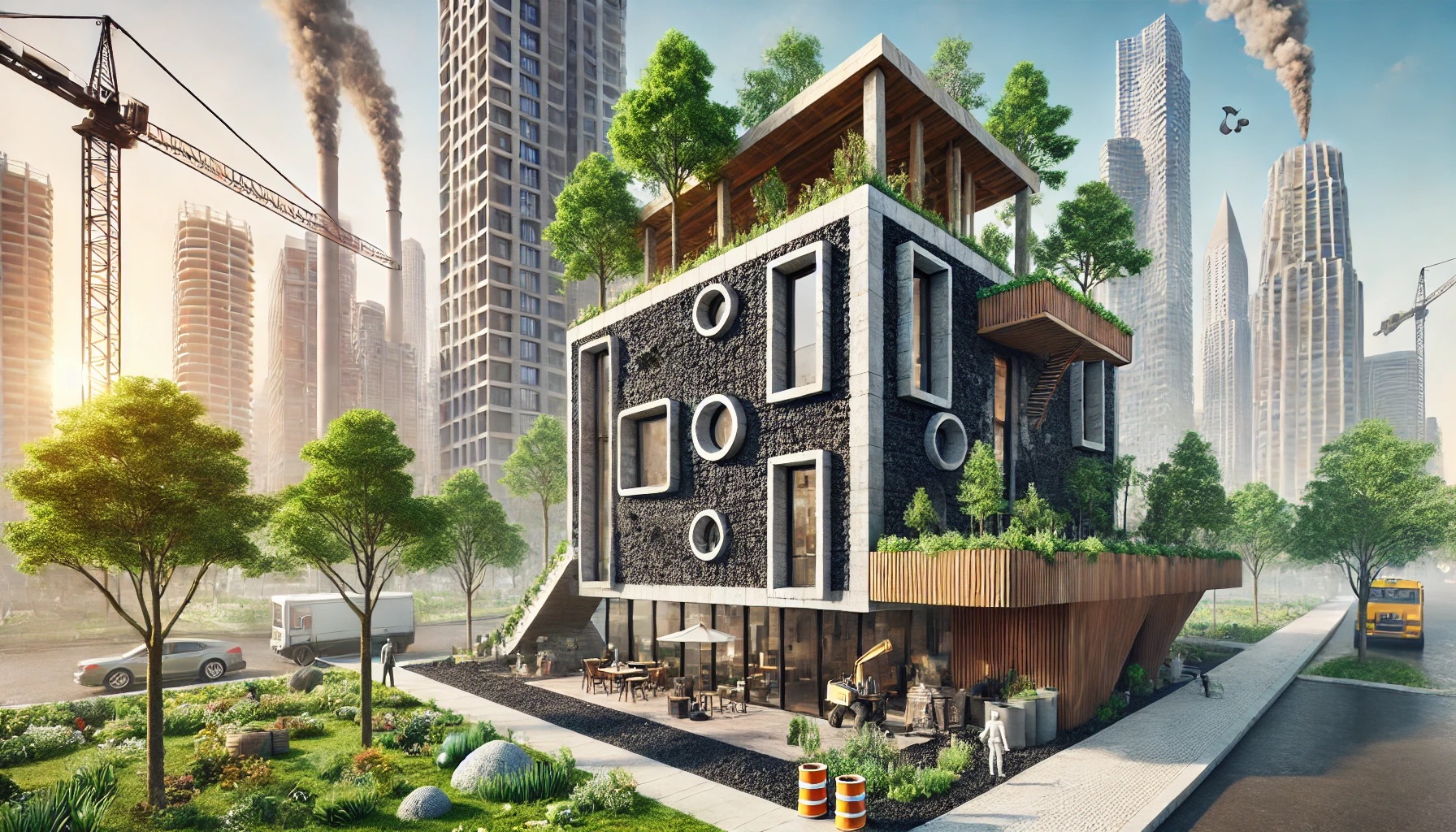
A team of scientists, led by Dr. Mehreen Gul from Heriot-Watt University, is researching biocharBiochar is a carbon-rich material created from biomass decomposition in low-oxygen conditions. It has important applications in environmental remediation, soil improvement, agriculture, carbon sequestration, energy storage, and sustainable materials, promoting efficiency and reducing waste in various contexts while addressing climate change challenges. More as a low-carbon building material. The interdisciplinary project, funded with £800,000 from UKRI, aims to advance sustainability in the construction industry.
Biochar is a charcoal-like material made by heating organic waste with limited oxygen. It has shown promise in improving insulation, moisture control, and air quality in buildings, while also acting as a carbon sink. Replacing just 1% of fine aggregate in cement with biochar can enhance compressive strength by around 10%.
Dr. Gul, an assistant professor in Architectural Engineering, highlights the urgency of reducing construction’s environmental impact, which accounts for 40% of global energy-related emissions. The team is collaborating with civil engineers, building physicists, and social scientists from Heriot-Watt, Aston University, and the University of Birmingham. They will test biochar’s performance in materials like concrete, brick, and plaster, alongside building simulations to assess energy savings.
Key stakeholders, including industry experts and policymakers, will be consulted to understand biochar’s readiness, cost, and social acceptability. The team hopes to develop a framework to encourage biochar use in the UK and beyond, supporting net-zero emission targets. Outcomes will include reports, case studies, and performance metrics, alongside exploring regulatory and carbon credit opportunities to accelerate biochar adoption in construction.
READ MORE: ‘Carbon-eating’ building materials research set to advance sustainable construction




Leave a Reply